How Australian Home Decor Stores Cut Returns with AR (Augmented Reality)
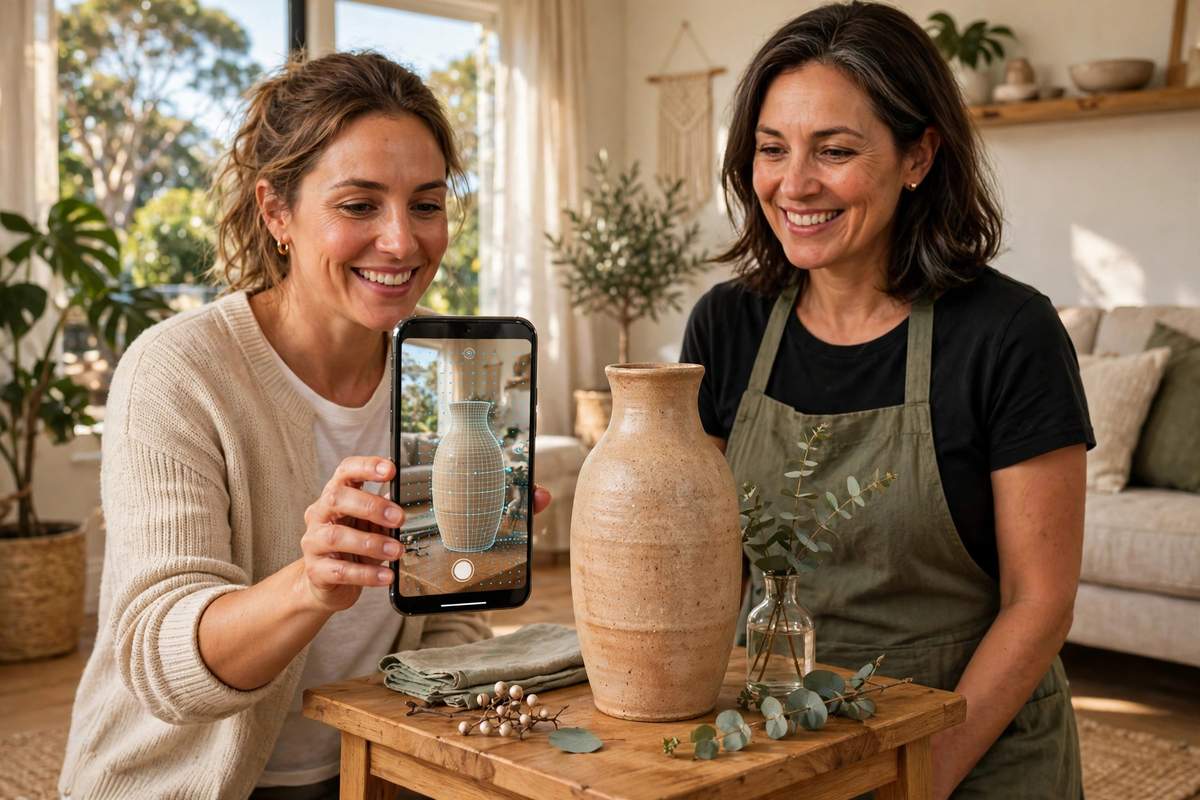
Picture a home decor store owner in Melbourne. She sells vases, lamps, mirrors, and wall art from one shop and a website. A fair share of her online orders come back. The reason is almost always the same. The piece looked right on screen and wrong in the room. Too tall for the side table. Too wide for the wall. The colour worked, the size did not.
That is the decor returns problem in one line. It is not quality, and it is not taste. It is size, guessed from a photo.
Why decor returns are mostly size returns
Decor is bought for a spot. A lamp is bought for a table of a known size. A mirror is bought for a wall of a known width. A vase is bought for a shelf with a set height. The shopper knows the spot. What they cannot tell from a photo is whether the piece fits it.
A tape measure helps, but few shoppers measure twice, and fewer still can picture the result from numbers alone. So they order, they hope, and when the piece lands they send it back. The return costs the store the postage both ways, the time to check and re-list the piece, and often the sale itself, because the shopper has already moved on.
Picture a shopper in Brisbane who orders a floor lamp for the corner by her sofa. The photo showed it beside a chair, and it looked about right. In her room it stands a head taller than the sofa arm and crowds the walkway. She packs it up the same day. Nothing was wrong with the lamp. The size was a guess, and the guess was wrong.
What changes when the shopper sees it in the room
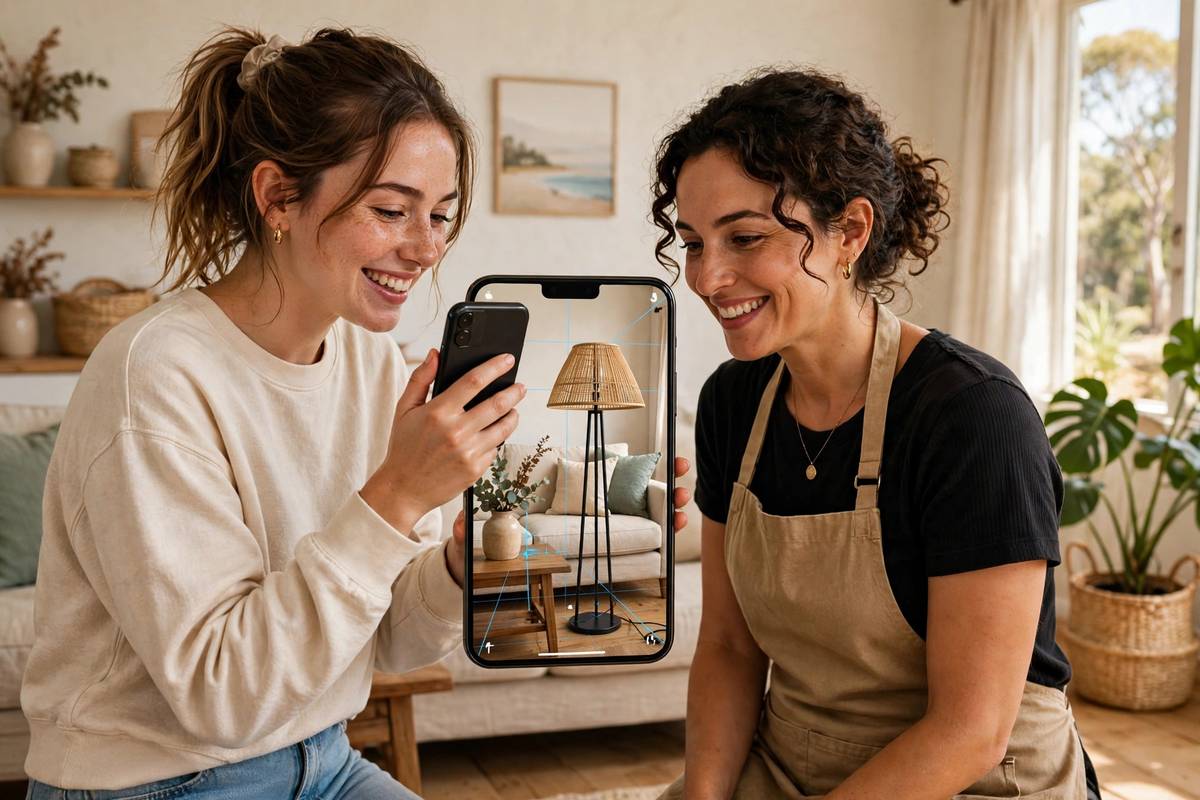
AR (Augmented Reality) puts the piece in the shopper's own room at its true size before they buy. They point the phone at the side table and the lamp appears on it, the right height, the right width, in the light of their own room. They walk around it. They check it against the wall. The guesswork is gone, and with it goes most of the reason to send the piece back.
That is the whole mechanism. The shopper stops imagining the size and starts checking it. A piece that fits the spot gets ordered with confidence. A piece that does not fit never gets ordered, which is a sale you lose cleanly instead of a return you pay for twice.
Where the view has to live
A true-to-size view only cuts returns if shoppers actually use it, and they use it where the buying decision happens. Three spots matter.
- Next to the price on every product page. That is where size doubt lives. A see-it-at-true-size link beside the buy button answers the question at the moment it matters.
- On the price tags in the shop. A QR code on the tag opens the same piece in AR. Customers check it at home and come back decided, instead of buying two sizes and returning one.
- In Instagram posts and stories. The link opens on a phone, which is exactly where your shoppers browse. A follower who can check the size in their own room is a follower who can order without a trip to the shop.
What the store owner has to do
Nothing technical. You send photos and your real listed dimensions, bestsellers first. Our designing department produces the true-to-size AR (Augmented Reality) views for you, hosts them, and hands you links and QR codes for each product. About seven days from photos to a live catalogue. Custom packages are available if your store needs something beyond the standard catalogue, and our team follows up after launch to make sure the views are working where shoppers actually see them.
You do not need the whole catalogue on day one. Twenty proven pieces covering most of your revenue teach you what customers actually do with it, and the returns on those pieces are the first ones to fall.

The maths the owner can check
One number worth knowing, and it is Shopify's own data, not ours: products with 3D or AR views convert about 94% better than products without. Shoppers who can check the true size hesitate less, and they order more.
Put the two together and the picture is plain. More orders, because the size doubt is answered before the buy button. Fewer returns, because the piece that arrives is the piece the shopper already saw in their own room. That pair is what pays for the service, and it is why the stores that move first are the ones that stop paying the returns bill twice.
For the sales side of the same story, read how Australian decor stores win Christmas sales with AR.
The cheapest way to check before you buy
You do not have to sign anything to find out if it works for your store. Send a photo of your bestselling lamp or mirror and we will build you one true-to-size AR (Augmented Reality) view free. Put it on your own phone, check it against the real piece, and see if your customers would use it. If it does not convince you, you have spent nothing. Try the live decor demo first: it opens in your phone browser, no install.
No programming, no changes to your website needed. We send you a QR code for each product. Put it on the product page, on your packaging, in your shop, on social media, anywhere. Your buyer scans it and sees your product in their own room, real size.
FAQ
Why do Australian decor stores get so many returns?
Most of them come down to size. The piece looked right in a photo and wrong in the room: too tall for the table, too wide for the wall. A true-to-size AR (Augmented Reality) view lets the shopper check the piece against their own room before they order, so the size guess never happens.
Do my customers need an app to see my decor in AR?
Not with ARQR360. Each piece gets a link and a QR code that opens the AR view in the phone browser. Try the live decor demo on your own phone.
How much does AR cost a small Australian decor store?
It depends on who produces the views, which is the biggest cost on most routes. ARQR360 is flat and public: $249 one-time setup and $29 a month, with all AR (Augmented Reality) view production included. The first test view is free.
Try it on your own product, free
Reply with a photo of your bestselling product and we will build you one true-to-size AR model free, to try on your own phone. No commitment.
Get my free model