How Australian Shoe Stores Cut Size Returns with AR (Augmented Reality)
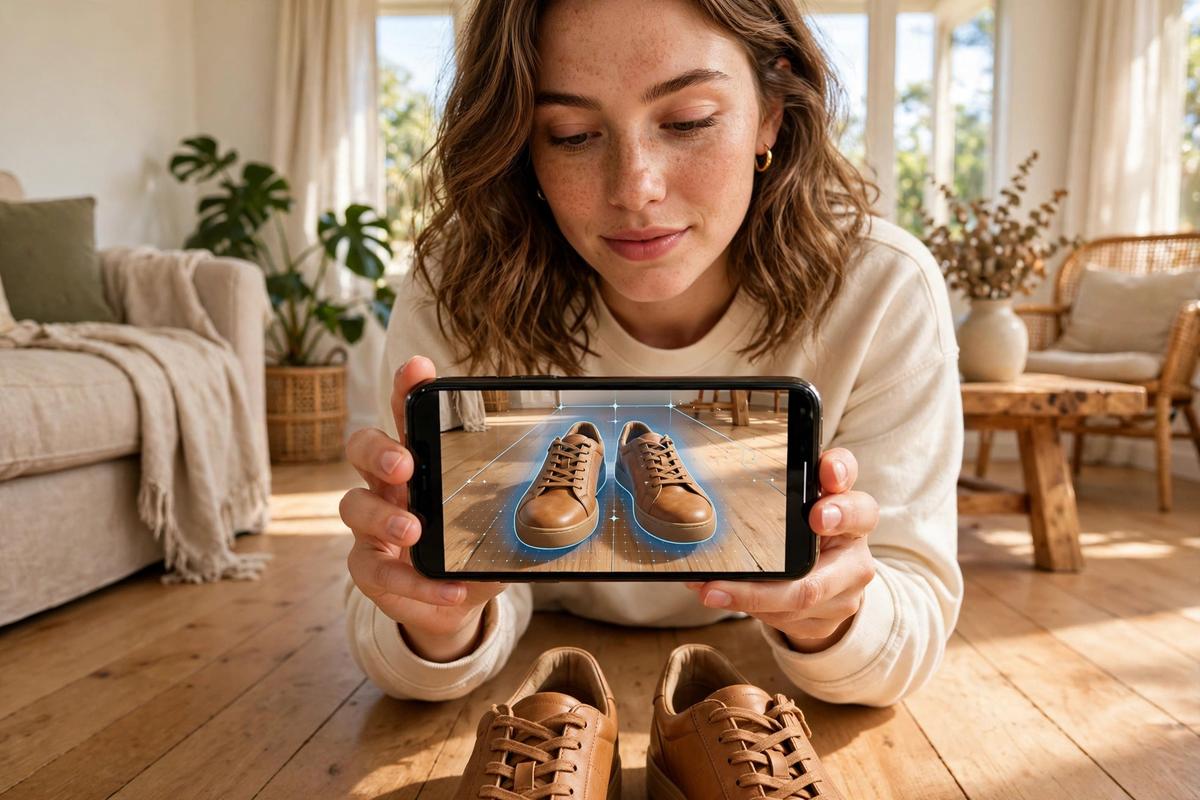
Picture a shoe store owner in Melbourne. She stocks runners, boots and sandals from a dozen brands. The product photos are beautiful. The size chart is exact. And still, a big share of her online orders come back with a size change request. The customer loved the shoe. They just ordered the wrong size.
This is bracketing, and shoe stores live with it more than almost any other retailer. A 40 in one brand is not a 40 in another. Some brands run long, some run narrow, some drift between batches. The shopper knows this from experience, so they order two sizes and return the one that does not work. The store pays for both shipments. The warehouse repacks the returned pair. The margin on that sale is gone before it lands.
Why photos and size charts cannot fix this
Three problems work against every shoe store. First, brand sizing drifts. A chart tells you the foot length for each size, but it says nothing about the shoe's actual proportions, and very few shoppers measure their feet with a ruler. Second, style changes the shape. A pointed toe and a round toe both labelled a 38 look completely different next to your own foot, yet online they sit in the same row of the chart. Third, there is no reference point. A photo of a boot gives no sense of the space it takes up. Numbers on a chart do not turn into a real size idea.
What a true-to-size AR view does
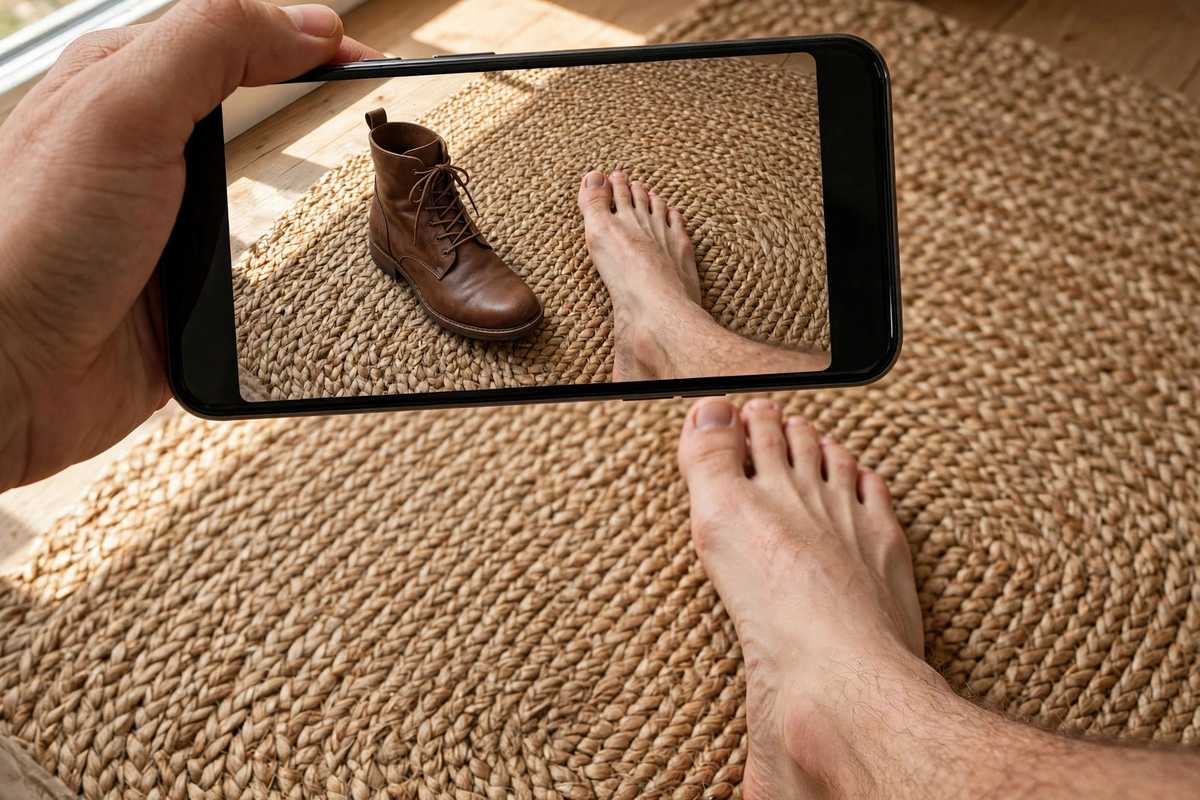
A true-to-size AR (Augmented Reality) view puts the shoe at its real dimensions in the shopper's phone view. They hold the phone over their own foot and see the boot at true size beside it. It does not tell them how the shoe feels, and no honest store should claim that. It gives them something photos cannot: a real size idea of the actual product, in scale with the one foot they know.
For the store this attacks bracketing at its root. The shopper who was going to order two sizes orders the one that looks right against their own foot. Fewer double shipments. Fewer repacks. The sale lands, and it stays landed.
Where the links go
- On the product page, beside the size selector. That is where the size decision happens. A see-it-at-true-size link next to the dropdown answers the question at the moment of doubt.
- In Instagram posts and stories. The link opens on a phone, which is exactly where Australian shoppers browse shoe stores.
- On the shelf edge in the shop. A QR code next to the box lets customers check the online-only colourways at true size, without the store stocking every colour in every size.
What it costs to start
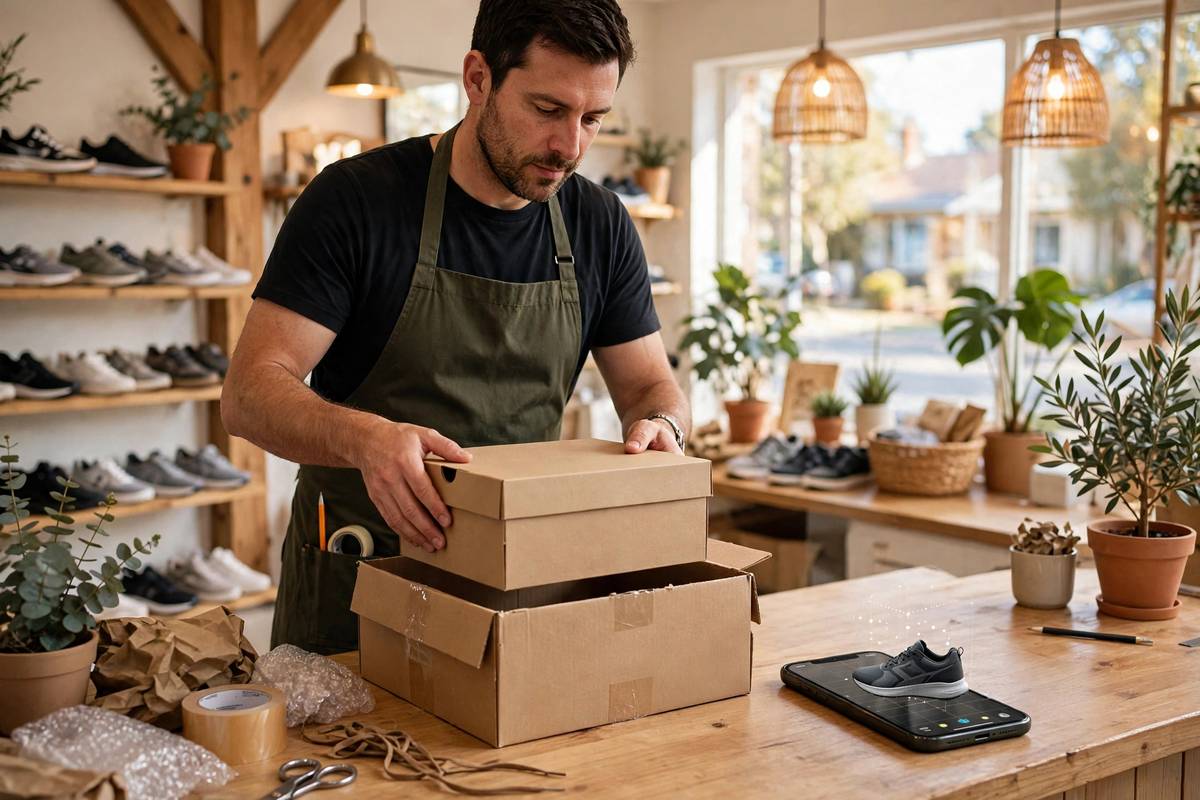
ARQR360 is a done-for-you AR catalogue for independent retailers. You send photos of your bestselling shoes and their real listed dimensions. We produce true-to-size AR (Augmented Reality) views from them, host them, and hand you links and QR codes that open the AR view in your customer's phone browser. No app. No 3D team. No files to manage on your side.
The price is flat and public: $249 one-time setup and $29 a month, with all AR view production included. About seven days from photos to a live catalogue.
For the tool side of the same story, read the best AR tools for footwear stores.
The cheapest way to check if it works for your store
You do not have to commit to anything to find out. Send a photo of your bestselling shoe and we will build you one true-to-size AR view free. Put it on your own phone, hold it against your own foot, and see if it changes how you judge sizes. If it does not convince you, you have spent nothing. Try the live footwear demo first: it opens in your phone browser, no install.
The pattern is the same in every market: the shoe looked right and the size judgement was wrong. Our main guide to AR for footwear stores is the shared playbook, with the styles to start on.
FAQ
Do my customers need an app?
Not with ARQR360. Each shoe gets a link and a QR code that opens the AR view in the phone browser. Try the live footwear demo on your own phone.
Can AR tell a shopper how a shoe fits?
Honestly, no. AR shows true size, not comfort, not feel, not arch support. What it does well is give the shopper a real size idea of the shoe against their own foot, which is what stops the two-size orders.
What does AR cost a shoe store?
It depends on who produces the AR views, which is the biggest cost on most routes. ARQR360 is flat and public: $249 one-time setup and $29 a month, with all AR view production included. The first test piece is free.
Try it on your own product, free
Reply with a photo of your bestselling product and we will build you one true-to-size AR model free, to try on your own phone. No commitment.
Get my free model