How Canadian Home Decor Stores Cut Returns with AR (Augmented Reality)
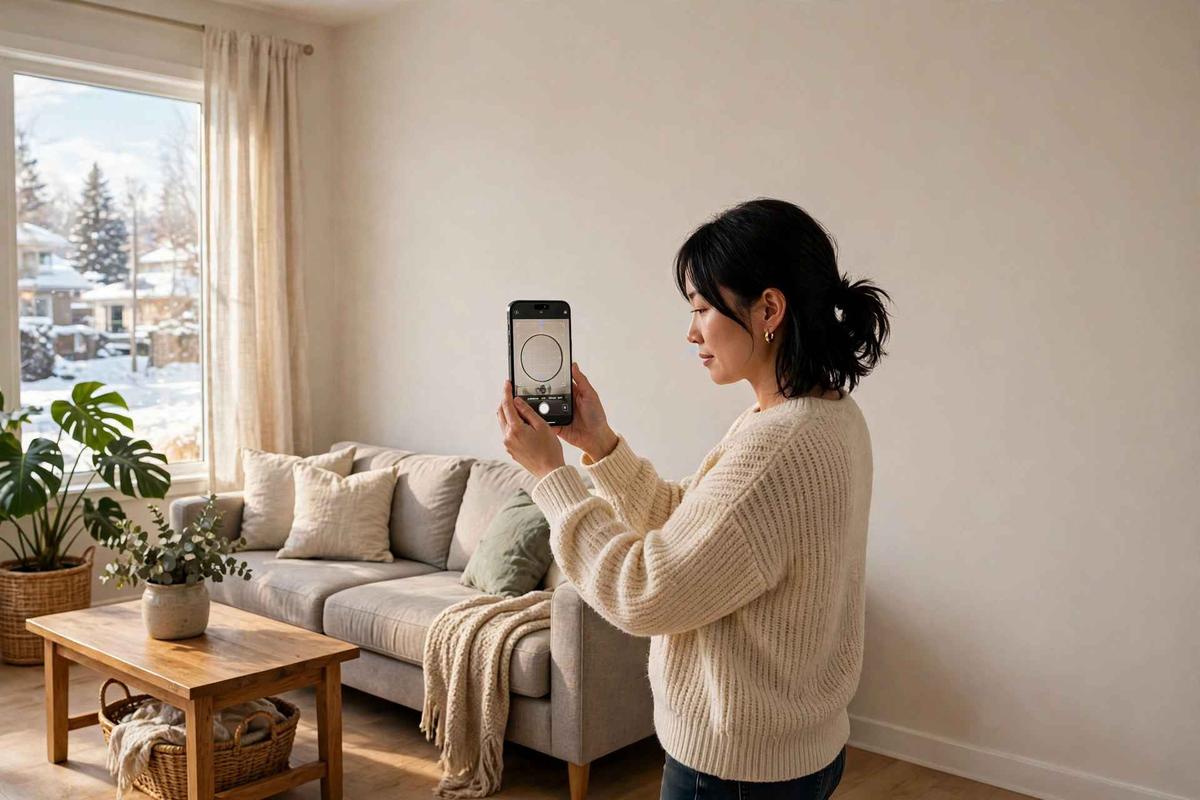
Picture a home decor store owner in Toronto. She sells wall art, mirrors, vases and lamps from one shop and a website. Her returns tell the same story every month. The pieces come back because of size. The canvas looked bigger online. The mirror swallowed the hallway. The vase did not fit the shelf.
This is the quietest cost in home decor retail. A returned mirror costs shipping twice and sells at a discount the second time. A returned set of prints costs the store the sale and the goodwill. The fix is simple. Let the shopper see the piece at its true size before they order.
Where the guessing happens
Decor is the hardest category to judge online. A sofa has listed dimensions that a buyer can measure against a room. A wall art print has them too, but almost nobody measures. The buyer looks at a photo, feels the size, and hopes. Mirrors and lighting are worse. They interact with the room, and a photo of a product on white cannot show that.
Picture a buyer in Vancouver. She orders two framed prints for the wall above her sideboard. They arrive. They look lost. She packs them up and returns both. Nobody lied to her. The listing had the sizes. She just could not picture them. That gap between listed size and pictured size is where most decor returns come from.
Canadian stores feel this twice over. A return from a distant province costs more to ship back, takes longer, and ties up stock that could be sold to someone else. Every size return that never ships is money kept in the store.
What the shopper actually checks
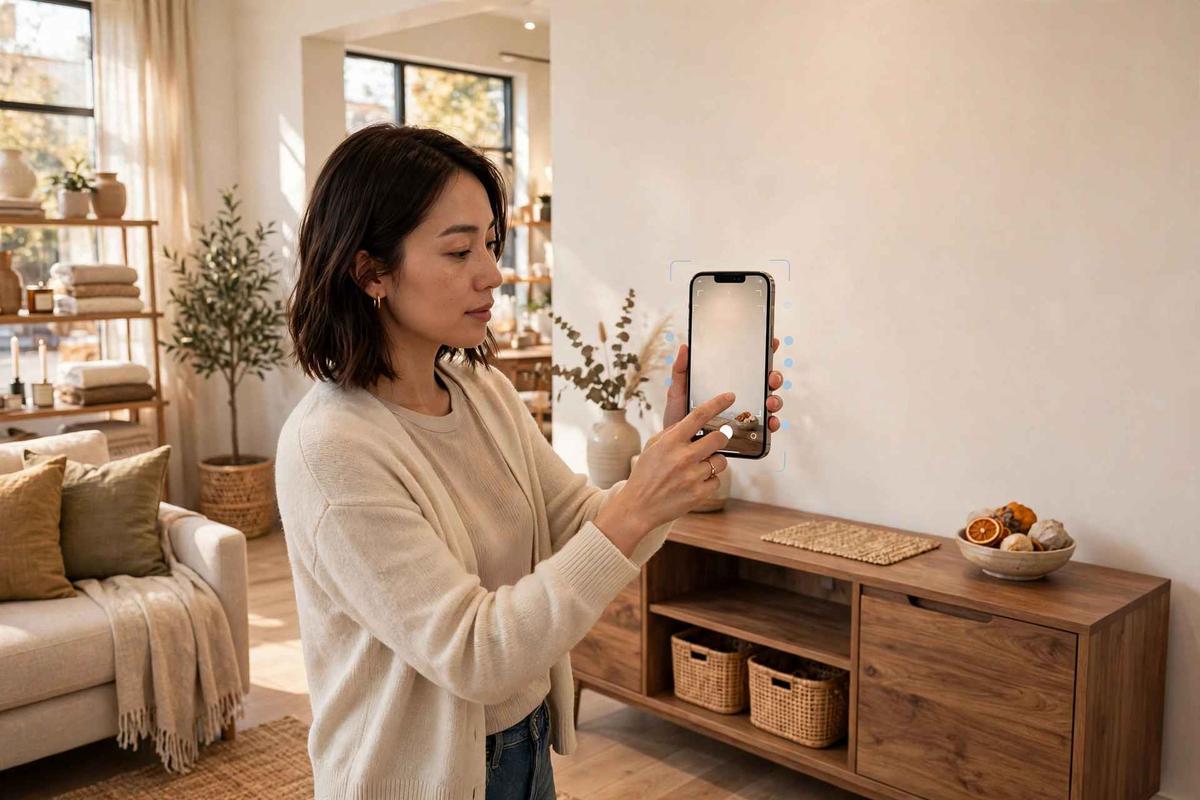
AR (Augmented Reality) answers one question. How does this look in my room, at its true size. The shopper points their phone at their wall or their shelf. The piece appears where it would really stand. Too big is obvious. Too small is obvious. The guessing ends.
That one check changes the order in two ways. The buyer who would have returned the piece does not order the wrong size in the first place. The buyer who was going to leave the tab open and think about it orders with confidence, because the doubt is gone. One number worth knowing, and it is Shopify's own data, not ours: products with 3D or AR views convert about 94% better than products without. Shoppers who can check the true size hesitate less.
The route that skips the hard part
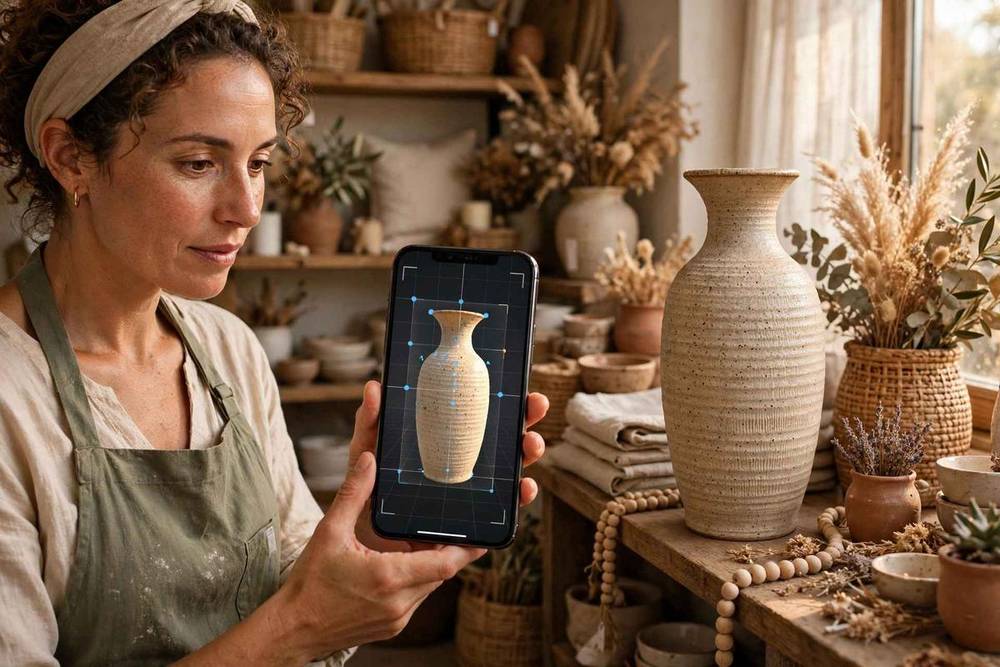
Most decor stores stay away from AR for one reason. Somebody has to produce the views. The store owner has no design team and no wish to build one. This is where ARQR360 is built differently. You send product photos and your listed dimensions. Our talented designing department produces the true-to-size AR (Augmented Reality) views for you. Photos in, views out.
The price is flat and public. $249 one-time setup, $29 a month, with all AR (Augmented Reality) view production included. No product cap. No per-view fees. About seven days from photos to a live catalogue. Each piece gets a link and a QR code that opens in the phone browser. No app for the shopper to install. Custom packages are available if your store needs something beyond the standard catalogue, and our team follows up after launch to make sure the views are working where shoppers actually see them.
Where the links go
Three places do the most work. Next to the price on every product page, where sizing doubt lives. On the price tags in the shop, so visitors check pieces at home and come back decided. In Instagram posts and stories, which shoppers open on the same phone that runs the AR view.
Start with your bestsellers. Twenty proven pieces covering most of your revenue do more than the whole catalogue on day one. Put the view next to the price, where the question is asked, not buried on a separate page nobody opens.
For the buying checklist behind this article, read what Canadian decor stores should look for in an AR provider.
The cheapest way to check if it works for your store
You do not have to commit to anything. Send a photo of your bestselling mirror or wall art piece and we will build you a free test AR (Augmented Reality) view. Try it against the real piece. Show it to your team. Put it on your own phone and check it on your own wall. If it does not convince you, you have spent nothing. Start with the live decor demo on your own phone. It opens in the browser, no install.
FAQ
How does AR cut returns for a decor store?
Most decor returns come from size, not defects or taste. The buyer could not picture the listed size. AR (Augmented Reality) shows the piece at its true size in the buyer's own room, so the size guessing that causes most returns disappears before the order.
Do my customers need an app to see my pieces in AR?
No. Each piece gets a link and a QR code that opens the AR view in the phone browser. Try the live decor demo on your own phone.
What does AR cost a small Canadian decor store?
It depends on who produces the views, which is the biggest cost on most routes. ARQR360 is flat and public: $249 one-time setup and $29 a month, with all AR (Augmented Reality) view production included. The first test view is free.
Try it on your own product, free
Reply with a photo of your bestselling product and we will build you one true-to-size AR model free, to try on your own phone. No commitment.
Get my free model