How Canadian Footwear Stores Cut Size Returns with AR (Augmented Reality)
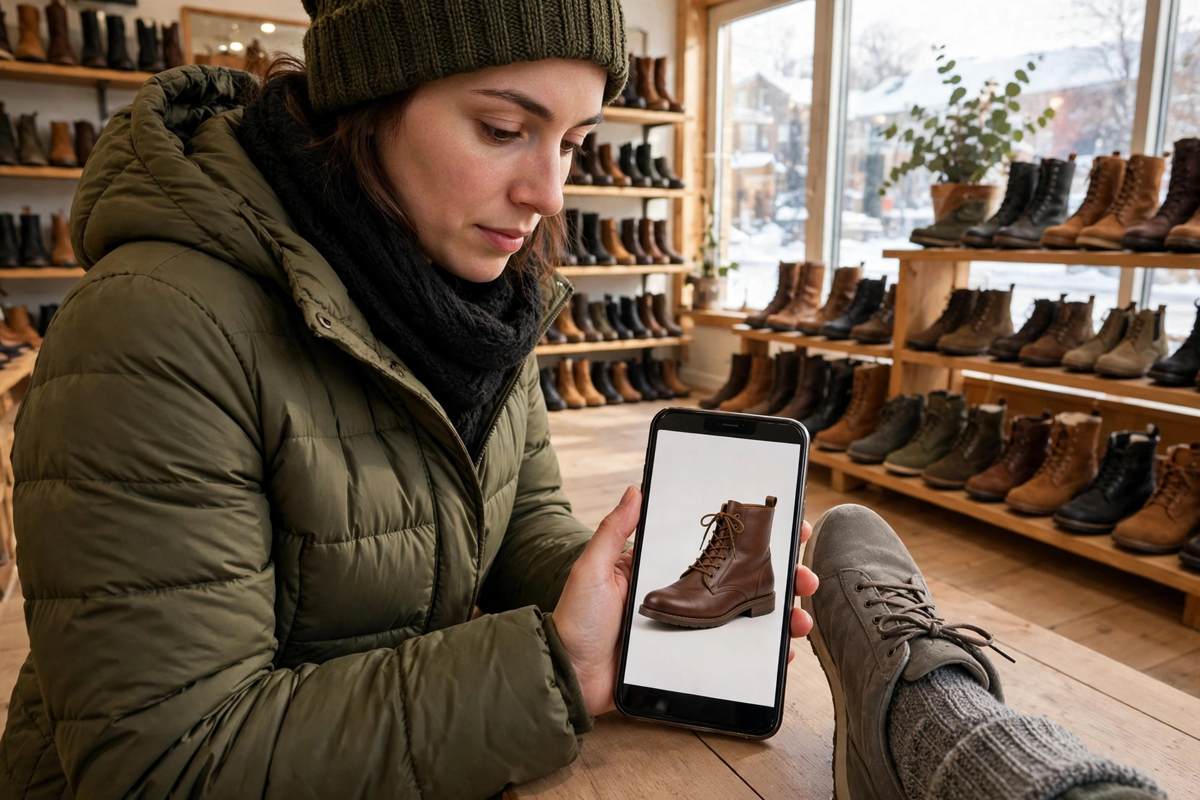
Picture a shoe store owner in Toronto. She sells leather boots and winter shoes from one shop and a website. Orders come in from across Ontario, and some ship to British Columbia and Alberta. Every month a few pairs come back. The reason is almost always the same. The size was wrong.
A shoe return hurts more than most. A pair of winter boots that goes to Vancouver and comes back has burned two long trips, a packing job, and a delivery slot she could have sold to a real customer. The margin on the sale is gone twice over. Return shipping across provinces costs real money, and a returned pair comes back a little less new each time.
Why shoes come back
A photo cannot show true size. A boot shot in a studio looks the same in a size 7 as it does in a size 9, and the shopper has no way to tell from the picture. The size chart sits on the page, but almost nobody measures their foot before ordering. They look at the photo, imagine the boot on their own foot, and trust the picture.
The picture is usually wrong. The boot is a half size too short, so the toe presses. Or it is a full size too long, so the heel slips. Nobody is angry. They just guessed, and the guess was off.
What the shopper checks before they order
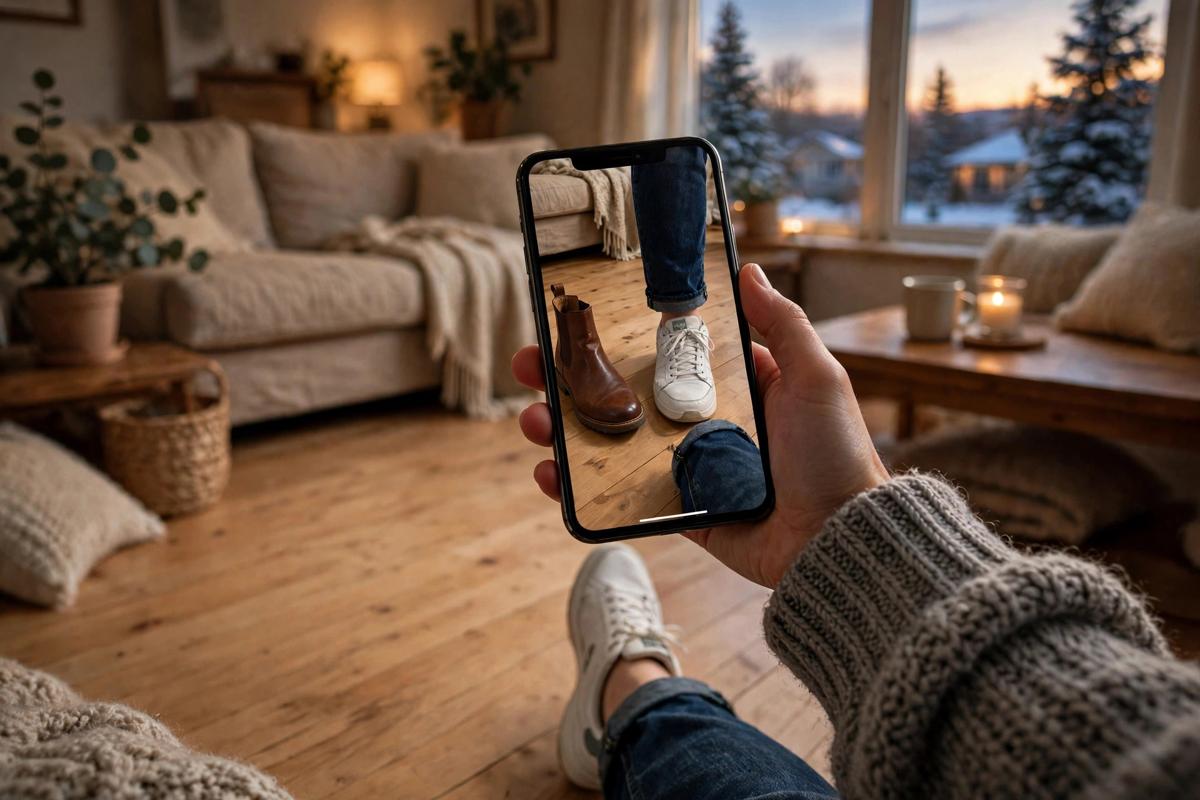
The true-to-size AR (Augmented Reality) view answers the one question the photo cannot. The customer taps a link on the product page, points the phone at the floor, and the boot appears at its real size, live in their own room. They compare it against their own feet. They check the length and width next to a pair they already own and know fits.
No app to download. It opens in the phone browser, in seconds. That matters, because most of this happens late in the evening, on the sofa, when the shopper is one tap away from either ordering or giving up.
Be honest about what it does and what it does not do. AR (Augmented Reality) cannot tell a shopper how a boot will feel on their foot. Comfort and feel only come from trying the shoe on. What it can do is show the true size, so the shopper orders the right length and width instead of guessing from a photo. The size guess is behind most returns, and that is the part it removes.
Shopify reports that products with 3D or AR views convert about 94% better than products without. That is Shopify's own data, not ours. For shoes the mechanism is simple. A shopper who has compared the true size of a boot against their own feet hesitates less and guesses less.
For the other side of the same story, read how Canadian footwear stores turn browsers into buyers with AR.
Where the store puts the links
- Next to the price on every product page. That is where size doubt lives. A see-it-at-true-size link beside the buy button answers the question at the moment it matters.
- In Instagram chats and email replies. Shoppers ask about sizing in DMs before they buy. An AR link in the chat lets them check the boot against their own feet without a trip to the shop.
- On the shoe boxes and in the shop. A QR code on the box lets browsing customers check another colour or size at home and come back decided. The sale survives the trip home.
What it takes on the store's side
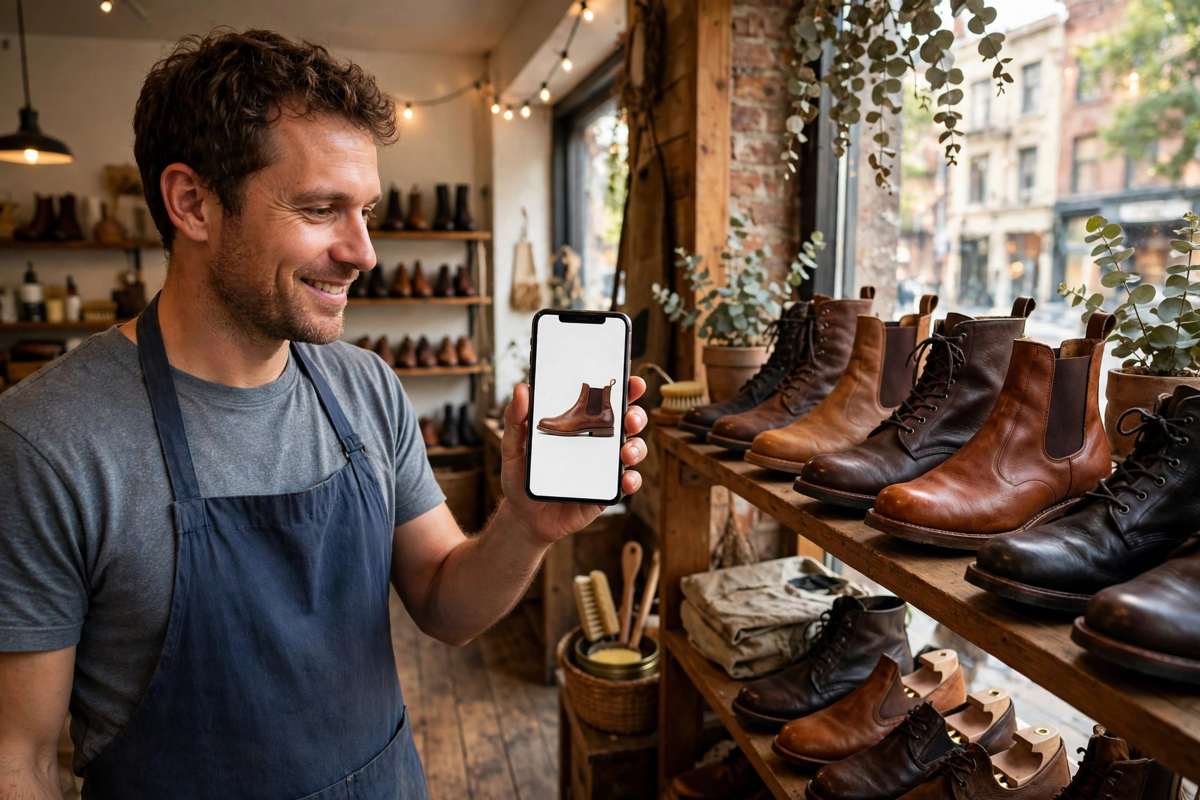
Everything starts with a true-to-size AR (Augmented Reality) view of each shoe. The store sends photos of its bestselling pieces and the real listed dimensions. Our talented designing department produces the true-to-size AR (Augmented Reality) views for you, hosts them, and hands you links and QR codes. The links go on the product pages. The QR codes go in the shop. There is nothing to integrate and nothing to maintain.
About seven days from photos to a live catalogue. The price is flat and public: $249 one-time setup and $29 a month, with all AR (Augmented Reality) view production included. Custom packages are available if your store needs something beyond the standard catalogue, and our team follows up after launch to make sure the views are working where shoppers actually see them.
No programming, no changes to your website needed. We send you a QR code for each product. Put it on the product page, on your packaging, in your shop, on social media, anywhere. Your buyer scans it and sees your product in their own room, real size.
The cheapest way to check if it works for your store
You do not have to commit to anything to find out. Send a photo of your bestselling boot and we will build you one true-to-size AR (Augmented Reality) view free. Put it on your own phone, check it against the real pair, and see if your customers would use it. If it does not convince you, you have spent nothing. Try the live footwear demo first: it opens in your phone browser, no install.
FAQ
Do my customers need an app to see my shoes in AR?
No. Each shoe gets a link and a QR code that opens the AR (Augmented Reality) view in the phone browser. Try the live footwear demo on your own phone.
Will this tell a shopper if a shoe fits their foot?
No, and it is important to be straight about that. AR (Augmented Reality) shows the true size, so a shopper can compare the length and width against their own feet, but comfort and feel only come from trying the shoe on. It removes the size guess, which is behind most returns.
What does it cost a small shoe store?
ARQR360 is flat and public: $249 one-time setup and $29 a month, with all AR (Augmented Reality) view production included. The first test view is free.
Try it on your own product, free
Reply with a photo of your bestselling product and we will build you one true-to-size AR model free, to try on your own phone. No commitment.
Get my free model