How Canadian Rug Stores Cut Size Returns with AR (No App Needed)
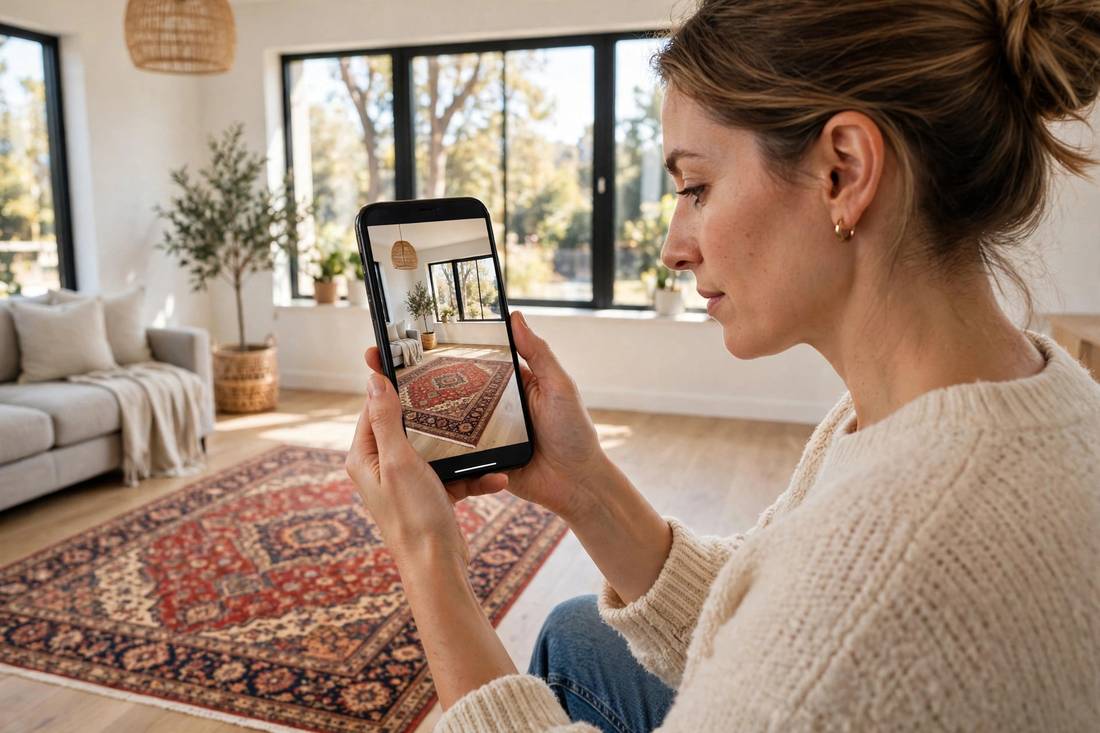
Picture a rug store owner in Vancouver. She sells Persian and modern rugs from one showroom and a website that ships across Canada. A customer in Calgary buys a 5x8 from her product page. It arrives, and it floats in the middle of the room, too small for the furniture. Back it goes. She pays the freight both ways and restocks a rug that was never faulty.
This is the plain-English version of why that happens and what actually fixes it.
Why rugs come back
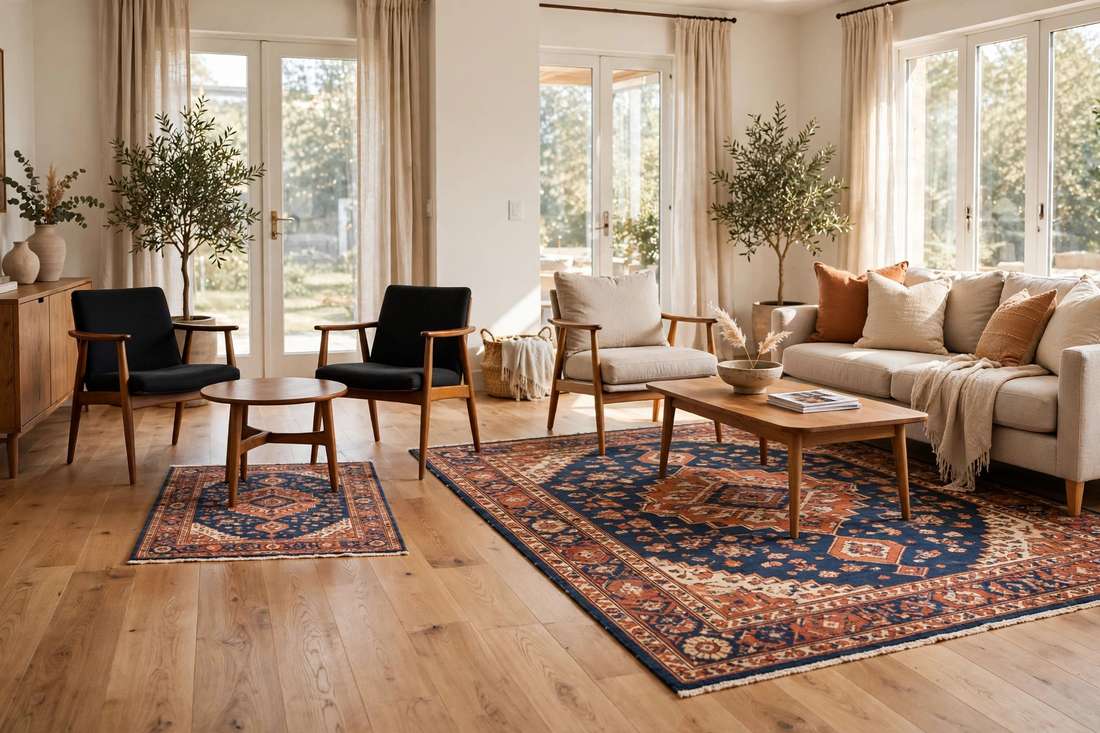
Most rug returns are not quality problems. They are size problems. The customer read the dimensions, looked at the photos, and guessed. Photos lie about scale. A 5x8 rug looks the same size as an 8x10 in a square product photo. The numbers are on the page, but numbers on a screen do not land in a room. People cannot feel the difference between a rug that anchors a room and one that floats in it, not from a spec table.
And rugs are the cruelest category for this. A rug that is too big can fold or go back. A rug that is too small ruins the whole look, and the customer knows it the moment it unrolls. They measure the room, they imagine the rug, and they guess one size down because the bigger one costs more. That guess comes back in a shipping box.
What changes when the customer can check the size first
Now picture the same customer in Calgary. She taps a link on the product page. Her phone camera opens. She points it at her floor and the 5x8 appears in her living room, at its true size. She walks around it. She sees the chair legs land off the rug before she spends a dollar. She picks the 8x10 instead, or she does not buy at all. Either way, the rug does not come back over a surprise.
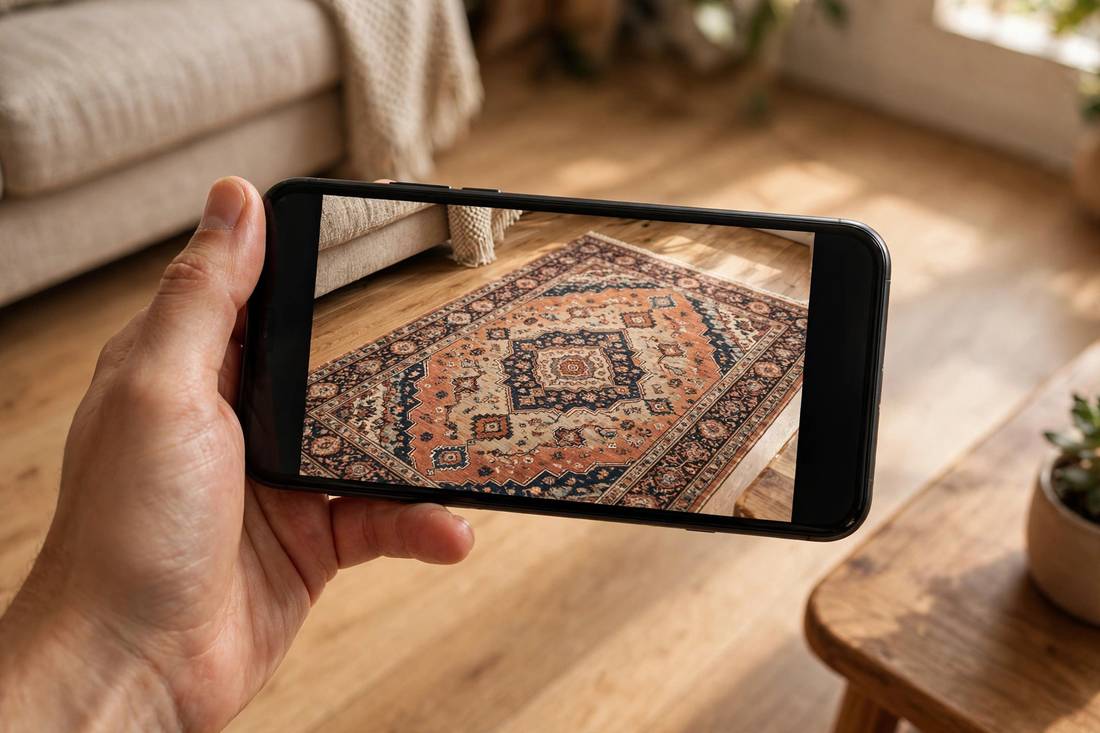
This is what true-to-size AR (Augmented Reality) does. It answers the one question photos cannot: will it fit my room. It opens in the phone browser from a link or a QR code. The customer installs nothing. Most people will not download an app to look at a rug.
The Canadian part of the problem
In Canada the cost of a wrong-size rug is high. A returned 8x10 can travel from Vancouver to Toronto and back, eating the margin twice. And a big share of online buyers live nowhere near your showroom. Winter lasts half the year. People shop from the couch. The product page has to do the job your showroom floor used to do.
Browsing peaks in the evening, when your shop is closed and your website is open. A shopper who can check the size at 10pm is a shopper who can buy at 10pm.
What it actually takes
You send photos of your bestselling rugs and the real listed dimensions. ARQR360 builds the true-to-size AR (Augmented Reality) views from them and hands you links and QR codes for each piece. About seven days from photos to a live catalogue. There is no platform to learn, no design team on your side, no developer work. We worked the full maths in our pricing breakdown for rug stores.
Where the link lives
Put the link next to the price on every product page, where the buying decision happens. A link buried in a menu nobody opens does nothing. In the shop, the QR code goes on the tags and the price cards: a browsing customer scans the rug they are standing in front of, checks it in their own room that night, and comes back decided. That is the whole system.
The returns maths
Be honest about it. One avoided cross-border rug return pays for a catalogue like this many times over. ARQR360 publishes its price: $249 one-time setup and $29 a month, AR (Augmented Reality) views included. No product cap, no per-view fee. Your first view is free, so you can check the quality on your own phone before spending anything.
One more number, and it is Shopify's own data, not ours: products with 3D or AR views convert about 94% better than products without. Whatever number your store gets, the mechanism is the same. Shoppers who can see the true size hesitate less and return less.
The cheapest way to check if it works for your store
You do not have to commit to anything to find out. Send a photo of your bestselling rug and we will build you one true-to-size AR (Augmented Reality) view free. Put it on your own phone, check it against the real piece, and see if your customers would use it. If it does not convince you, you have spent nothing. Try the live rug demo first: it opens in your phone browser, no install.
The pattern is the same on both sides of the border. The full breakdown sits in our main guide to AR for rug stores, with the sizes to start on and the ones to leave for later.
FAQ
Do my customers need an app?
No. Each rug gets a link and a QR code that opens the AR (Augmented Reality) view in the phone browser. Try the live rug demo on your own phone. If a provider needs their app installed, most customers will never use it.
How long before my rugs are live?
With ARQR360, about seven days from your photos arriving. Ask any provider for a written timeline for your catalogue size before you commit.
What does it cost a small rug store?
ARQR360 is flat and public: $249 one-time setup and $29 a month, AR (Augmented Reality) views included. The first test view is free.
Try it on your own product, free
Reply with a photo of your bestselling product and we will build you one true-to-size AR model free, to try on your own phone. No commitment.
Get my free model