How NZ Decor Stores Sell to Shoppers They Will Never Meet
Picture a decor store owner in Ponsonby. She sells ceramic lamps, tall floor vases, framed mirrors, woven wall pieces. Her best customers are nowhere near her shop: a couple furnishing a new build in Queenstown, a buyer refreshing a villa in Remuera, a holiday-home host in Wanaka styling three rentals at once. They buy from photos. And photos cannot tell them the one thing that matters: will this piece fit my space, and will it suit it.
New Zealand is small and far. Two islands, four million people spread thin. A decor store in Auckland can do most of its sales to people it will never meet. That makes the size question heavier than almost anywhere. Shipping a ceramic lamp from Auckland to Dunedin and back costs more than the margin on the lamp. So the sale dies before it starts: the shopper likes the look, cannot judge the size, and moves on.
The two questions that kill the sale
Every decor sale turns on two questions. Will it fit? Will it suit? Flat photos answer neither. The dimensions table says 42 cm tall, but nobody can picture 42 cm against their own mantel. The styling shot was taken in a studio with perfect light. The shopper's living room is not a studio. So they guess, and guessing is the most expensive habit in decor retail. Wrong guesses become returns. Right guesses that never happened become sales that never happened.
What answers the question is not a bigger showroom
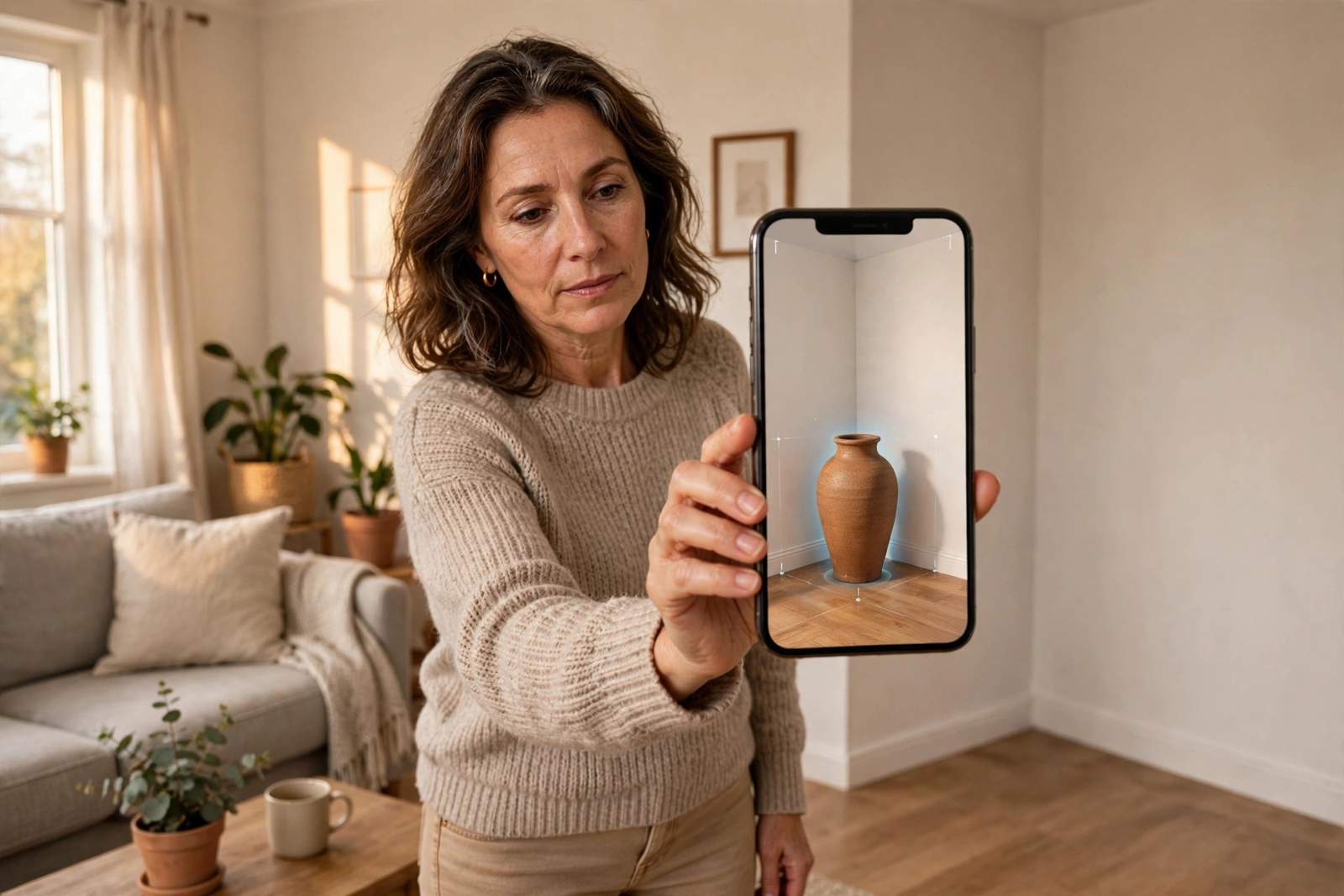
A bigger showroom would not fix this. The shopper in Queenstown will never visit it. What fixes it is putting the piece itself in the shopper's own room, at its true size, on their phone. They tap a link on the product page, point the camera at the corner, and the lamp stands there. They walk around it. They see whether it swamps the side table or sits right. The question gets answered before the buy button, not after the courier drops the box.
The customer needs no app. The AR view opens in the phone browser. That matters, because every extra step loses shoppers, and an app download is the biggest step of all.
Why NZ stores never got this before
Until recently this was a big-company toy. It needed a 3D team, months of project time, and a quote you had to negotiate. A small decor store in New Zealand does not have those things. So most stores skipped it and kept losing sales to the size question.
What ARQR360 does instead
ARQR360 is a done-for-you AR (Augmented Reality) service for independent decor stores. You send photos of your bestselling pieces and their real listed dimensions. Our designing department builds true-to-size AR (Augmented Reality) views of each piece by hand, hosts them, and hands you links and QR codes. About seven days from photos to a live set of views. No app, no 3D team, no files to manage on your side.
The service part is the point. We do not sell you software and leave you to figure it out. We build the views, we place them with you on your product pages, we follow up and fix anything that looks off. And when your store grows, we build with you: autopilot AR for the whole catalogue, custom AR pages, your own branded setup. The price is flat and public: $249 one-time setup and $29 a month, with all AR (Augmented Reality) view production included.
Where the links go
- On every product page, beside the buy button. That is where the doubt lives. A see-it-in-your-room link beside the price turns a sizing question into a two-minute answer.
- On the price tags and packaging in the shop. A QR code opens the same piece in AR. Visitors scan it, check it at home, and come back decided.
- In Instagram messages and chats. NZ shoppers buy through chat as much as through the site. An AR link in the chat answers the size question without anyone visiting the shop.
One number, and it is Shopify's own data, not ours: products with 3D or AR views convert about 94% better than products without. The mechanism is simple. Shoppers who can see the true size hesitate less, and confident shoppers buy.
One true-size view beats a showroom you cannot visit
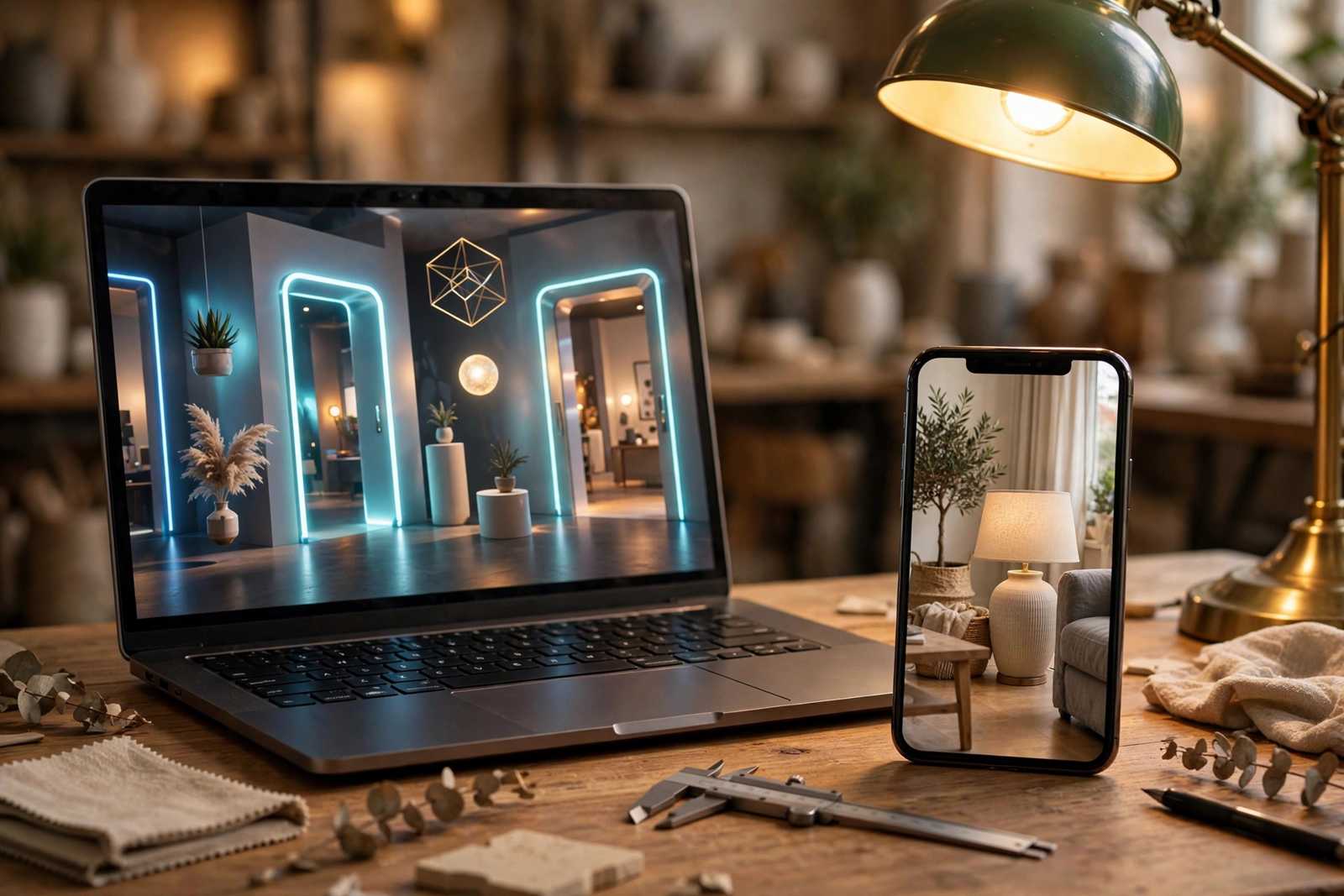
You could rebuild your whole shop as a virtual tour online. Shoppers could walk through it on their computer. It looks impressive. It does not answer the question either, because the question was never about your shop. It was always about their room. One true-size view of the actual piece, in the actual corner, on the phone they already hold. That is what closes a sale in Queenstown from a shop in Ponsonby.
For the same idea from a rug store's side of the story, read how Gulf rug stores sell to shoppers they will never meet.
The cheapest way to check if it works for your store
You do not have to commit to anything to find out. Send a photo of your bestselling lamp or mirror and we will build you one true-to-size AR (Augmented Reality) view free. Put it on your own phone, check it against the real piece, and see if your customers would use it. If it does not convince you, you have spent nothing. Try the live decor demo first: it opens in your phone browser, no install.
Selling at a distance only works when the room doubt is gone. AR for decor stores explains how a true-to-size view removes it before the piece ships.
FAQ
Do my customers need an app?
No. Each piece gets a link and a QR code that opens the AR (Augmented Reality) view in the phone browser. Try the live decor demo on your own phone.
How long before my pieces are live in AR?
About seven days from your photos arriving. Send your bestsellers first.
What does AR cost a NZ decor store?
It depends on who produces the AR views, which is the biggest cost on most routes. ARQR360 is flat and public: $249 one-time setup and $29 a month, with all AR (Augmented Reality) view production included. The first test piece is free.
Try it on your own product, free
Reply with a photo of your bestselling product and we will build you one true-to-size AR model free, to try on your own phone. No commitment.
Get my free model