How New Zealand Furniture Stores Cut Costly Returns with True-to-Size AR (Augmented Reality)
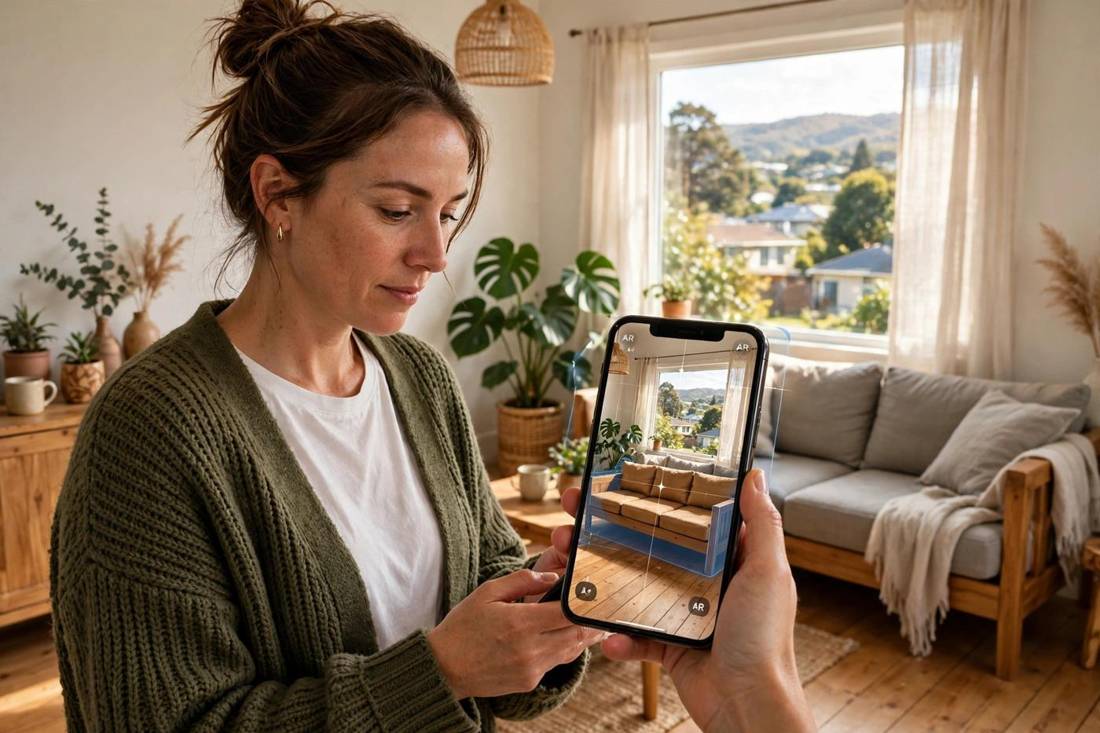
Picture a furniture store owner in Christchurch. She sells sofas, dining tables and bookshelves from one shop and a website. Her online orders reach shoppers in Auckland, Wellington, Dunedin and small towns in between. Most of those shoppers will never sit on the sofa before they buy it. They read the listed dimensions, look at the photos, and guess. When the guess is wrong, the piece comes back, and a furniture return is nothing like a returned pair of socks.
This is the plain version of why furniture comes back, and what actually cuts those returns.
Why furniture comes back
Most furniture returns are not faults. They are size. The sofa that looked right on screen is too long for the wall. The dining table crowds the room once the chairs are pulled out. The bookshelf fits the width but blocks the light switch. Photos cannot show any of that. A photo has no room around it, no doorway beside it, no rug under it. The shopper does the maths in their head, and the maths is often wrong.
For a New Zealand store, a wrong guess costs more than in a compact city market. A bulky piece travels a long way, sometimes between islands, sometimes out to a rural address. When it comes back, it travels all the way again. While it is in transit, it is not on your floor and not available to sell. When it finally arrives, it may need a clean, a touch up, or a discount before it sells again. One size return can eat the profit on several good sales.
What the shopper sees before they order
AR (Augmented Reality) changes the step where the guess happens. Each piece gets a link and a QR code that opens a true-to-size AR (Augmented Reality) view in the phone browser. No app to install. The shopper points their phone at their own room and the sofa appears there at its real size, on their own floor, against their own wall.
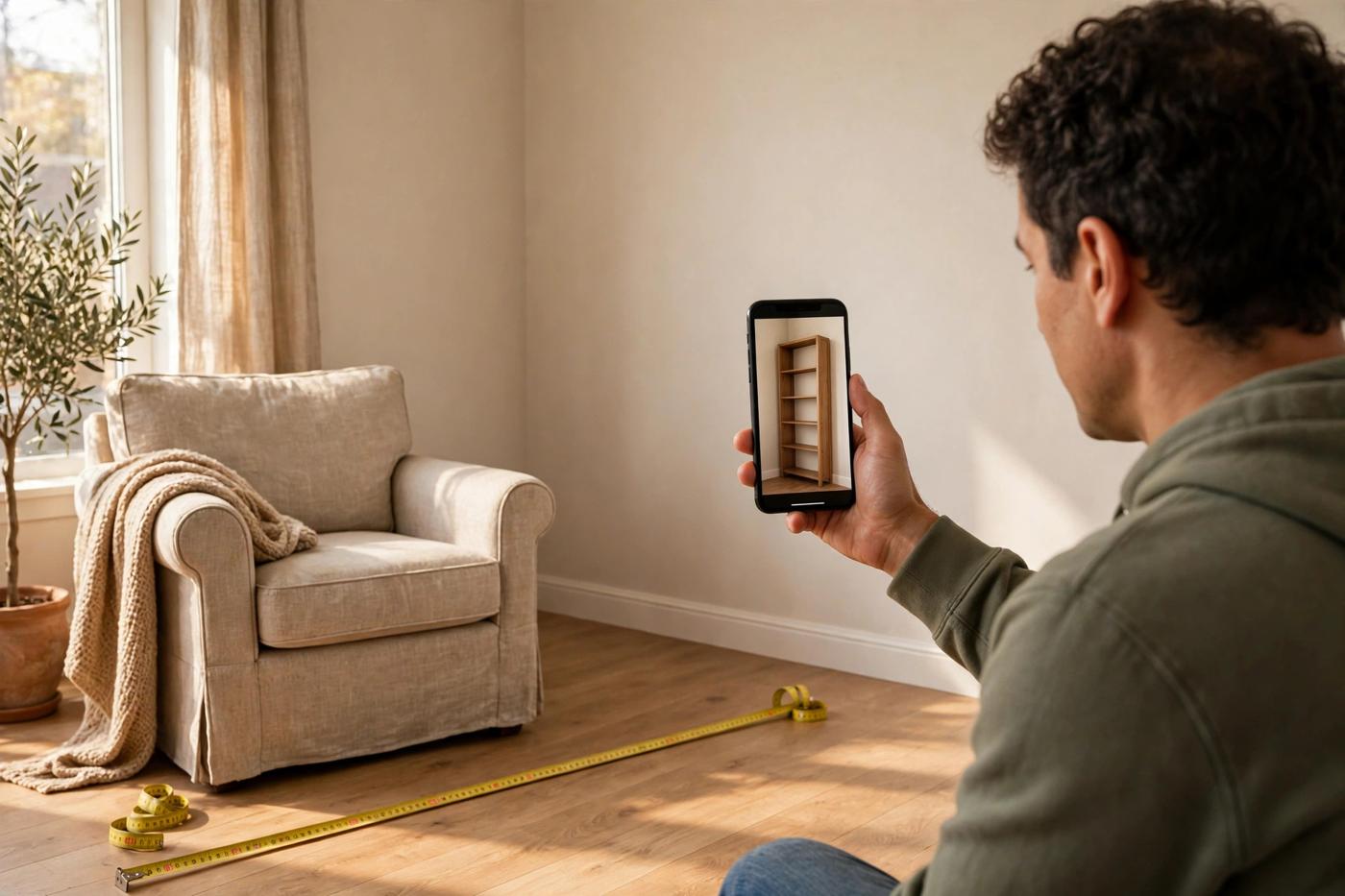
That check answers the questions a photo cannot. Does the sofa leave room to walk past it. Does the table leave room for the chairs. Does the bookshelf crowd the window. The shopper sees the answer with their own eyes, in their own room, before they pay. Shoppers who order unsure are the ones who send pieces back. Remove the doubt and a good share of the returns never leave the store.
One number worth knowing, and it is Shopify's own data, not ours: products with 3D or AR views convert about 94% better than products without. Shoppers who can check the true size hesitate less, and hesitant shoppers are the ones who guess wrong.
What changes for the store
- Fewer size returns. The buyer who saw the sofa at its true size in their own room is far less likely to be surprised on delivery day.
- Fewer will it fit messages. Staff stop answering the same sizing questions all day, because the view answers them on the product page.
- Sales that would have walked away. Some shoppers close the tab when they cannot tell if a piece fits. A true size view keeps them, because the doubt is gone.
- A calmer delivery day. When the piece arrives looking exactly like the view, the customer is ready for it. No surprise, no refusal at the door.
For New Zealand stores selling to shoppers far from the showroom, this matters even more. Read how New Zealand furniture stores sell to distant shoppers with AR for the distance side of the same story.
Where the links go
Three places do the most work. Next to the price on every product page, where sizing doubt lives. On the price tags in the shop, so visitors check pieces at home and come back decided. In Instagram posts and stories, which shoppers open on the same phone that runs the AR view.
Getting started is simple. You send product photos and your real listed dimensions. Our designing department produces the true-to-size AR (Augmented Reality) views for you. About seven days from photos to a live catalogue. ARQR360 is flat and public: $249 one-time setup and $29 a month, with all AR (Augmented Reality) view production included. No product cap, no per-view fees. Custom packages are available if your store needs something beyond the standard catalogue, and our team follows up after launch to make sure the views are working where shoppers actually see them.
The cheapest way to check before you buy
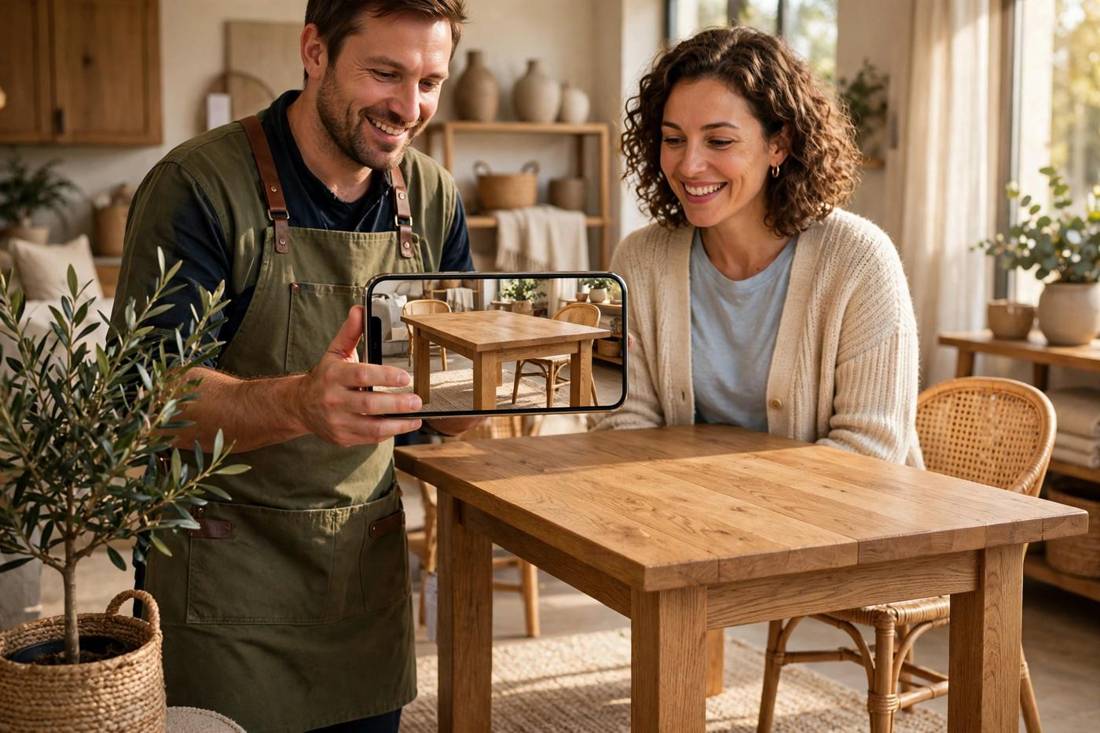
You do not have to sign anything to find out if this cuts your returns. Send a photo of your bestselling sofa or dining table and we will build you one true-to-size AR (Augmented Reality) view free. Put it on your own phone, check it against the real piece, and show it to your team. If it does not convince you, you have spent nothing. Try the live furniture demo first: it opens in your phone browser, no install.
FAQ
How does AR cut furniture returns?
Most furniture returns come from size, not faults. The buyer could not picture the listed size in their own room. AR (Augmented Reality) shows the piece at its true size in the buyer's own room, so the size guessing that causes most returns disappears.
Do my customers need an app to see my furniture in AR?
Not with ARQR360. Each piece gets a link and a QR code that opens the AR view in the phone browser. Try the live furniture demo on your own phone.
What does AR cost a small New Zealand furniture store?
ARQR360 is flat and public: $249 one-time setup and $29 a month, with all AR (Augmented Reality) view production included. No product cap, no per-view fees. The first test view is free.
Try it on your own product, free
Reply with a photo of your bestselling product and we will build you one true-to-size AR model free, to try on your own phone. No commitment.
Get my free model