How UK Decor Stores Cut Wrong-Colour Returns with AR (Augmented Reality)
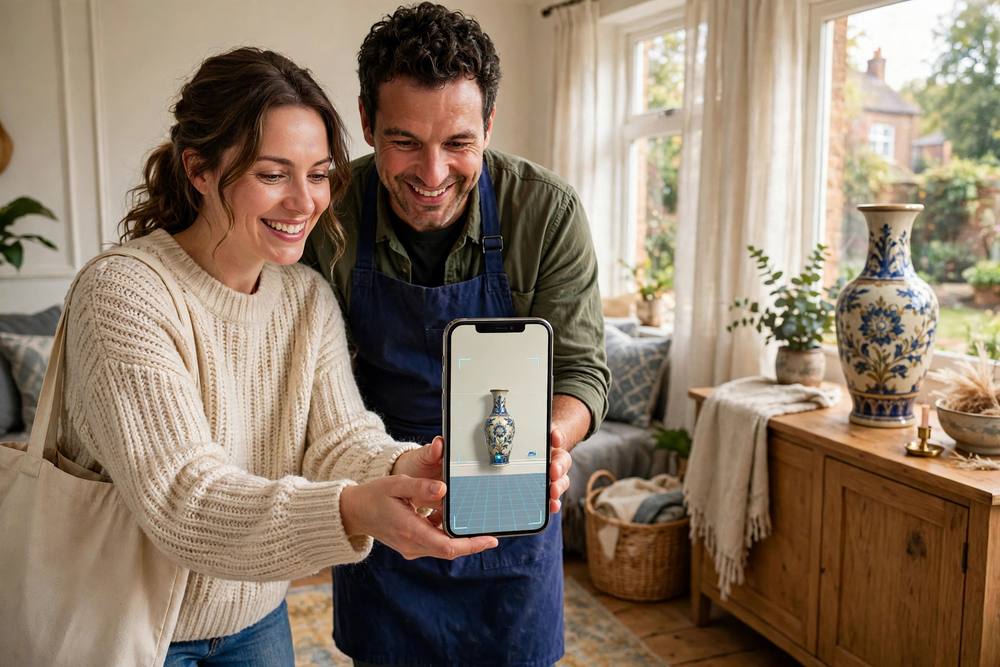
Picture a decor store owner in Brighton. She sells lamps, vases, mirrors and wall art from one shop and a website that ships across the UK. Her returns pile is not mostly wrong sizes. It is wrong colours. A terracotta vase that looked warm on screen turns orange against the customer's grey wall. A brass lamp that looked soft gold online looks yellow in a north-facing room. She cannot fix that with a better photo, because the photo is not the problem. The room is.
This is the part of the returns problem most decor stores miss. Size gets all the attention. Colour quietly sends just as many pieces back.
Why colour is the hardest thing to judge from a photo
Product photos are shot in studio light, against a plain backdrop. The customer's room has its own light, its own wall colour, its own floor and its own sofa. A photo cannot show the piece against any of that. It shows the piece against nothing.
Picture a shopper in Manchester. She buys a sage green vase for the shelf above her fireplace. On screen it looks soft and calm. Against her cream wall, in the light from her window, it reads grey and dull. The vase is fine. The match is wrong. She sends it back, and the store pays the postage both ways.
Now picture the same shopper with an AR (Augmented Reality) view. She points her phone at the shelf. The vase appears there, at its true size, against her own wall, in her own light. She sees the clash before she buys. She picks a different colour, or a different piece, and the one she orders stays.
What the AR view actually shows
The AR view is not a better photo. It is the piece placed in the room it has to live in. The shopper sees the lamp next to their own sofa. They see the mirror above their own console table. They see the vase against their own wall, under their own ceiling light. The guesswork goes, because the room in the picture is their room.
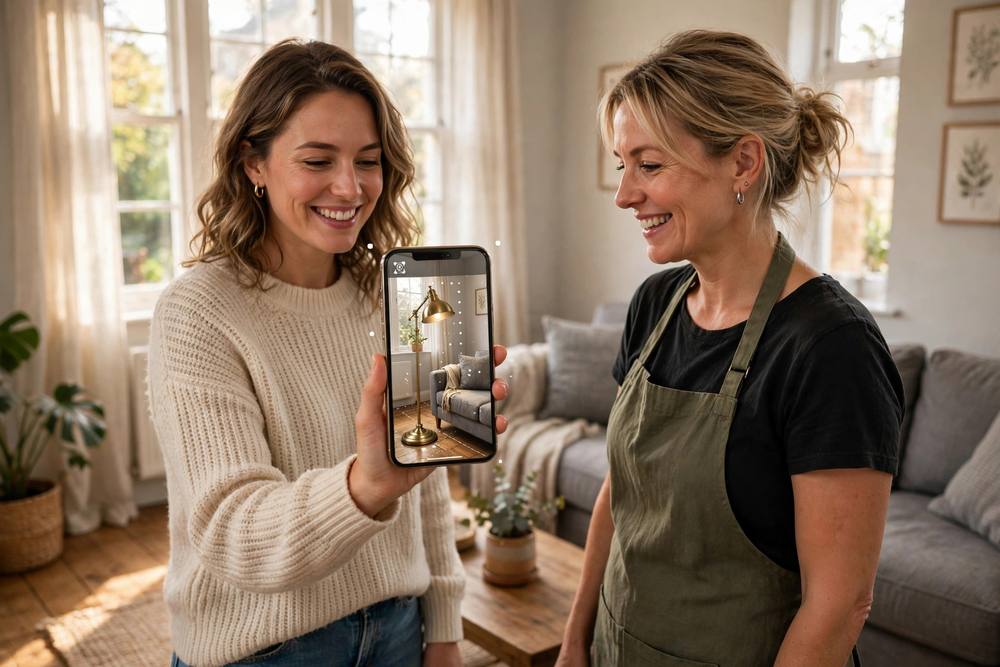
That check is what changes the sale. Shoppers who can see the piece in their own room hesitate less, and they send less back. Shopify reports that products with 3D or AR views convert about 94% better than products without. That figure comes from Shopify's own data, not from ARQR360. The mechanism is plain: shoppers who can see the true size and the true colour in their own room buy with more confidence.
Which pieces benefit most
Anything where the colour has to live next to something the shopper already owns. Lamps, vases, mirrors, wall art, planters and cushions lead the list. A wall mirror is mostly size. A vase is mostly colour. A lamp is both, because the shade changes the light in the room as well as the look of the piece.
Start with the pieces that come back most. Every decor store knows which ones they are. Put those in AR first, then work down the bestseller list. You do not need the whole catalogue on day one. Twenty proven pieces covering most of your returns teach you what customers actually do with it.
Putting it on the product page
The link belongs next to the price, where the buying decision happens. A view buried in a menu nobody opens does nothing. Put the same link on the shelf tag in the shop, as a QR code, so a browsing customer can check the piece against their own wall at home and come back decided.
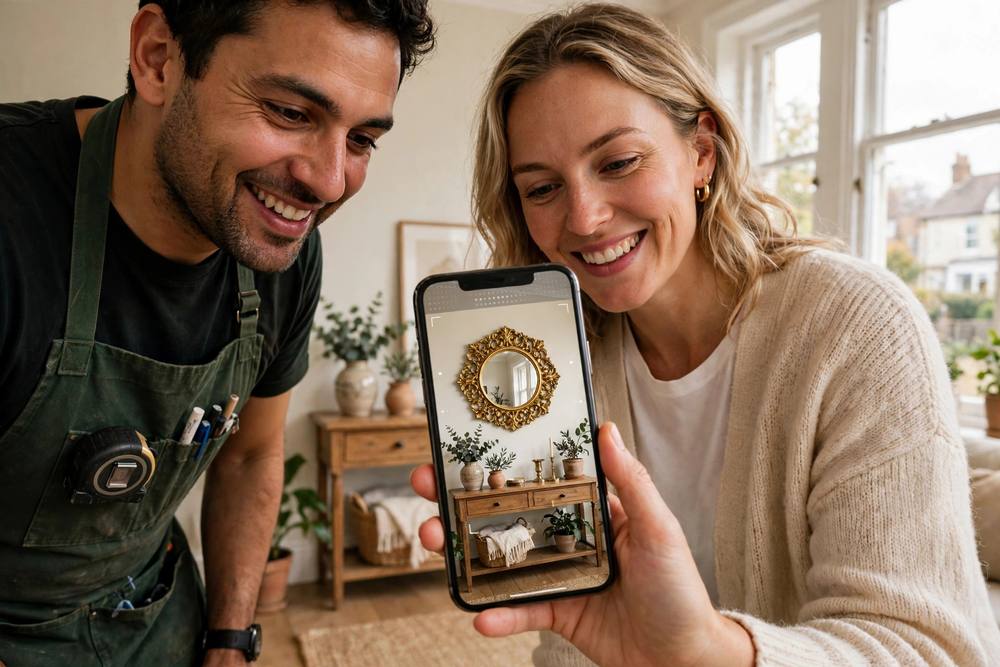
With ARQR360, the work on your side is small. You send photos of your bestselling pieces and their real listed dimensions. Our designing department produces the true-to-size AR (Augmented Reality) views, hosts them, and hands you links and QR codes that open the view in your customer's phone browser. No app. No platform to learn. About seven days from photos to a live catalogue.
For the size side of the same problem, read how UK decor stores end wrong-size returns with AR.
The cheapest way to check if it works for your store
You do not have to commit to anything to find out. Send a photo of your bestselling lamp or vase and we will build you one true-to-size AR view free. Put it on your own phone, hold it against your own wall, and see if your customers would use it. If it does not convince you, you have spent nothing. Try the live decor demo first: it opens in your phone browser, no install.
FAQ
Does AR really show the true colour of a lamp or vase?
It shows the piece against the buyer's own wall, in the light of their own room, which is the check a studio photo cannot give. The clash that causes a colour return becomes visible before the order, not after the delivery. Try the live decor demo on your own phone and hold it against your own wall.
Which decor pieces should a UK store put in AR first?
The pieces that come back most, then the bestsellers. Lamps, vases, mirrors, wall art and planters lead the list, because their colour has to live next to something the shopper already owns. Twenty proven pieces cover most of the returns.
How long before my decor pieces are live?
With ARQR360, about seven days from your photos arriving. The first test view is free, so you can check the quality against the real piece before spending anything.
Try it on your own product, free
Reply with a photo of your bestselling product and we will build you one true-to-size AR model free, to try on your own phone. No commitment.
Get my free model