How UK Decor Stores Win Christmas Sales with AR (Augmented Reality)
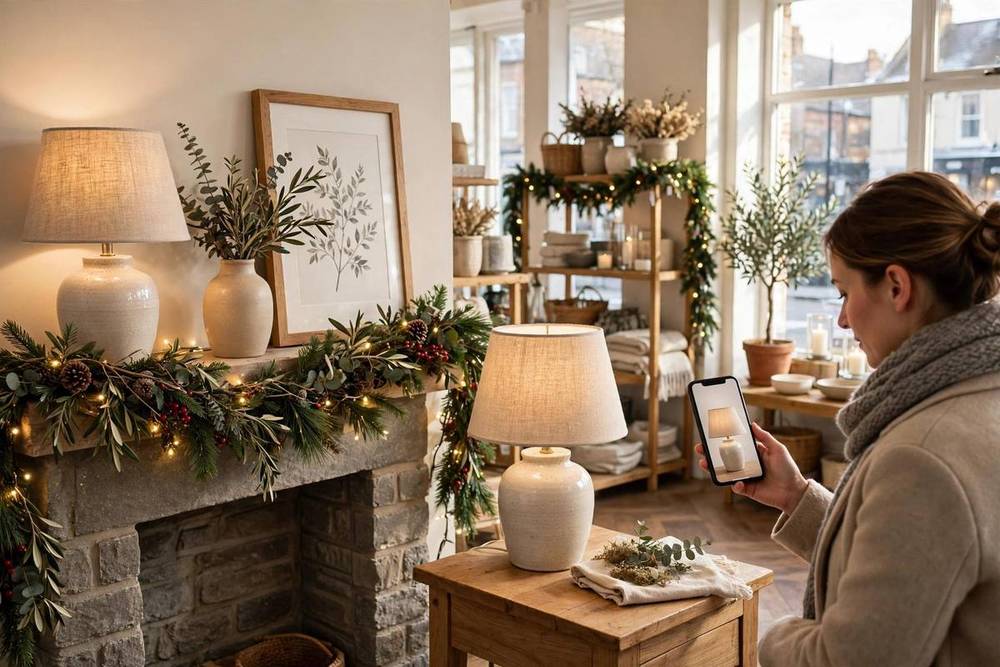
Picture a decor store owner in York. She sells table lamps, mirrors, vases and wall art from one shop and a website. November arrives and the gift shoppers arrive with it. They browse her product pages in the evening, find a lamp they like, and stop. They cannot tell if it will suit the room it is meant for, because the room is not theirs. It belongs to the person getting the gift.
That shopper is not saying no. She is saying she cannot tell yet. At Christmas the doubt is doubled. She is buying for someone else's home, from a photo, with no way to measure. Some of those shoppers buy anyway and guess wrong. Those gifts come back in January. The rest never buy at all. Both cost the store, and both are avoidable.
Why Christmas decor is hard to buy from a photo
A photo of a lamp on a white background gives the shopper nothing to measure against. No table, no wall, no familiar object. A mirror looks the same at 40cm and 80cm in a square photo. A vase could be a desk piece or a floor piece. The shopper reads the dimensions, tries to picture them, and gives up.
Gift buying makes it worse. The giver cannot walk into the recipient's living room with a tape measure. She is guessing twice: the taste and the size. When the size guess fails, the return lands in January, right when the store is quietest. A return in January costs freight both ways and a sale that looked safe in December.
What the shopper actually checks
AR (Augmented Reality) answers one question. How does this piece look at its true size, in a real room? The shopper points their phone at their own wall or side table. The lamp appears at its true size, so they can check it against furniture they already own. A mirror appears on the wall at its real width. A vase sits on the shelf at its real height. That check ends the guessing that stops so many Christmas orders.
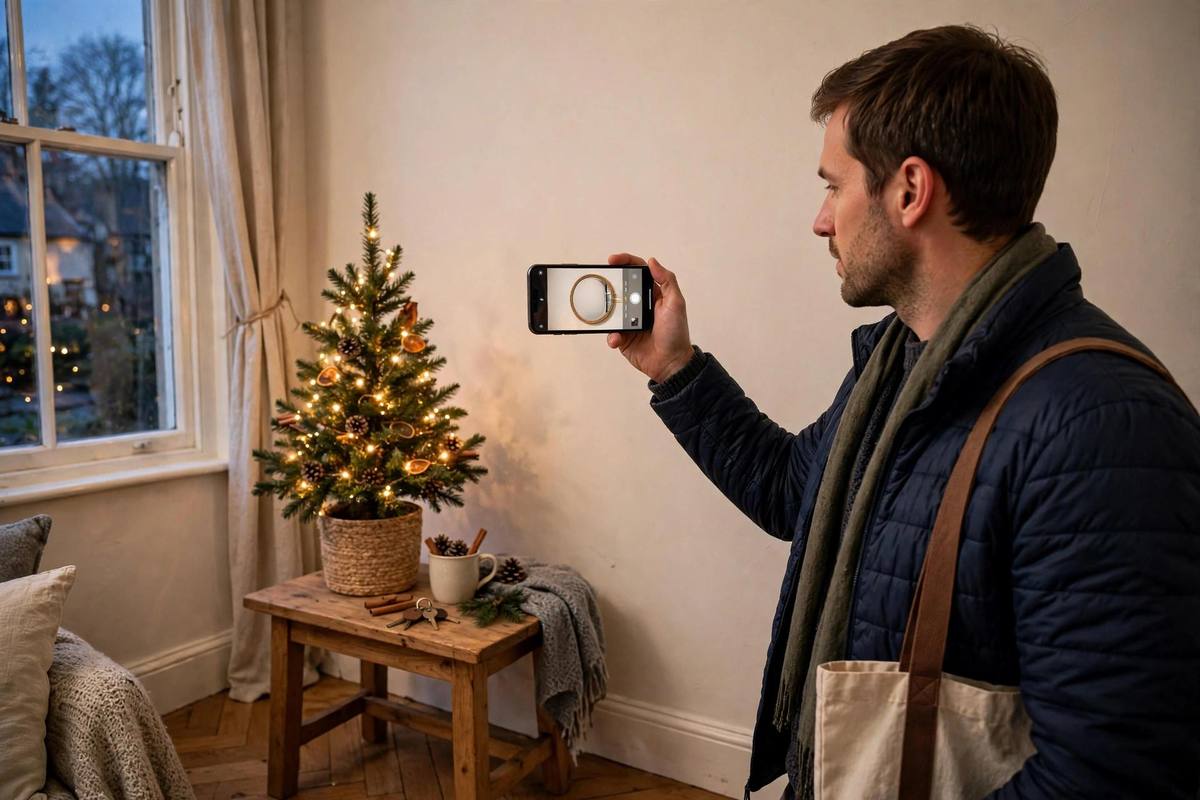
That check works best on the pieces that already get traffic. Bestsellers first. Twenty proven pieces covering most of your Christmas revenue teach you what shoppers actually do with the views, before you cover the whole catalogue.
Why the browser view gets used
Ask one question before you buy any AR route: does the shopper need to download an app? If the answer is yes, most of them will not use it. People do not install apps to check a lamp. A view that opens in the phone browser, from a link or a QR code, gets used. Test that on your own phone with our live decor demo.
One number worth knowing, and it is Shopify's own data, not ours: products with 3D or AR views convert about 94% better than products without. Shoppers who can check the true size hesitate less, and at Christmas hesitation is a lost sale.
Where the links go
- Next to the price on every product page. That is where size doubt lives. A see-it-at-true-size link beside the buy button answers the question at the moment it matters.
- On the price tags in the shop. A QR code on the tag opens the same piece in AR. Customers check it at home and come back decided, or send the link to the person they are buying for.
- In Instagram posts and stories. The link opens on a phone, which is exactly where your Christmas shoppers browse.
Who produces the views
This is where most decor stores stall. Some routes sell you a viewer only, and you supply every file yourself, usually commissioned at roughly $100 to $500 per product. For a catalogue of hundreds of pieces, that bill is the project, not the software.
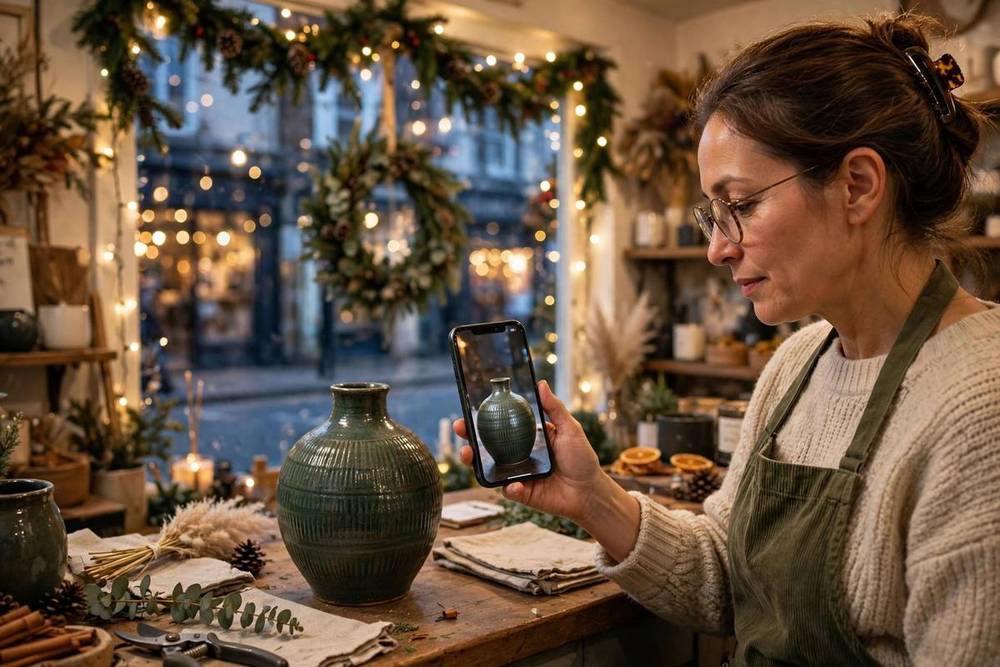
ARQR360 works the other way. You send photos and your real listed dimensions. Our designing department produces the true-to-size AR (Augmented Reality) views for you, hosts them, and hands you links and QR codes. About seven days from photos to a live catalogue. The price is flat and public: $249 one time setup and $29 a month, with all AR (Augmented Reality) view production included. No product cap, no per-view fees. Custom packages are available if your store needs something beyond the standard catalogue, and our team follows up after launch to make sure the views are working where shoppers actually see them.
For furniture stores facing the same Christmas rush, read how UK furniture stores win Christmas sales with AR.
The cheapest way to check before you buy
You do not have to sign anything to find out. Send a photo of your bestselling lamp or mirror and we will build you one true-to-size AR (Augmented Reality) view free. Put it on your own phone, check it against the real piece, and decide with the thing in front of you. If it does not convince you, you have spent nothing. Try the live decor demo first: it opens in your phone browser, no install.
FAQ
Do my customers need an app to see my decor in AR?
Not with ARQR360. Each piece gets a link and a QR code that opens the AR view in the phone browser. Try the live decor demo on your own phone.
How much does AR cost a small UK decor store?
It depends on who produces the views, which is the biggest cost on most routes. ARQR360 is flat and public: $249 one time setup and $29 a month, with all AR (Augmented Reality) view production included. The first test view is free.
How long before my Christmas pieces are live?
With ARQR360, about seven days from your photos arriving. Send your bestsellers early in the season so the gift stock is covered before the December rush, and new pieces can be added the same way as your range changes.
Try it on your own product, free
Reply with a photo of your bestselling product and we will build you one true-to-size AR model free, to try on your own phone. No commitment.
Get my free model