How UK Shoe Stores Cut Size Returns with AR (No App Needed)
Picture a shoe store owner in Leeds. She sells leather boots and trainers from one shop and a website. Every Monday, the post brings back boxes. Boots that did not fit. Trainers a half size too small. Each return costs her the postage, the inspection time, and a pair that comes back scuffed and no longer sellable at full price.
She is not alone, and the cause is not her shoes. It is the size guess. Online, a customer picks a size from a chart, hopes the brand runs true, and waits. When it does not fit, the store pays.
Why size charts do not fix it
UK shoe sizes add their own confusion. A size 7 in one brand fits like a 6 in another. A wide foot in a standard last feels a half size down. Size charts tell the customer the numbers are right, but they cannot tell her how the shoe sits on her own foot. So she orders two sizes and sends one back, or she orders one and sends it back.
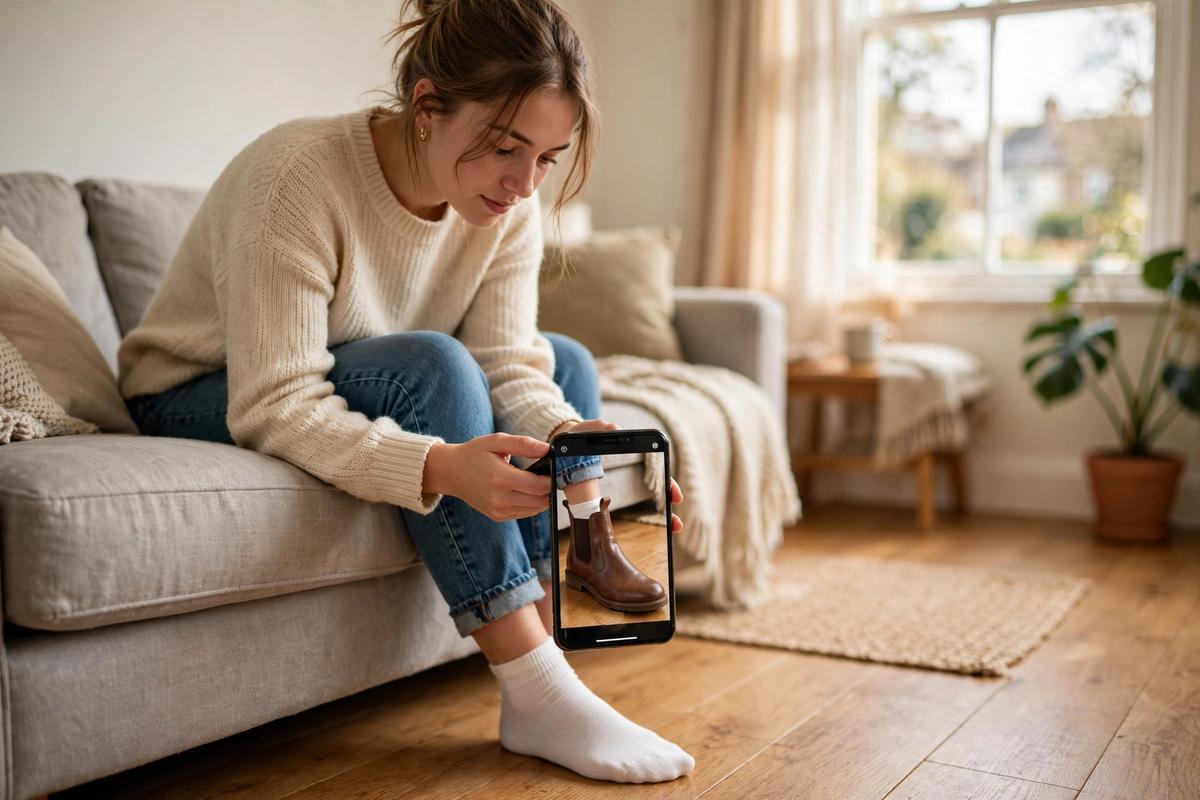
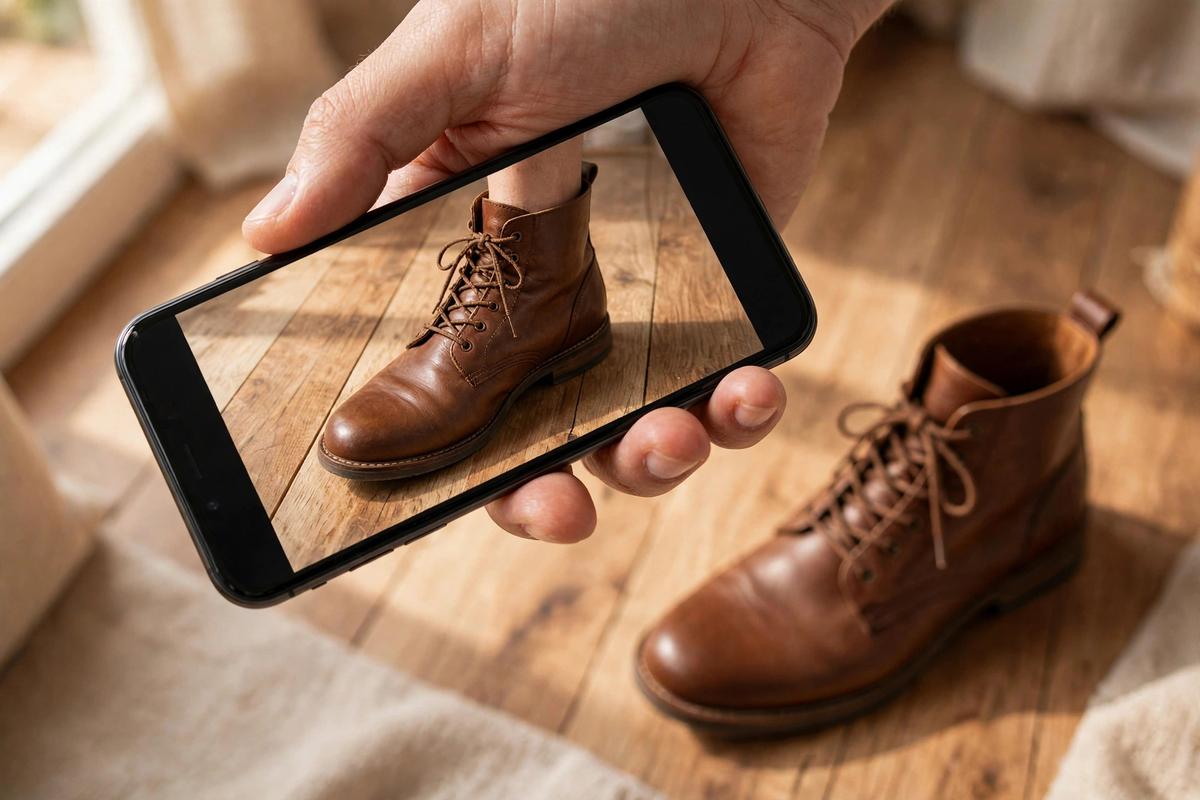
AR try-on answers the actual question. The customer points her phone at her feet and sees the shoe on her own foot, at true size, in the light of her own room. She checks the shape, the length, the look, before the buy button. The guess goes away.
What AR try-on changes for the store
Fewer size mistakes mean fewer returns. It is that direct. The customer who sees the fit before buying is the customer who keeps the box. Shopify reports that products with 3D or AR views convert about 94% better than products without. That is Shopify's own data, not ours, and it lines up with the mechanism: shoppers who can check the fit hesitate less and send fewer pairs back.
It also changes who buys. Customers who never order shoes online because of the fit gamble start ordering. That is new revenue, not just saved postage.
How a small store gets it live
There are two routes. The first is do it yourself with a viewer app. On Shopify, AR viewer apps add a 3D viewer to your product pages for a small monthly fee. But they are viewers only. You supply every 3D model yourself, usually commissioned from 3D artists at roughly $100 to $500 per product. A shoe store with 40 styles needs dozens of models. The subscription is small. The modelling bill is the project. We worked the same maths in our pricing breakdown for footwear stores.
The second route is done for you. You send photos of your bestselling shoes and their real listed dimensions. ARQR360 builds true-to-size AR (Augmented Reality) views from them, hosts them, and hands you links and QR codes. The price is flat and public: $249 one-time setup and $29 a month, with the AR (Augmented Reality) views included. About seven days from photos to a live catalogue. No 3D team, no platform to learn.
The app question
Ask every provider this before you sign: does the customer need to download an app? If the answer is yes, most of your customers will never use it. People do not install apps to look at a boot. Browser-based try-on opens from a link or a QR code in seconds. That is the version that actually gets used. Try it yourself first: our live footwear demo opens in your phone browser, no install.
What to check before you choose
- True-to-size proof: for shoes, a view even slightly off teaches the customer the tool cannot be trusted. Ask how the provider verifies scale against the real shoe.
- Who builds the models: on most routes the modelling bill, not the software, is the biggest cost. Ask what is included and what new-season stock costs.
- Total cost: add the models, the setup, and the next range. Per-model fees quietly dwarf subscriptions.
- Where the link lives: try-on buried in a menu nobody opens does nothing. The link belongs next to the price, where the buying decision happens.
For a full tour of the options, read the best AR tools for footwear stores in 2026.
The cheapest way to check if it works for your store
You do not have to commit to anything to find out. Send a photo of your bestselling shoe and we will build you one true-to-size AR (Augmented Reality) view free. Put it on your own foot, check it against the real shoe, and see if your customers would use it. If it does not convince you, you have spent nothing. Try the live footwear demo first: it opens in your phone browser, no install.
The UK picture matches the wider one: most returns are size returns. Our guide to how shoe stores cut size returns pulls the whole pattern together, with the honest limits of what AR can fix.
FAQ
Do my customers need an app to try shoes on?
No. With ARQR360, each shoe gets a link and a QR code that opens the try-on in the phone browser. Try the live footwear demo on your own phone. Some platforms run try-on inside apps, so ask before you sign.
What does AR cost a small UK shoe store?
It depends on who builds the models, which is the biggest cost on most routes. ARQR360 is flat and public: $249 one-time setup and $29 a month, with the AR (Augmented Reality) views included. The first view is free.
How long before my shoes are live in AR?
With ARQR360, about seven days from your photos arriving. On self-serve routes it depends on model turnaround plus your own integration work. Ask for a written timeline for your catalogue size before you commit.
Try it on your own product, free
Reply with a photo of your bestselling product and we will build you one true-to-size AR model free, to try on your own phone. No commitment.
Get my free model