How US Rug Stores Turn Browsers Into Buyers with True-to-Size AR (Augmented Reality)
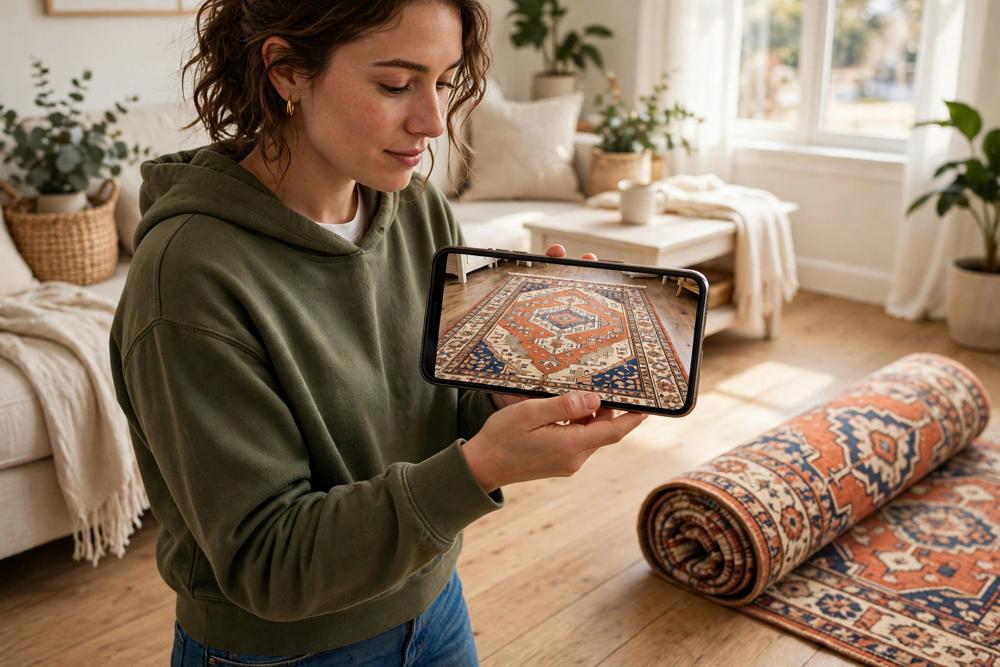
Picture a rug store owner in Denver. She sells wool rugs, runners and flatweaves from one shop and a website. Her traffic is healthy. Her product pages get looked at, her posts get saved, and her shop gets weekend visitors. Yet too many of those people leave without buying. They were not against the price. They were not against the pattern. They were unsure about one thing: how that rug would look at its real size, on their own floor.
That is the gap between a browser and a buyer. A browser likes the rug. A buyer is sure enough to pay for it. True-to-size AR (Augmented Reality) views close that gap, because they answer the size question before the order, not after the parcel arrives.
1. Why browsers leave without buying
Online rug shopping asks the customer to trust a photo. A photo flattens the rug. It cannot show how much floor a 5 by 8 really covers, how the pattern reads from the doorway, or how the colour looks in their own light. So the shopper does the safe thing. She closes the tab and thinks about it. Thinking about it usually means never coming back.
In the shop, the same doubt shows up differently. A customer unrolls a rug, likes it, and still walks out to measure at home first. She wanted one more piece of proof, and nobody gave it to her in the moment.
Size is the whole question for rugs. A rug that is even a little off in the room looks wrong, and the buyer knows it. That is why so many rug orders end as returns, and why so many more never become orders at all. For the returns side of the same story, read how US rug stores stop wrong-size returns with AR. Fewer returns and more buyers are the same job: the shopper knew the true size before the order.
2. What a browser needs before the buy button
A browser needs three things, in this order. First, the rug at its true size, not a photo that could be any size. Second, a way to see it without installing an app, because most shoppers will not install an app to check a rug. Third, a link or QR code that opens the view in the phone browser, right where they are already browsing.
That is how ARQR360 works. You send photos and your real listed dimensions. Our talented designing department produces the true-to-size AR (Augmented Reality) views for you. Each rug gets a link and a QR code that opens in the phone browser. Try it yourself with our live rug demo on your own phone. No install, no account, just the rug at its true size.
3. Put the view where the hesitation lives
A view only turns browsers into buyers if it sits where the doubt sits. That means three places.
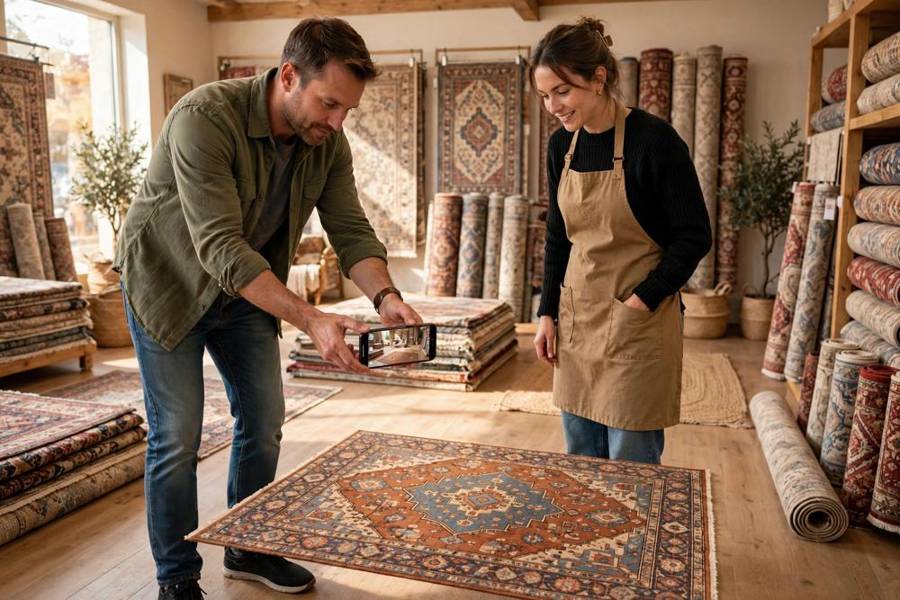
- Next to the price on every product page. That is where size doubt lives. A see-it-in-your-room link beside the buy button answers the question at the moment it matters.
- In Instagram posts and stories. The link opens on a phone, which is exactly where your shoppers browse. A saved post becomes a second look, and the second look now ends with a size check, not another closed tab.
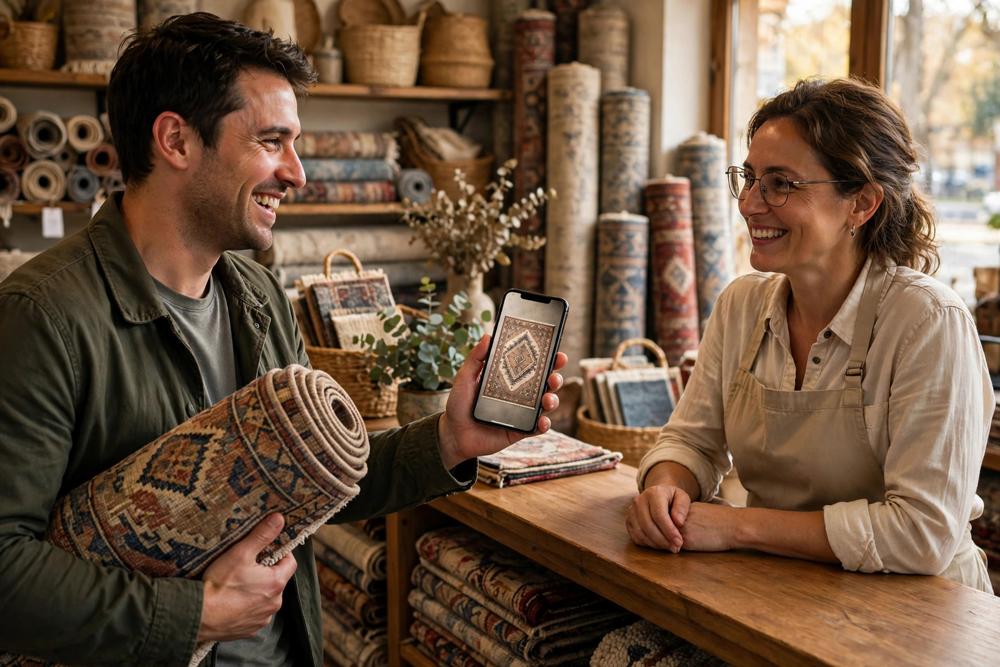
- On the price tags in the shop. A QR code on the tag opens the same rug in AR. Customers check it at home, show it to someone they trust, and come back decided.
One number worth knowing, and it is Shopify's own data, not ours: products with 3D or AR views convert about 94% better than products without. You do not need anywhere near that lift to change a month. A handful of browsers who would have closed the tab, now sure enough to buy, is the whole win.
4. What happens after launch
A view that goes live and is never checked will quietly stop working for you. New season stock arrives, product pages change, and links move. ARQR360 follows up after launch to make sure the views are working where shoppers actually see them. Custom packages are available if your store needs something beyond the standard catalogue, like a full seasonal range or a showroom set. The point of buying a service, not just software, is that someone stays with the job after the first week.
The price stays flat and public: $249 one-time setup and $29 a month, with all AR (Augmented Reality) view production included. No product cap, no per-view fees. About seven days from photos to a live catalogue.
The cheapest way to turn your own browsers into buyers
You do not have to sign anything to test this on your own traffic. Send a photo of your bestselling rug and we will build you one true-to-size AR (Augmented Reality) view free. Put it on your own phone, check it against the real rug, and put it on the product page for a week. Watch what happens to the browsers who used to leave. If it does not convince you, you have spent nothing. Start with the live rug demo first: it opens in your phone browser, no install.
FAQ
Can AR really turn browsers into buyers for a rug store?
It can when the doubt is about size. A shopper who sees the rug at its true size, on their own floor, has the proof a photo cannot give. That proof is what moves a browser from almost sure to sure enough to buy.
Do my customers need an app to see my rugs in AR?
Not with ARQR360. Each rug gets a link and a QR code that opens the AR view in the phone browser. Try the live rug demo on your own phone.
How much does AR cost a small US rug store?
ARQR360 is flat and public: $249 one-time setup and $29 a month, with all AR (Augmented Reality) view production included. No product cap, no per-view fees. The first test view is free.
Try it on your own product, free
Reply with a photo of your bestselling product and we will build you one true-to-size AR model free, to try on your own phone. No commitment.
Get my free model