What Canadian Furniture Stores Should Look for in an AR (Augmented Reality) Provider
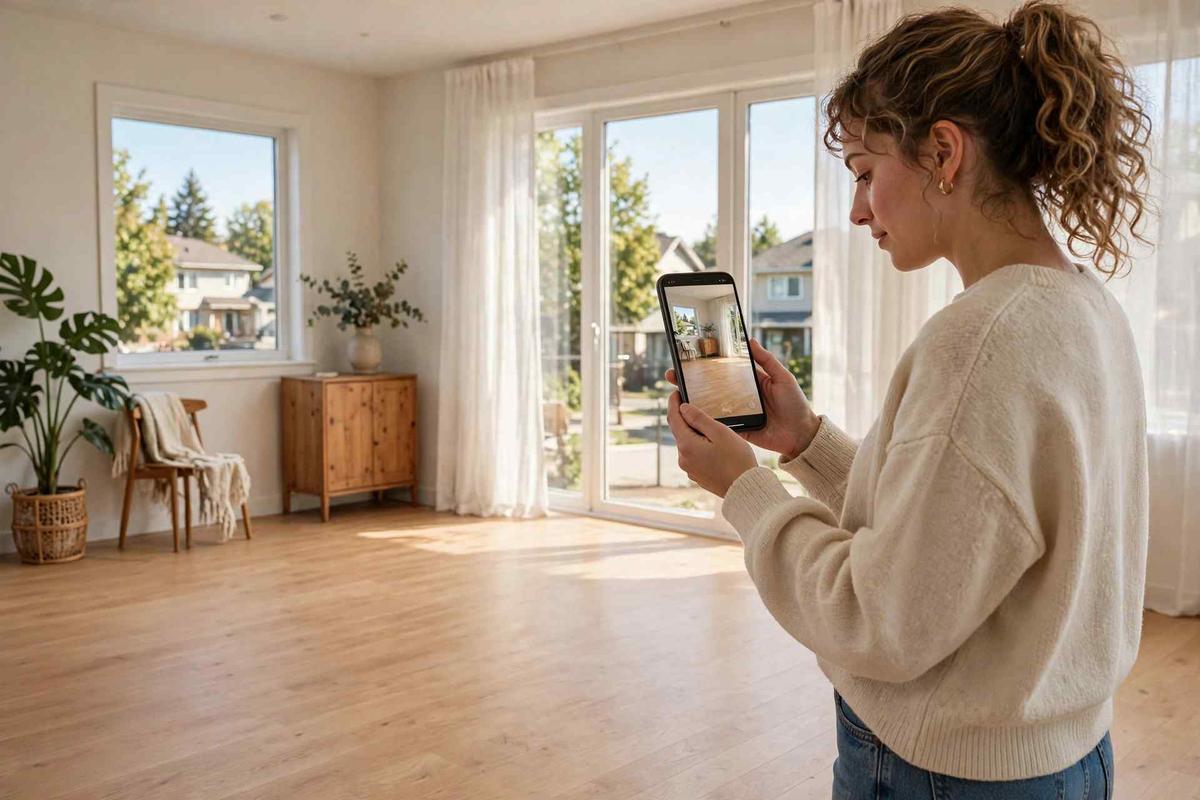
Picture a furniture store owner in Toronto. She sells sofas, beds and dining tables online and from one showroom. Her shoppers live all over Ontario, and many of them never visit the shop. They browse the photos, wonder if the sofa will fit their living room, and leave the tab open for days. She decides to look into AR (Augmented Reality) for her store, and every provider she finds sounds the same. This is the plain checklist she should use, in the order that matters.
1. True size, proved against the real piece
This is the whole point, and it is the first thing to test. A sofa that looks right but measures wrong teaches the shopper the tool cannot be trusted. Ask the provider how they check each view against the real listed dimensions of the piece. Ask to see the proof on your own phone, against a piece sitting in your showroom. If the view cannot be checked that way, it is decoration, not a buying tool.
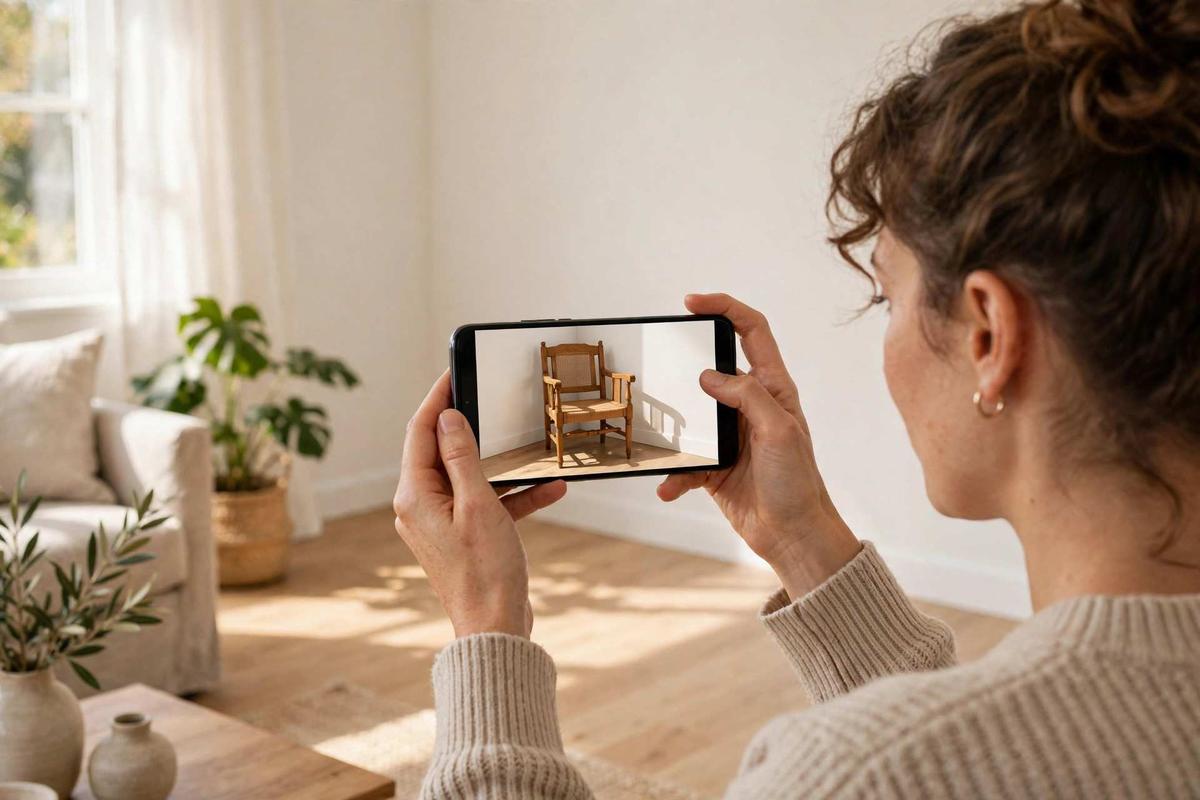
Shopify reports that products with 3D or AR views convert about 94% better than products without. That is Shopify's own data, not ours. The mechanism is plain: shoppers who can check the true size hesitate less, and shoppers who hesitate less return less.
2. No app for your shoppers
Ask this before you sign anything: does the shopper need to download an app? If the answer is yes, most of your shoppers will never use it. People do not install apps to look at a sofa. A view that opens from a link or a QR code in the phone browser gets used. A view locked inside an app gets skipped. Try it on your own phone first: our live furniture demo opens in the browser with no install, and that is the standard to hold every provider to.
3. Who does the work, and what do they need from you
Some AR routes hand you software and leave the hard part to you. You supply the views, you learn the platform, you keep it working. That is the right shape for a store with a digital team. It is a heavy shape for a shop with a small staff and a busy floor.
The done-for-you shape is different. You send photos of your bestselling pieces and their real listed dimensions. Our talented designing department produces the true-to-size AR (Augmented Reality) views, hosts them, and hands you links for your product pages and QR codes for the showroom floor. About seven days from photos to a live catalogue. There is nothing to integrate and nothing to maintain on your side.
4. The full cost, not just the monthly fee
Ask for the full annual cost in writing, including view production for new stock. On many routes the monthly fee is small and the view production bill is the whole project. ARQR360 is flat and public: $249 one-time setup and $29 a month, with all AR (Augmented Reality) view production included. No product cap, no per-view fees. If your store needs something beyond the standard catalogue, custom packages are available, priced plainly before any work starts.
5. What happens after launch
A catalogue that goes live and is never checked again slowly stops working. Links move, pages change, new stock arrives without views. Ask who follows up after launch. Our team follows up after launch to make sure the views are working where shoppers actually see them, on the product pages and in the showroom, and to help you add new pieces as they arrive. That follow-up is part of the service, not an extra you have to chase.
Put it where shoppers decide
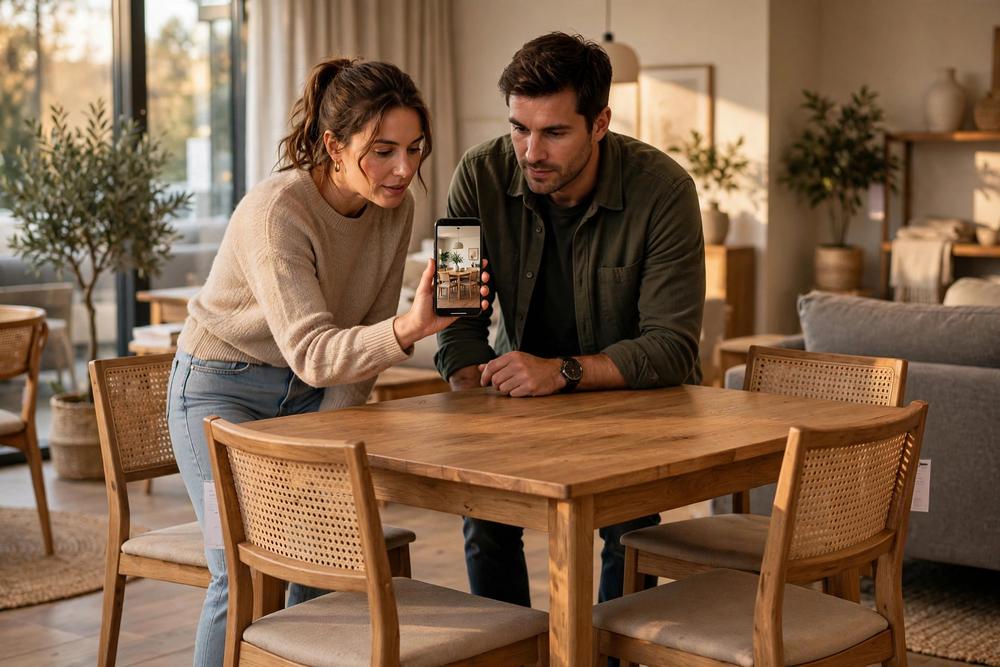
A view buried in a menu nobody opens does nothing. The link belongs next to the price, where the buying decision happens. The QR code belongs on the floor model, so a shopper browsing in your store can check the fabric at home and come back decided. Bestsellers first is enough. Twenty proven pieces covering most of your revenue will teach you what your shoppers actually do with it, and the rest of the catalogue can follow.
For the returns side of the same story, read how Canadian furniture stores cut returns with AR.
The cheapest way to check before you buy
You do not have to sign anything to find out. Send a photo of your bestselling sofa or armchair and we will build you one true-to-size AR (Augmented Reality) view free. Put it on your own phone, check it against the real piece, and see if your shoppers would use it. If it does not convince you, you have spent nothing. Try the live furniture demo first: it opens in your phone browser, no install.
FAQ
How do I check if an AR view is truly true to size?
Ask the provider how each view is checked against the real listed dimensions, then test it yourself: open the view on your phone next to the real piece in your showroom. With ARQR360, that check is the free test view. Send a photo of your bestseller and compare the view against the real piece before you spend anything.
Do my shoppers need an app to see my furniture in AR?
No, not with ARQR360. Each piece gets a link and a QR code that opens the AR (Augmented Reality) view in the phone browser. Try the live furniture demo on your own phone. If another provider needs an app installed, ask how many shoppers actually complete that step.
What does AR cost a Canadian furniture store?
It depends on who produces the views, which is the biggest cost on most routes. ARQR360 is flat and public: $249 one-time setup and $29 a month, with all AR (Augmented Reality) view production included. The first test view is free, and custom packages are available for stores that need more than the standard catalogue.
Try it on your own product, free
Reply with a photo of your bestselling product and we will build you one true-to-size AR model free, to try on your own phone. No commitment.
Get my free model