What European Rug Stores Should Ask Before Buying AR (Augmented Reality)
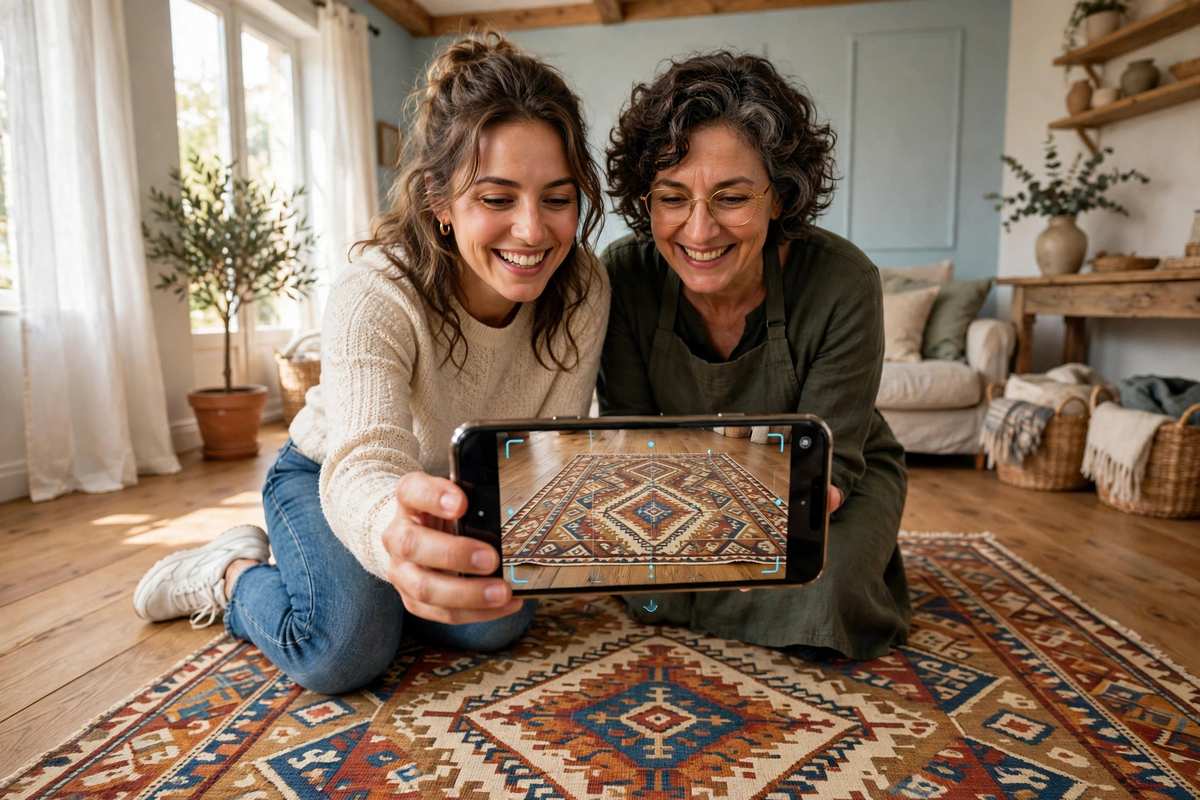
Picture a rug store owner in Lyon. She sells Persian rugs, Turkish kilims and flatweaves from one showroom and a website that ships across Europe. Her product pages get steady traffic from France, Germany and the Netherlands. Visitors zoom in on the photos, read the dimensions, then close the tab. The rug sits unsold. She is ready to put AR (Augmented Reality) on her product pages, and the quotes she has received do not look like they describe the same product. Here is the checklist that cuts through them, written for a European rug store.
It comes down to five questions. Who produces the views. Whether the shopper needs an app. How true size is proven. What one year really costs. And what happens when stock changes. Ask all five in writing before you sign anything.
1. Who produces the views, and from what
Start here, because everything else follows. Ask the vendor a plain question: who makes the AR views of my rugs, and what do they start from?
On some routes, you supply the files yourself. The vendor sells a viewer, you commission the files from artists, and you manage the whole pipeline. For a rug store, that means a file for every size and colourway of every design. The bill for the files is the project, not the software.
On the done-for-you route, you send photos and your real listed dimensions, and the vendor produces the true-to-size AR (Augmented Reality) views. ARQR360 works this way. Our designing department produces the views for you, from your photos, with new season stock handled the same way. When you compare quotes, compare the full job: views plus viewer plus hosting, not the monthly fee alone.
Ask one more thing inside this question: who updates a view when the rug changes. A design that comes back in a new colourway needs a new view. Ask whether that is included or billed per piece.
2. Does the shopper need an app
Ask before you sign: does the customer need to download an app to open the view? If the answer is yes, most of them will not use it. People do not install apps to check a rug. A view that opens in the phone browser, from a link or a QR code, gets used. Test that on your own phone with our live rug demo.
This matters more in Europe than most vendors admit. Your shoppers sit in different countries, on different phones, on different networks. A browser link works the same in Lyon, Berlin and Amsterdam. An app has to be found, installed and trusted first, and every extra step loses shoppers.

3. How is true size proven
For rugs, size is the whole question. A rug that shows even a little too big or too small teaches the customer the tool cannot be trusted. Ask the vendor how they check every view against the real listed dimensions, and what happens when a view is off. A serious answer names a process. A vague answer is the answer.
Ask too what the shopper actually sees. The honest promise for rugs is size and look in the room: the rug at its true size, on the shopper's own floor, next to their sofa and their coffee table, so they can see whether it fits the room before they order. That is what ends the size guessing that stops so many orders and causes so many returns. We worked the returns side in how European rug stores cut size returns with AR.
4. What does one year actually cost, in euros
Get the quote in writing for your full catalogue, for one year, with everything included, and ask for the number in euros with VAT stated. The monthly fee is usually the smallest line. The rest is per-product production fees, per-view charges that grow with your traffic, setup fees, and the cost of new season stock. A quote that will not put that number in writing is a quote you cannot compare.
For reference, ARQR360 is flat and public: $249 one-time setup and $29 a month, with all AR (Augmented Reality) view production included. About seven days from photos to a live catalogue. No product cap, no per-view fees. Custom packages are available if your store needs something beyond the standard catalogue, and our team follows up after launch to make sure the views are working where shoppers actually see them.
5. What happens when stock changes
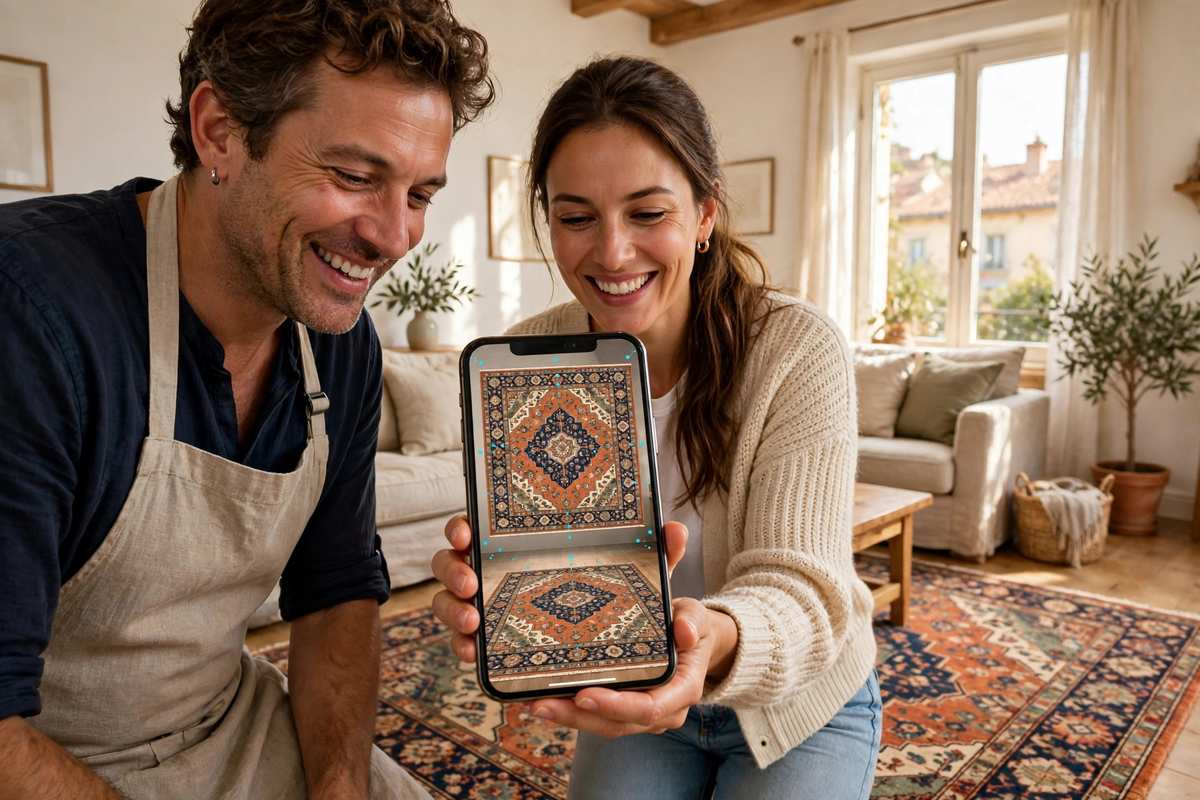
European rug stores turn stock over fast. One-off vintage pieces sell and never come back. New containers land every season. Ask the vendor what happens in both cases. Does a sold piece come down on its own, or does the link keep showing a rug you no longer hold? Does a new arrival get a view in days, or does it wait for the next quarterly batch?
With ARQR360, new stock follows the same route as the first batch: send the photos and the real dimensions, and our designing department produces the views. The link and QR code for a piece stay with that piece, so a sold rug stops being offered and a new rug gets its own view.
One more question worth asking any vendor, and it matters under European privacy rules: what data does the view collect from my shoppers? A browser link that opens a view and collects nothing is the simplest answer. If a vendor needs shopper accounts, tracking or app installs, ask what data is kept and where it is stored, in writing.
Where the links go
- Next to the price on every product page. That is where size doubt lives. A see-it-at-true-size link beside the buy button answers the question at the moment it matters.
- On the price tags in the showroom. A QR code on the tag opens the same rug in AR. Customers check it at home and come back decided.
- In Instagram posts and stories. The link opens on a phone, which is exactly where your shoppers browse. A follower who can check the size in their own room is a follower who can order without a trip to the shop.
One number worth knowing, and it is Shopify's own data, not ours: products with 3D or AR views convert about 94% better than products without. Shoppers who can check the true size hesitate less.
Christmas is the busiest season for European rug stores, and it is also the season of wrong-size returns. A shopper who checks the rug at true size on their own floor in November is a shopper who does not send it back in January.
The cheapest way to check before you buy
You do not have to sign anything to run the checklist. Send a photo of your bestselling rug and we will build you one true-to-size AR (Augmented Reality) view free. Put it on your own phone, check it against the real rug, and test your five questions against the actual thing. If it does not convince you, you have spent nothing. Try the live rug demo first: it opens in your phone browser, no install.
FAQ
What should a European rug store ask before buying AR?
Five things, in writing: who produces the AR views and from what source material, whether the shopper needs an app, how true size is proven, the full one-year price in euros with VAT, and what happens when stock changes. The answers tell you more than any feature list.
Do my customers need an app to see my rugs in AR?
Not with ARQR360. Each rug gets a link and a QR code that opens the AR view in the phone browser, the same in every European country. Try the live rug demo on your own phone.
How much does AR cost a small European rug store?
It depends on who produces the views, which is the biggest cost on most routes. ARQR360 is flat and public: $249 one-time setup and $29 a month, with all AR (Augmented Reality) view production included. The first test view is free. We also worked the full payback maths in the payback maths for a small rug store.
Try it on your own product, free
Reply with a photo of your bestselling product and we will build you one true-to-size AR model free, to try on your own phone. No commitment.
Get my free model