What US Rug Stores Should Look for in an AR (Augmented Reality) Provider
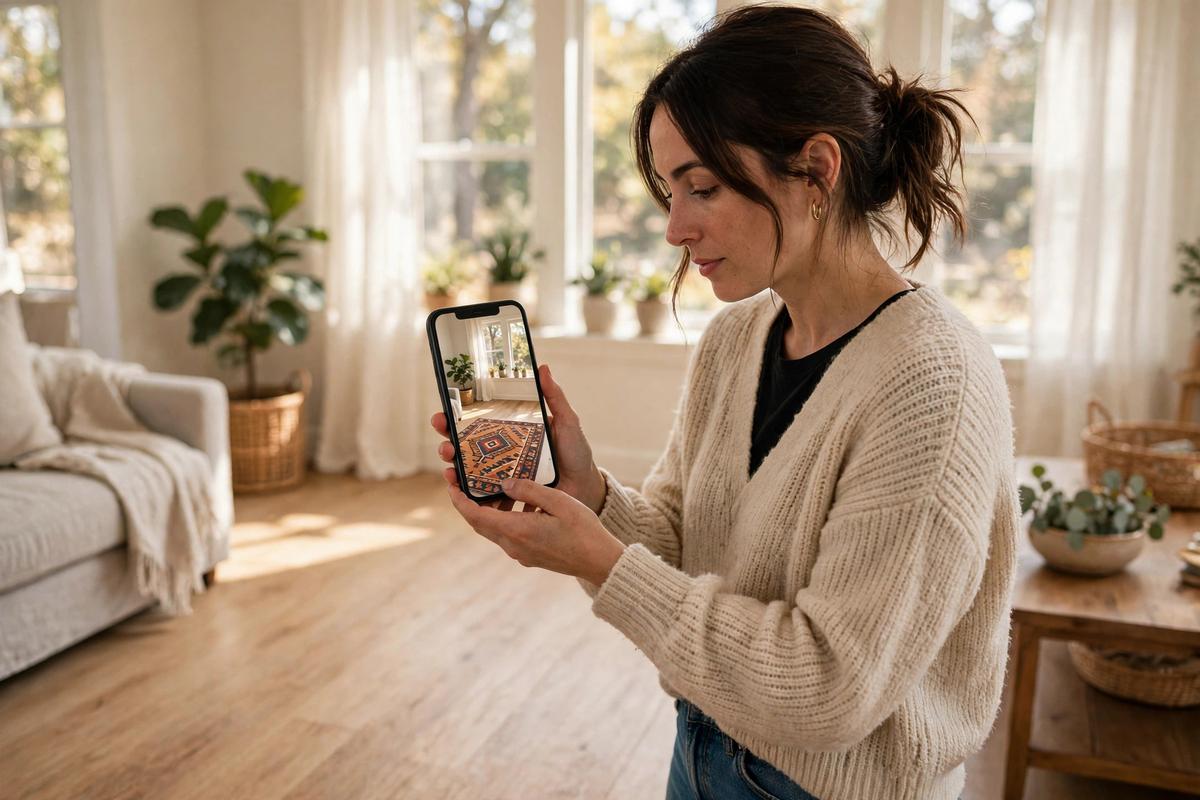
Picture a rug store owner in Dallas. She sells wool rugs, hand knotted rugs and flatweaves online and from one showroom. Most of her website visitors live in other states. They browse the photos, wonder if the rug will fit under their sofa, and leave. She starts looking for an AR (Augmented Reality) provider, and every website sounds the same. Here is what to actually look for, in plain terms, before you sign anything.
1. True size, proven against your real dimensions
Start here, because size is the whole question for rugs. A rug that is even a few inches off teaches the shopper the tool cannot be trusted. Look for a provider who checks every view against the real listed dimensions of your rugs, and who can say plainly what happens when a rug is off. A serious answer names a process. A vague answer is the answer.
Look at pattern scale too. A rug is not just a rectangle. The shopper needs to see the pattern at its real scale, not stretched or shrunk to fill a space. If the border looks wrong on screen, the rug will look wrong in the room, and the order comes back.
2. No app for the shopper
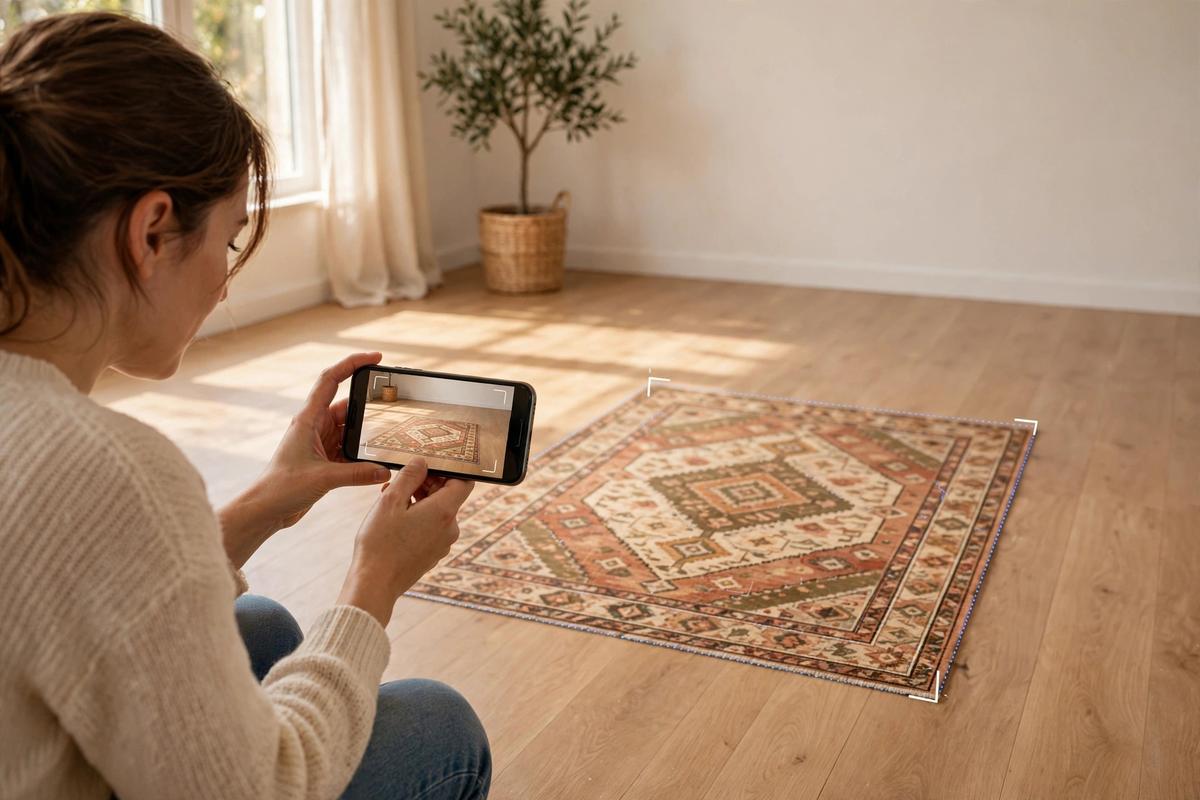
Look for a view that opens in the phone browser, from a link or a QR code. If the customer must download an app to see your rug, most of them will not. People do not install apps to look at rugs. A browser view gets used. Test that on your own phone with our live rug demo. It opens in the browser with no install.
3. A provider who does the work for you
Look at who produces the views, and what they start from. On some routes, you supply the files yourself and manage the whole pipeline. That is a project, not a purchase, and it suits a store with a digital team. On the done for you route, you send photos and your real listed dimensions, and the provider produces the views.
That second route is how ARQR360 works. You send photos of your bestselling rugs and their real listed dimensions. Our talented designing department produces true to size AR (Augmented Reality) views from them, hosts them, and hands you links and QR codes that open the view in your customer's phone browser. No app. No files to manage on your side.
4. The full one year price, in writing
Look for a quote for your full catalogue, for one year, with everything included. The monthly fee is usually the smallest line. The rest is per product production fees, per view charges that grow with your traffic, setup fees, and the cost of new season stock. A quote that will not put that number in writing is a quote you cannot compare.
For reference, ARQR360 is flat and public: $249 one time setup and $29 a month, with all AR (Augmented Reality) view production included. About seven days from photos to a live catalogue. No product cap, no per view fees. Custom packages are available if your store needs something beyond the standard catalogue, and our team follows up after launch to make sure the views are working where shoppers actually see them.
5. Support after launch
Look for a provider who stays after the views go live. Who checks that the links still work when you add new rugs. Who fixes a view when a listing changes. Who answers when a shopper says the rug looked different on their phone. A provider that disappears after launch leaves you holding a catalogue you cannot maintain.
ARQR360 follows up after launch. We check the views are working where shoppers actually see them, on the product pages, in the shop, and on social media. If your store needs something custom, a branded AR page or extra features built your way, our team builds it as a custom package.
6. Where the links go
- Next to the size on every product page. That is where size doubt lives. A see it at true size link beside the dimensions answers the question at the moment it matters.
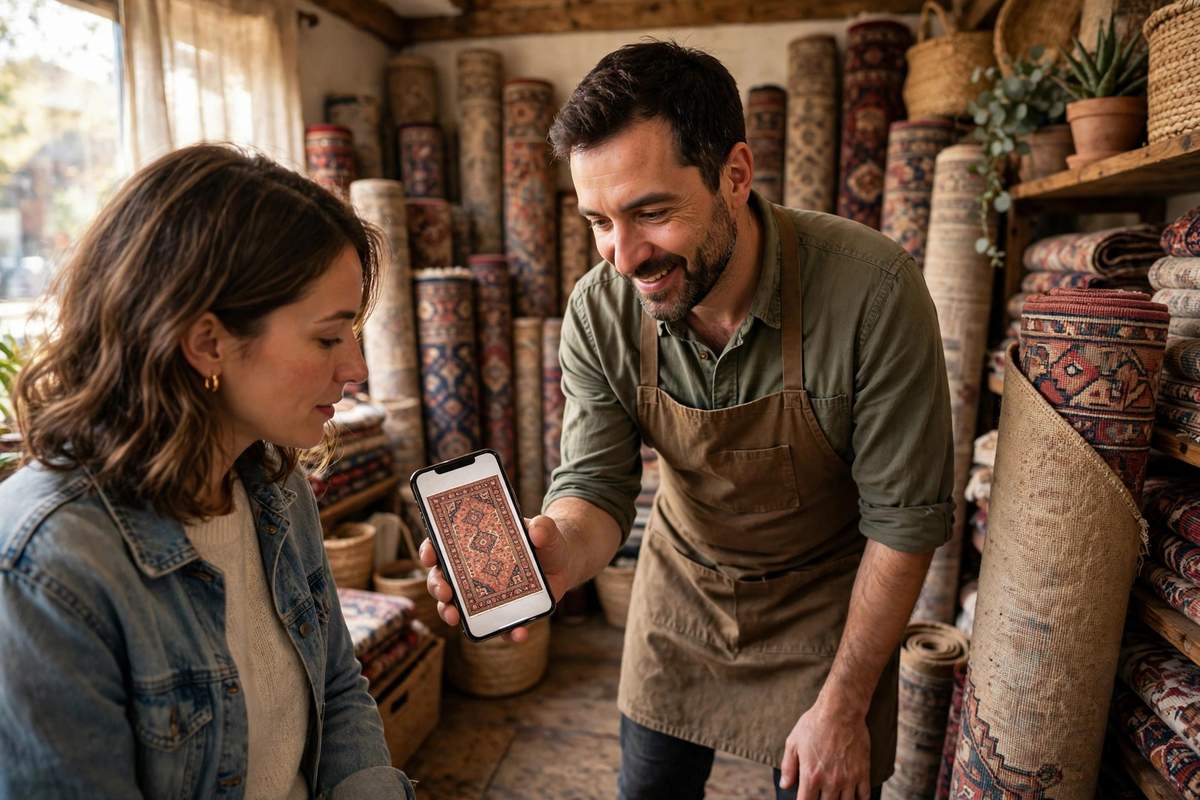
- On the swing tag in the shop. A QR code on the tag opens the same rug in AR. Customers check it at home and come back decided.
- In Instagram posts and stories. The link opens on a phone, which is exactly where your shoppers browse.
One number worth knowing, and it is Shopify's own data, not ours: products with 3D or AR views convert about 94% better than products without. Shoppers who can check the true size hesitate less.
For the returns side of the same story, read how US rug stores stop paying for wrong size returns with AR.
The cheapest way to check before you buy
You do not have to sign anything to run this checklist. Send a photo of your bestselling rug and we will build you one true to size AR (Augmented Reality) view free. Put it on your own phone, check it against the real rug, and test every point above against the actual thing. If it does not convince you, you have spent nothing. Try the live rug demo first: it opens in your phone browser, no install.
FAQ
What should a US rug store look for in an AR provider?
Six things, in writing: how true size is proven for each rug, whether the shopper needs an app, who produces the views and from what source material, the full one year price for your catalogue including production, support after launch, and where the links and QR codes actually go. The answers tell you more than any feature list.
Do my customers need an app to see my rugs in AR?
Not with ARQR360. Each rug gets a link and a QR code that opens the AR view in the phone browser. Try the live rug demo on your own phone.
How much does AR cost a small rug store?
It depends on who produces the views, which is the biggest cost on most routes. ARQR360 is flat and public: $249 one time setup and $29 a month, with all AR (Augmented Reality) view production included. The first test view is free.
Try it on your own product, free
Reply with a photo of your bestselling product and we will build you one true-to-size AR model free, to try on your own phone. No commitment.
Get my free model