The Best AR Tools for Rug Stores in 2026
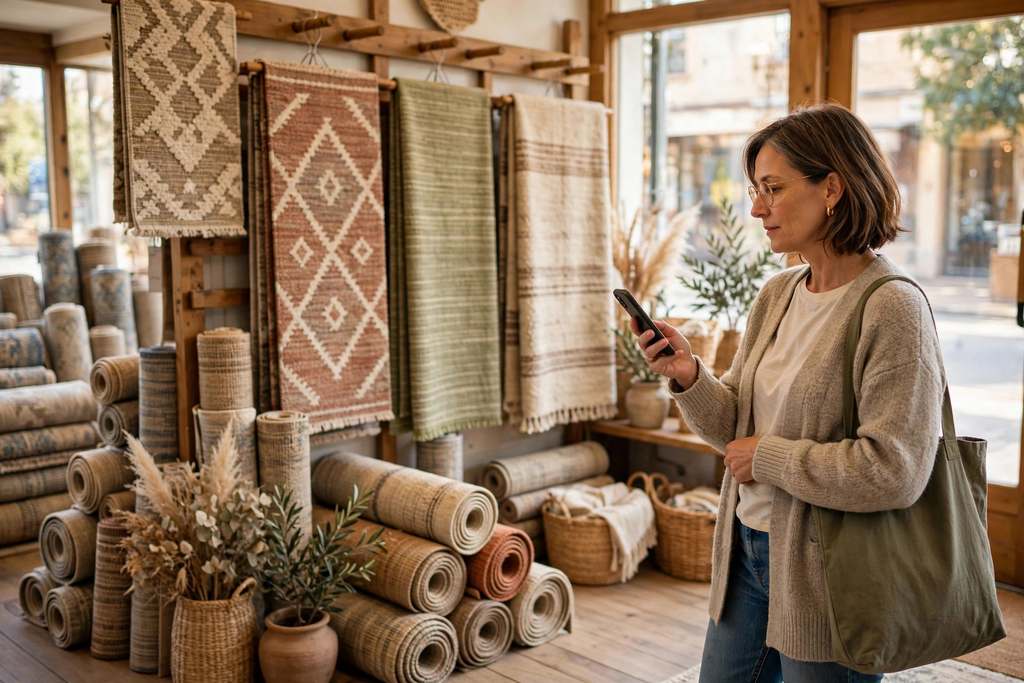
Picture a rug store owner in Denver. She sells handmade and machine-made rugs, from small runners to big 12x15 statement pieces. Her website gets steady traffic. Visitors open a rug page, zoom into the pattern, read the size guide, then close the tab. The rug sits unsold.
The problem is not the rug. It is the one question a flat photo cannot answer. Will this rug actually work in my room. A rug two inches too narrow looks wrong the moment it unrolls. A pattern that is perfect online can fight with the sofa in real life. Customers know this, so they hesitate.
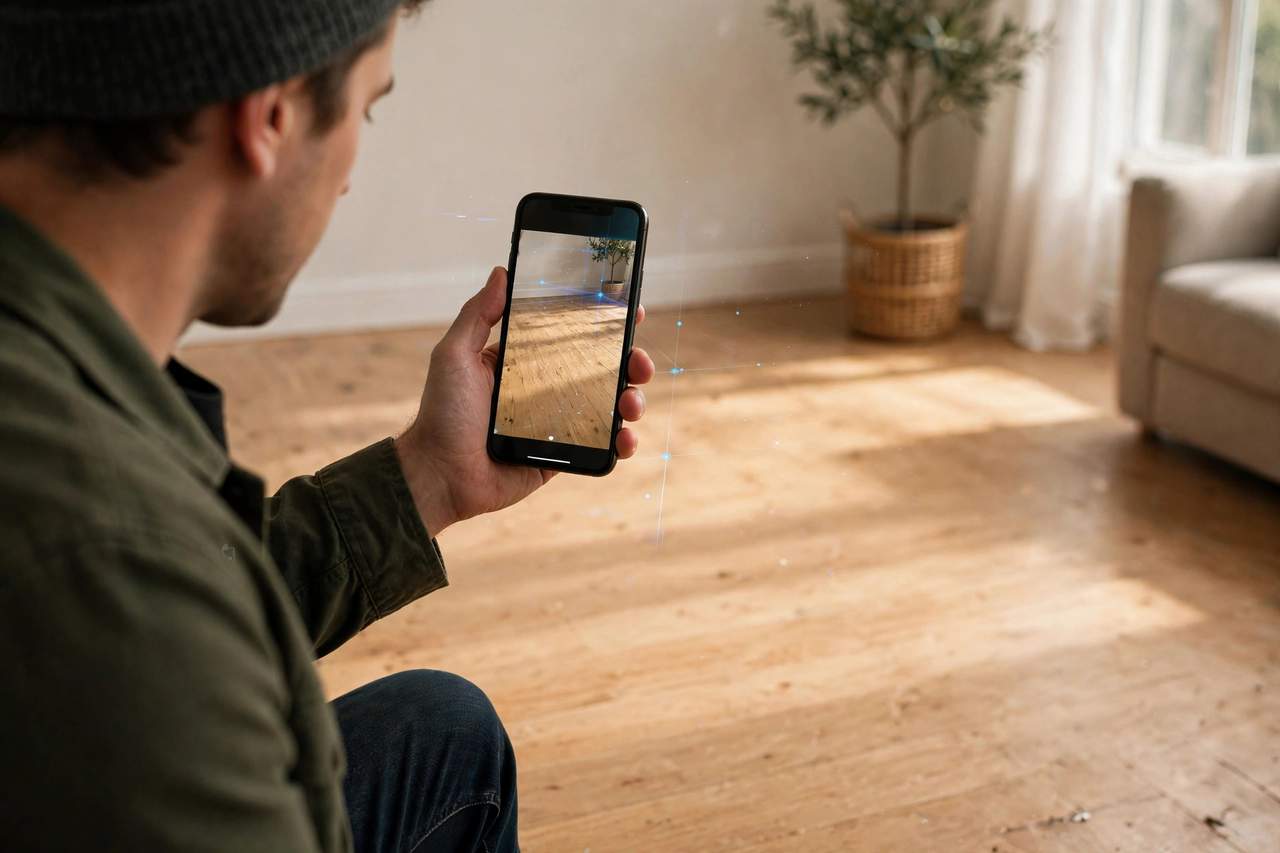
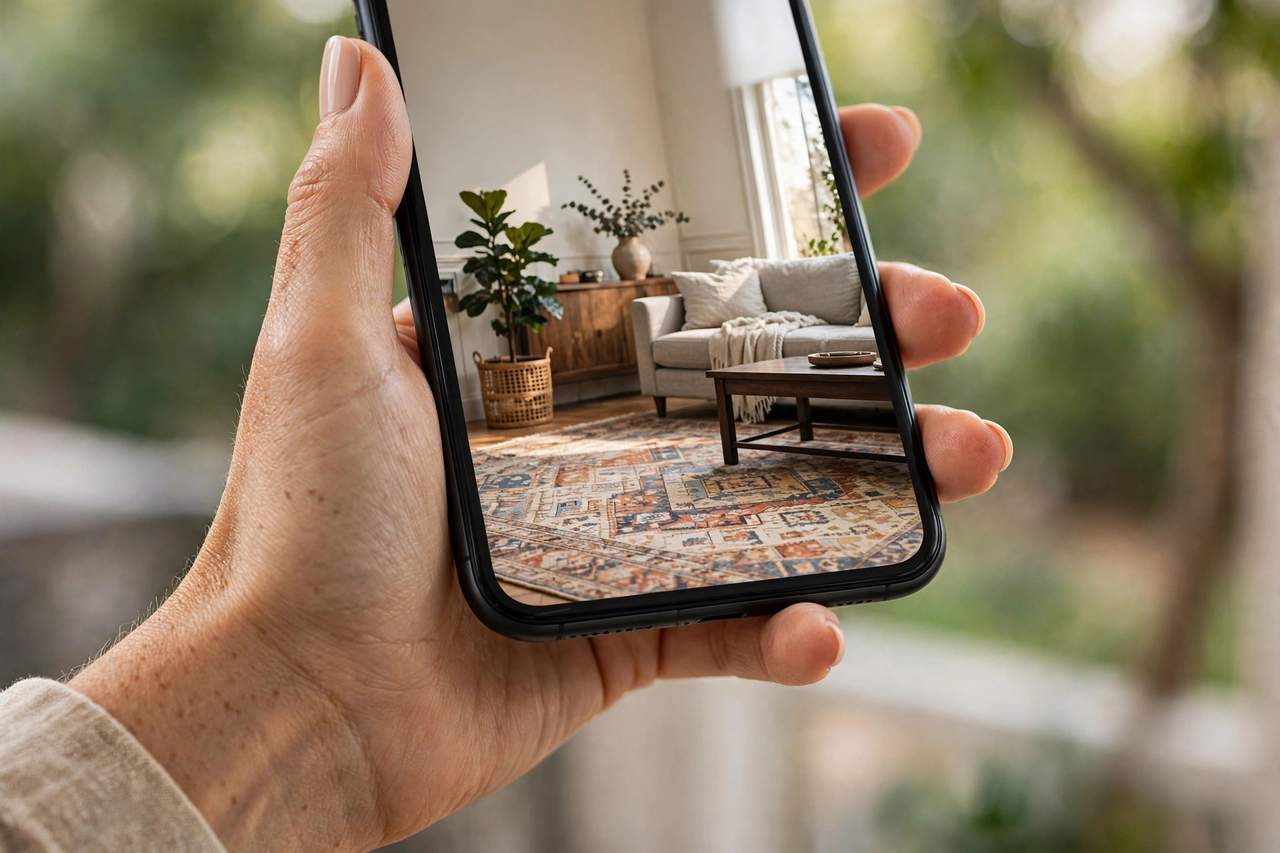
AR answers the size question before the order ships. The customer points their phone at their own floor and sees the rug in place, at its true size, next to their own furniture. Here are the real options a rug store can buy in 2026, written for a store owner, not a developer.
Option 1: photo-based room visualizers
The best-known example in rugs is Roomvo, a Canadian room-visualization platform used by flooring and rug retailers. Your catalogue plugs into their system, and your website gets an embedded visualizer. The customer picks a rug, uploads a photo of their own room or chooses a stock room scene, and sees the rug layered into that photo. They can swap rugs, compare side by side, adjust the size, and share the finished image.
It is photo visualization, not 3D. Nobody builds a 3D model of anything. The visualizer composites your real product photos into the customer's room photo. It runs in the browser on your own website, with your branding on it. No app to download.
Good when: you want customers to see your actual rug photo in their actual room, including the exact pattern and color they would buy. For rugs, a photo composite shows the real thing, which matters. Bad when: you need the rug placed on the floor of a live camera view. A room photo is one fixed angle. Also check the pricing and catalogue terms in writing before you compare, since it is a platform subscription built for retailers, not a per-item service.
Option 2: Shopify AR viewer apps
If you sell on Shopify, AR viewer apps on the app store add a 3D viewer to your product pages for a small monthly subscription. Public listings put pricing around free to roughly $36 a month, depending on how many products you publish.
The catch is the same one every viewer app has. The apps are viewers only. You supply every 3D model yourself, usually commissioned from 3D artists at roughly $100 to $500 per product. A rug store with 150 designs needs 150 models for full coverage. The subscription is small. The modelling bill is the project. We worked the same maths in our pricing breakdown for rug stores.
Good when: you already have 3D models of your rugs, or a designer on staff who makes them. Bad when: you do not, which is almost every small rug store.
Option 3: 3D and AR creation services
Some companies build the 3D models and host the AR for you. The usual shape: you pay per model for creation, roughly a couple hundred dollars a model depending on complexity, plus a SaaS fee for hosting and distribution that scales with your catalogue size. The pricing is honest about what it costs. It costs what enterprise budgets are built for.
Good when: you run a brand with hundreds of designs and the budget for per-model creation plus platform fees. Bad when: you run a small store, where the creation bill is the whole project before anything earns a dollar.
Option 4: done-for-you AR services
You send photos and real dimensions of your rugs, bestsellers first. Someone else builds the true-to-size AR (Augmented Reality) views and hands you links and QR codes that open the view in the phone browser. ARQR360 works this way. No app for your customers. No modelling work on your side. About seven days from photos to a live catalogue.
The price is flat and public: $249 one-time setup and $29 a month, with all AR (Augmented Reality) views included. No product cap, no per-view fees.
Good when: you want AR live this month with no new hires. Bad when: you need deep custom work like a full product configurator. That is a platform job, not a service job.
What to check before you choose
- True-to-size proof: for rugs, a size off by a few inches is the whole purchase. Ask every provider how they verify the rug's real dimensions against what the customer sees.
- Photo or live AR: a visualizer shows your rug in a room photo. AR shows it on the customer's real floor through the phone camera. Both answer the size question. Only AR answers it from every angle.
- Who makes the visuals: the biggest cost on most routes is model creation, not the software. Ask whether the work is included and what new-season stock costs.
- Total cost, not the monthly fee: add the models, the setup, and the new range. Per-model fees quietly dwarf subscriptions on catalogues that change.
Where each option lands
If you want customers to see your actual rug photo in their room photo with your branding, a visualizer platform like Roomvo is the purpose-built tool. If you already have 3D models and a Shopify store, a viewer app is a cheap add. If you have neither, a done-for-you service is the route that ends with AR actually live on your site.
One more number, and it is Shopify's own data, not ours: products with 3D or AR views convert about 94% better than products without. Whichever route you take, giving shoppers a true-to-size view beats a flat photo.
See the result on your own phone first. Open our live rug demo and place a rug in your own room. For the comparison with Roomvo specifically, read ARQR360 vs Roomvo for rug stores, and for the returns side of the story, read how rug stores cut size returns with AR.
The cheapest way to start
You do not have to believe any article. Send a photo of your bestselling rug and we will build you one true-to-size AR (Augmented Reality) view free. Put it on your own floor, check it against the real rug, and decide with the thing in front of you. If it does not convince you, you have spent nothing.
FAQ
Do my customers need an app to see a rug in their room?
Not with ARQR360. Each rug gets a link and a QR code that opens the true-to-size AR (Augmented Reality) view in the phone browser. Try the live rug demo yourself. Some platforms run their visuals inside mobile apps, so ask before you sign.
What does AR cost a small rug store?
It depends on who builds the visuals, which is the biggest cost on most routes. ARQR360 is flat and public: $249 one-time setup and $29 a month, with all AR (Augmented Reality) views included. The first test view is free.
Do I need 3D models before using a room visualizer?
No. A photo-based visualizer like Roomvo composites your real product photos into the customer's room photo, so no 3D models are needed at all. Viewer apps and platforms that render in 3D do need one model per product, which is where the per-model cost comes from.
Try it on your own product, free
Reply with a photo of your bestselling product and we will build you one true-to-size AR model free, to try on your own phone. No commitment.
Get my free model