How Australian Decor Stores Cut January Returns with AR (Augmented Reality)
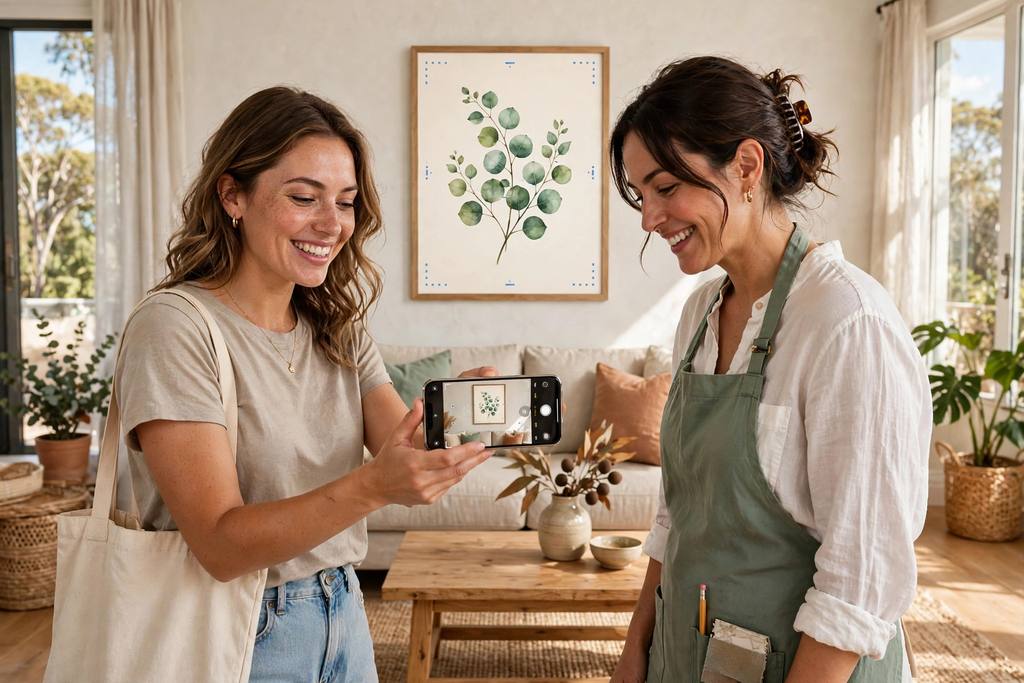
Picture a decor store owner in Sydney. Christmas is over. The shop is quiet again, and the returns start. A table lamp that was a gift, back in its box. A framed print bought in the Boxing Day sale, back because it looked too big on the wall. A vase that looked soft sage on the screen and reads mint green in the buyer's living room. Every one of those pieces has to be checked, repacked, and sold again, and some of them never sell at full price after that.
January is the hardest month for a decor store. December brings the sales. January brings the boxes back.
Why January returns hurt a decor store
A decor return is not like returning a shirt. The piece is fragile, or heavy, or both. A lamp has a shade that dents. A mirror has glass that chips. A framed print has corners that scuff. Every return costs the store the courier both ways, the time to inspect and repack, and a piece that may only sell again at a discount.
Gifts make it worse. The person who bought the lamp never saw the room it was going into. The person who received it did not choose it. When it does not suit the room, it comes back, and the store pays for a guess someone else made.
Sale pieces make it worse too. A shopper who buys in the Boxing Day rush is buying fast, on a screen, in a week when every store is shouting. She likes the lamp, she likes the price, and she guesses on the size. The guess is wrong more often than the store would like, and January is when the wrong guesses arrive at the counter. Australian summer light adds one more twist. Strong sun through the window changes how a colour reads in the room, so a piece that looked right in the shop can look wrong at home even when the size is right.
What changes when the shopper checks first
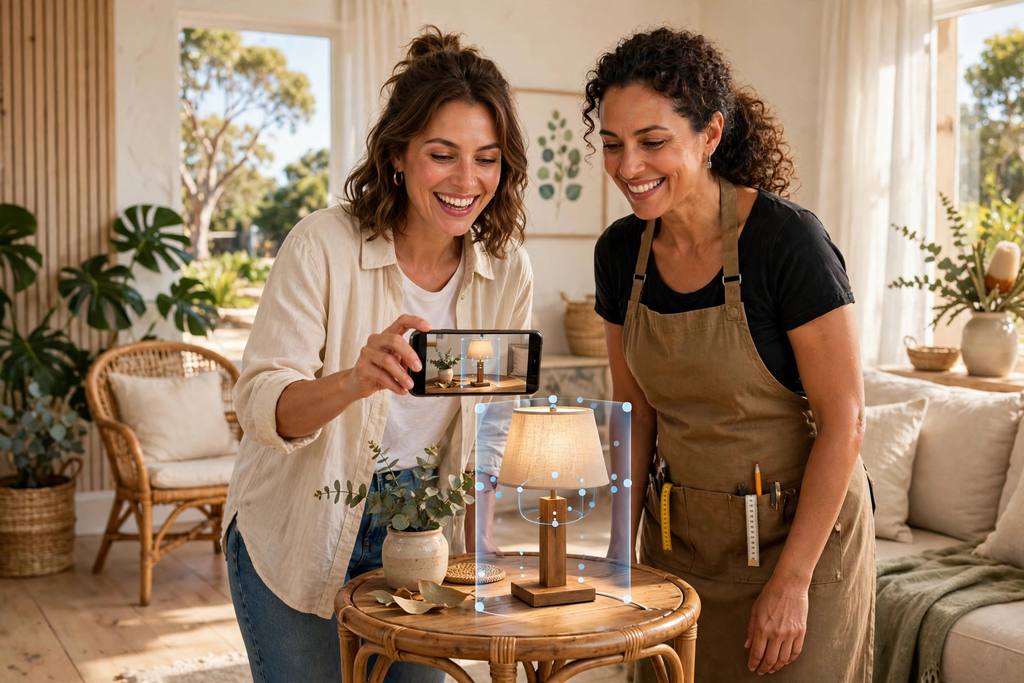
AR (Augmented Reality) lets the shopper see the piece in her own room before she buys. She taps a link on the product page, or scans a QR code, points her phone at her own wall or table, and the piece appears at its true size. She can check the lamp against her side table. She can see the framed print on her own wall, in her own light, next to her own sofa. She can see the colour as it really looks in her room, not as it looked in a studio photo.
That is the whole fix. The question that used to be answered by a guess is answered on the shopper's own wall. The gift buyer can check the piece in the room it is going to, or send the link to the person receiving it so they can check it themselves. The Boxing Day shopper can check the size in ten seconds instead of guessing in the rush.
Where the links go
The view only helps if the shopper sees it before she buys. Put the link next to the price on every product page. That is where the size doubt lives, and that is where the buying decision happens. A see-it-at-true-size link beside the buy button answers the question at the moment it matters.
Put a QR code on the price tag in the shop too. A customer browsing in the store can scan it, check the piece at home, and come back decided. And put the link in your January emails. A shopper who returned a piece in January is a shopper who still wants the right piece. Show her the link and she can check the replacement before she orders it.
What it costs, and what it saves
ARQR360 is a done-for-you AR service. You send photos and real dimensions of your products, bestsellers first, and our designing department produces the true-to-size AR (Augmented Reality) views for you. The links and QR codes go on your product pages and in your shop. About seven days from photos to a live catalogue. No app for your customers. No work on your side beyond the photos.
The price is flat and public: $249 one-time setup and $29 a month, with all AR (Augmented Reality) view production included. No product cap, no per-view fees. Custom packages are available if your store needs something beyond the standard catalogue, and our team follows up after launch to make sure the views are working where shoppers actually see them.
One January with fewer returns pays for the year. A lamp that stays sold is a lamp that never needs repacking. A print that fits the wall the first time never comes back in a box.
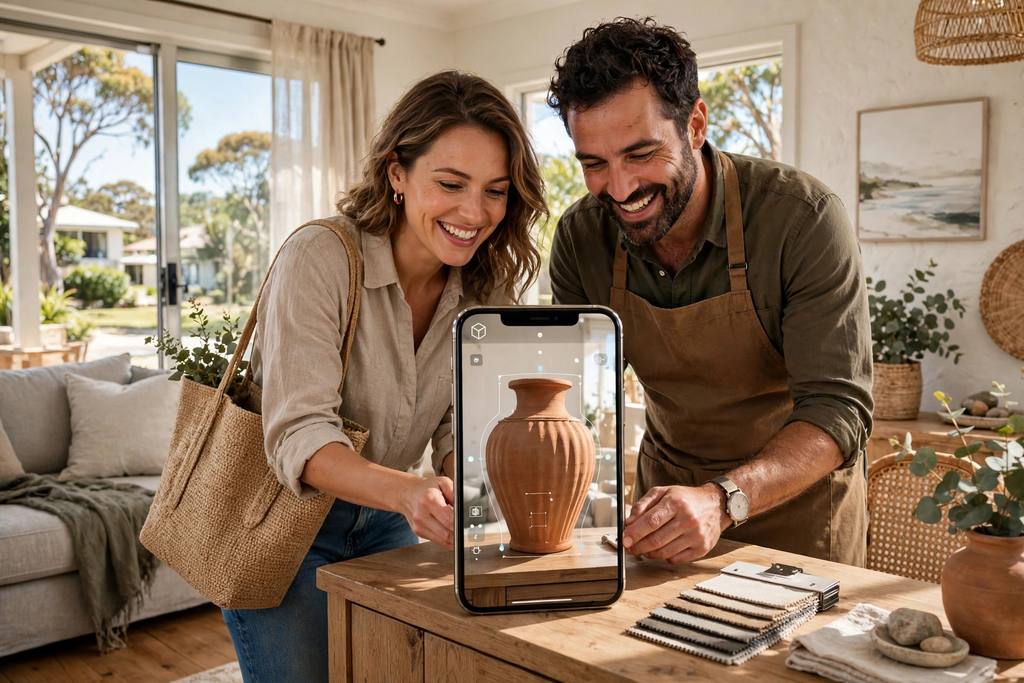
One number worth knowing, and it is Shopify's own data, not ours: products with 3D or AR views convert about 94% better than products without. Shoppers who can check the true size hesitate less, and shoppers who hesitate less guess less.
For the colour side of the same story, read how Australian decor stores cut wrong-colour returns with AR.
The cheapest way to check before you buy
You do not have to sign anything to find out if it works for your store. Send a photo of your bestselling lamp or mirror and we will build you one true-to-size AR (Augmented Reality) view free. Put it on your own phone, check it against the real piece, and see if your customers would use it. If it does not convince you, you have spent nothing. Try the live decor demo first: it opens in your phone browser, no install.
FAQ
Why do Australian decor stores get so many returns in January?
Two reasons. Christmas gifts bought for someone else's room, and Boxing Day sale pieces bought fast on a screen. In both cases the buyer guessed on size and colour. A true-to-size AR (Augmented Reality) view lets the shopper check the piece in the room before buying, so the guess never happens.
Do my customers need an app to see my decor in AR?
Not with ARQR360. Each piece gets a link and a QR code that opens the AR view in the phone browser. Try the live decor demo on your own phone.
How much does AR cost a small Australian decor store?
ARQR360 is flat and public: $249 one-time setup and $29 a month, with all AR (Augmented Reality) view production included. No product cap, no per-view fees. The first test view is free, so you can check it against the real piece before spending anything.
Try it on your own product, free
Reply with a photo of your bestselling product and we will build you one true-to-size AR model free, to try on your own phone. No commitment.
Get my free model