How US Decor Stores Cut Wrong-Colour Returns with AR (Augmented Reality)
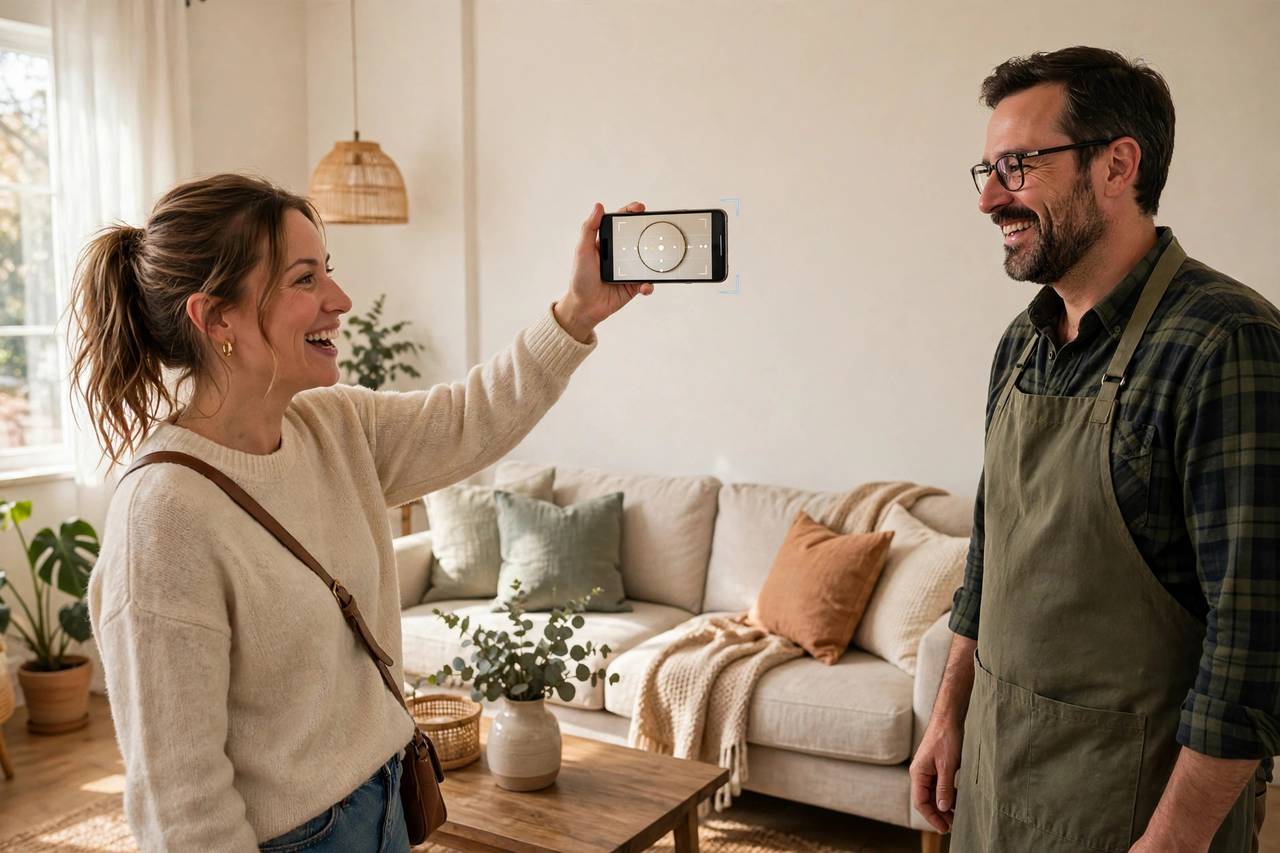
Picture a decor store owner in Austin. She sells lamps, mirrors, vases, and wall art from one shop and a website. Her bestseller is a brass table lamp. Shoppers love it online. Then the returns come back. The lamp is fine. The colour is wrong, at least in the buyer's room. In the photo it looked soft gold. On the buyer's side table, under their warm bulbs, it reads yellow. Back it goes.
Colour is the quietest return reason in decor. Size is easy to blame, because a tape measure settles it. Colour is harder. A screen shifts it. A room shifts it more. The shopper buys the photo, not the piece, and the piece loses.
Why colour goes wrong between the photo and the room
Three things pile up. First, screens lie a little. Every phone shows the same photo a little differently. Second, light changes everything. A vase that looks sage green in a bright studio photo turns grey in a north facing room. Third, the room itself. A mirror that looked calm against a white studio wall looks loud against a blue painted wall. None of this is the store's fault. It is what happens when the shopper has to guess.
Picture a shopper in Chicago. She buys a ceramic vase for her mantel. The photo shows a soft terracotta. Her living room has warm wood floors and cream walls, and in that light the vase reads orange. She likes the vase. She does not like the orange. She sends it back. The store pays the freight both ways and resells an opened piece at a discount.

What changes when the shopper sees it in their own room
AR (Augmented Reality) lets the shopper point their phone at the spot where the piece will live and see it there at its true size, in the light of that room. They check the lamp against their wall colour. They check the vase against their mantel. The colour question gets answered before the order is placed, not after the box arrives.
That is the whole mechanism. It is not a fancy effect. It is the piece, at its true size, in the shopper's own room, in their own light. If the view gets the colour and size right, the shopper trusts it. If it is even a little off, the shopper learns the tool cannot be trusted, and the sale is gone anyway.
For the returns side of the same story, read how US decor stores cut returns with AR.
Three places colour returns start, and how AR answers each
First, the lamp. A lamp is bought for the glow as much as the shape. The shopper sees it on their own side table, under their own bulbs, before they buy.
Second, the mirror and the wall art. A mirror changes a room. The shopper sees the frame against their own wall colour and the size against their own sofa, and decides with the full picture in front of them.
Third, the vase and the small pieces. Small pieces are the worst for colour guesses, because the photo is often the only reference. The shopper sees the piece on their own shelf, next to the things it has to live with.
What to ask before you buy AR for your decor store
Ask the provider how they prove true size and true colour. A serious answer names a process: every view checked against the real listed dimensions and the real finish of the piece. A vague answer is the answer.
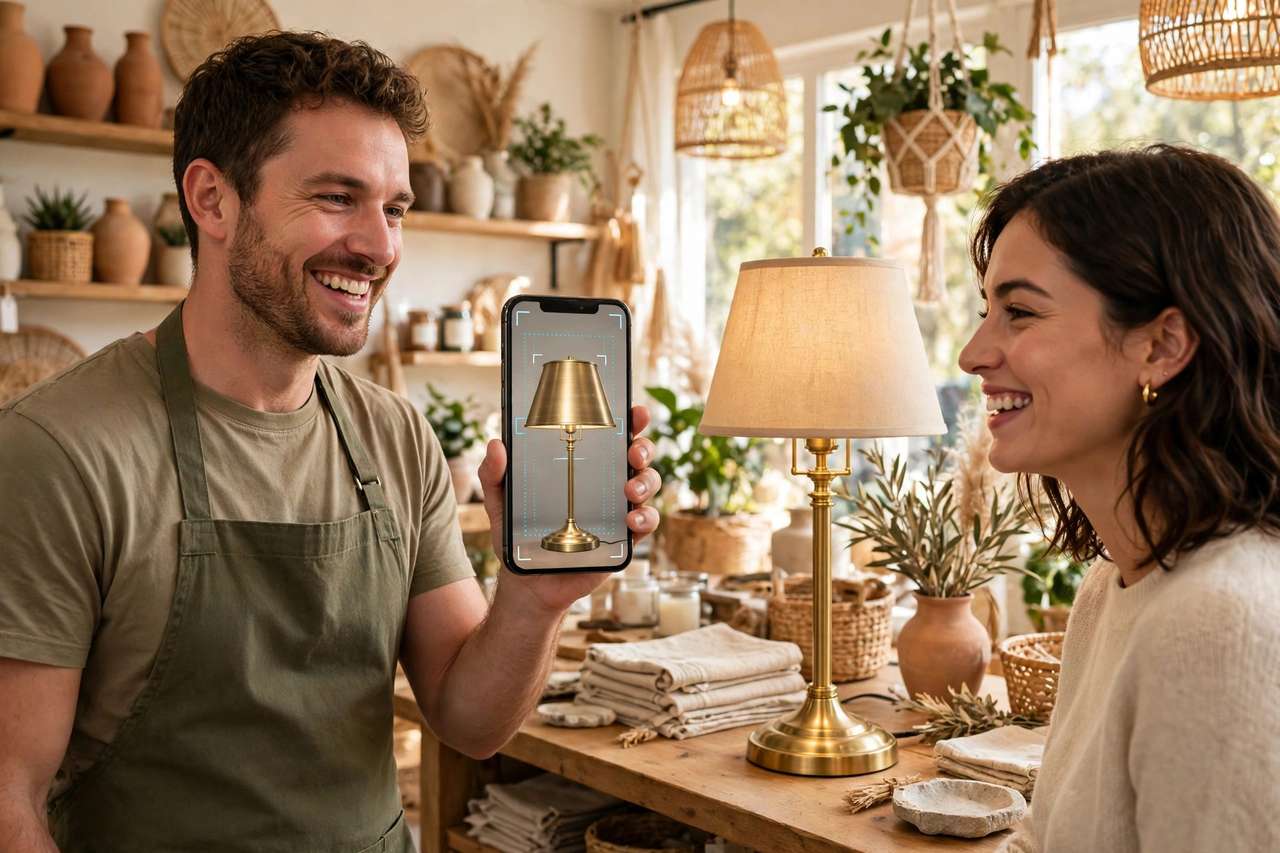
Ask whether the shopper needs an app. If the answer is yes, most of your customers will never use it. People do not install apps to check a lamp. A view that opens in the phone browser, from a link or a QR code, gets used. Try our live decor demo on your own phone and see.
Ask who builds the views, and from what. With ARQR360, you send photos of your bestselling pieces and their real listed dimensions, and our designing department builds the true-to-size AR (Augmented Reality) views for you. No app for your customers. No work on your side. About seven days from photos to a live catalogue.
One number worth knowing, and it is Shopify's own data, not ours: products with 3D or AR views convert about 94% better than products without. Shoppers who can check the true size and colour hesitate less.
For the same wrong-colour angle written for UK decor stores, read how UK decor stores cut wrong-colour returns with AR.
The cheapest way to check if it works for your store
You do not have to sign anything to find out. Send a photo of your bestselling lamp or mirror and we will build you one true-to-size AR (Augmented Reality) view free. Put it on your own phone, check it against the real piece, and see if your customers would use it. If it does not convince you, you have spent nothing. Try the live decor demo first: it opens in your phone browser, no install.
ARQR360 is flat and public: $249 one-time setup and $29 a month, with all AR (Augmented Reality) view production included. Custom packages are available if your store needs something beyond the standard catalogue, and our team follows up after launch to make sure the views are working where shoppers actually see them.
FAQ
How does AR cut wrong-colour returns for a US decor store?
When the shopper sees the lamp or vase in their own room, in their own light, before ordering, the colour guess disappears. The returns that follow a wrong colour guess fall with it. Try the live decor demo on your own phone.
Do my customers need an app to see my decor in AR?
Not with ARQR360. Each piece gets a link and a QR code that opens the AR view in the phone browser. No install, no account, no wait.
How long before my decor is live in AR?
With ARQR360, about seven days from your photos arriving. Send photos of your bestselling pieces and their real listed dimensions, and our designing department builds the true-to-size AR (Augmented Reality) views. The first test view is free.
Try it on your own product, free
Reply with a photo of your bestselling product and we will build you one true-to-size AR model free, to try on your own phone. No commitment.
Get my free model