How US Decor Stores Turn Browsers into Buyers with AR (Augmented Reality)
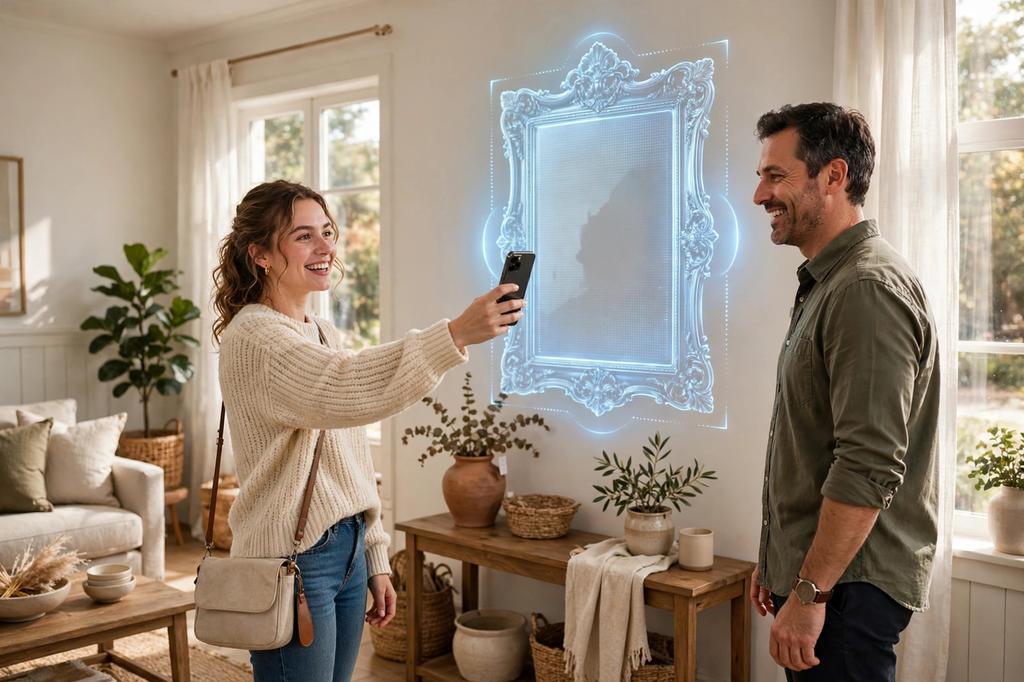
Picture a home decor store owner in Austin. She sells lamps, mirrors, vases, and wall art. Her website gets thousands of visits a month. People open the product pages, look at the photos, zoom in, and leave. The shop gets the traffic. The till does not get the sale.
That is the browser problem, and most US decor stores live with it every day. The shopper is not saying no to the piece. They are saying they cannot be sure it will work in their room, so they do nothing. AR (Augmented Reality) is the tool that turns that maybe into a yes, because it lets the shopper check the piece in their own room before they pay.
The browser problem is a confidence problem
A decor piece is not a book. A book looks the same everywhere. A lamp changes with the room. The shopper has to guess the size against their side table, the colour against their wall, and the style against their sofa. Photos cannot answer those guesses. A size chart lists numbers, and numbers do not show what a 60 centimetre mirror looks like over a real console table.
So the shopper does the safe thing. They save the page, they think about it, and they never come back. The store paid for the visit and got nothing. The fix is not more traffic. The fix is giving the traffic a reason to trust what they see.

What changes when the shopper sees it at home first
AR (Augmented Reality) lets the shopper point their phone at their own room and see the piece there at its true size, in the light of that room. They check the mirror over the console table. They check the lamp next to the armchair. They see whether the vase fights the curtains before they spend a dollar.
That is the whole mechanism. It is not a fancy effect. It is the piece, at its true size, in the shopper's own room. If the view gets the size and colour right, the shopper trusts it, and a trusting shopper buys. For the returns side of the same story, read how US decor stores cut returns with AR.
Three places the AR view does its work
First, the product page. The AR link sits next to the price, where the buying decision happens. A shopper who can check the size in ten seconds does not need to save the page for later. They buy now.
Second, the shop floor. A QR code on the shelf tag opens the same piece in AR, so a customer browsing in the store can check the lamp at home that evening and order from the sofa. The shop keeps selling after the customer leaves.
Third, the evening. Browsing peaks after the shops close. A shopper looking at 10pm can check the piece in their own room right then, from the product page, and buy at 10pm. A store with AR on every product page sells while the shop is dark.

What to ask before you buy AR for your decor store
Ask the provider how they prove true size. A serious answer names a process: every view checked against the real listed dimensions of the piece. A vague answer is a warning.
Ask whether the shopper needs an app. If the answer is yes, most of your customers will never use it. People do not install apps to check a lamp. A view that opens in the phone browser, from a link or a QR code, is the version that actually gets used.
Ask who builds the views, and from what. With ARQR360, you send photos of your bestselling pieces and their real listed dimensions, and our designing department builds the true-to-size AR (Augmented Reality) views for you. No app for your customers. No work on your side. About seven days from photos to a live catalogue.
One number worth knowing, and it is Shopify's own data, not ours: products with 3D or AR views convert about 94% better than products without. Shoppers who can check the true size and colour hesitate less.
For the same browsers into buyers angle written for US rug stores, read how US rug stores turn browsers into buyers with AR.
The cheapest way to check if it works for your store
You do not have to sign anything to find out. Send a photo of your bestselling lamp or mirror and we will build you one true-to-size AR (Augmented Reality) view free. Put it on your own phone, check it against the real piece, and see if your customers would use it. If it does not convince you, you have spent nothing. Try the live decor demo first: it opens in your phone browser, no install.
ARQR360 is flat and public: $249 one-time setup and $29 a month, with all AR (Augmented Reality) view production included. Custom packages are available if your store needs something beyond the standard catalogue, and our team follows up after launch to make sure the views are working where shoppers actually see them.
FAQ
Why do US decor shoppers browse and leave without buying?
They cannot be sure the piece will fit their room or suit their colours from a photo alone, so they leave to think about it and never come back. An AR (Augmented Reality) view on the product page answers the size and colour question in their own room, before they pay. Try the live decor demo on your own phone.
Do my customers need an app to see my decor in AR?
Not with ARQR360. Each piece gets a link and a QR code that opens the AR view in the phone browser. No install, no account, no wait.
How long before my decor is live in AR?
With ARQR360, about seven days from your photos arriving. Send photos of your bestselling pieces and their real listed dimensions, and our designing department builds the true-to-size AR (Augmented Reality) views. The first test view is free.
Try it on your own product, free
Reply with a photo of your bestselling product and we will build you one true-to-size AR model free, to try on your own phone. No commitment.
Get my free model