The Payback Maths: Does AR Earn Its Keep at a Small Decor Store?

Picture a home decor store owner in Amsterdam. She sells lamps, mirrors, vases, and wall pieces from one shop and a website that ships across the Netherlands and Belgium. AR keeps coming up in her searches. Every article tells her it is the future. None of them answers the only question she actually has. Will it pay for itself at a store her size.
This is the plain-English answer, with the maths.
What you actually pay
There are two honest routes to AR for a small decor store.
Route one is self-serve. AR viewer apps on the app stores cost a small monthly fee, often under forty dollars, and put a 3D viewer on your product pages. But they are viewers only. You supply every model yourself, usually commissioned from 3D artists at roughly 100 to 500 dollars per product. A decor store with 120 pieces needs a model for each one before the subscription does anything. We worked the same maths in our decor pricing breakdown. The software is cheap. The models are the project.
Route two is done for you. You send photos of your bestsellers and their real listed dimensions. ARQR360 builds the true-to-size AR (Augmented Reality) views from them, hosts them, and hands you links and QR codes for each piece. The price is flat and public: $249 one-time setup and $29 a month, every view included. About seven days from photos to live views. Your first view is free, so you can check the quality on your own phone before spending anything.
Where the money comes back
AR pays a decor store back in two ways, and both are about size.
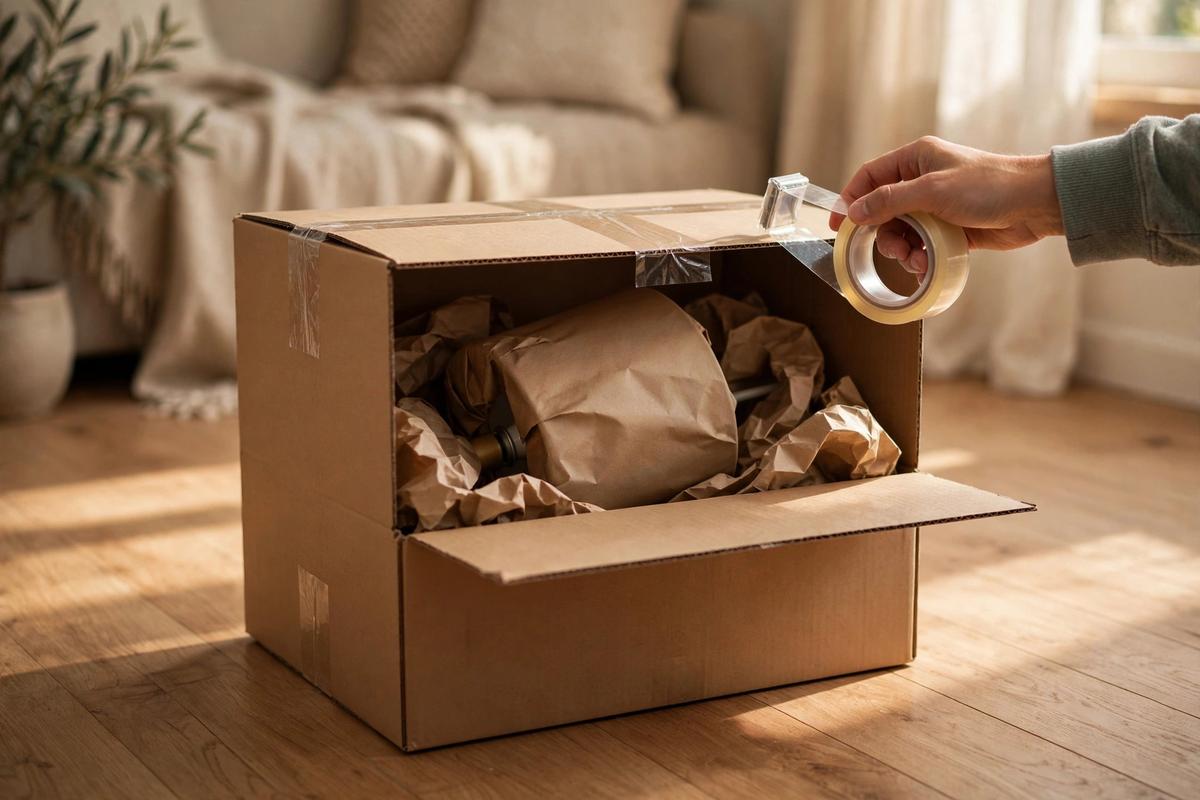
The first is returns. Most decor returns are size returns. A lamp that looked fine online arrives and looks lost on the sideboard. A mirror is smaller on the wall than it was in the photo. The customer is not angry at the product. They guessed the size and guessed wrong. Each of those returns costs you shipping both ways, plus the inspection and relisting work, plus a piece you can no longer sell as new. Cut the guessing and you cut the cheapest losses in the business.
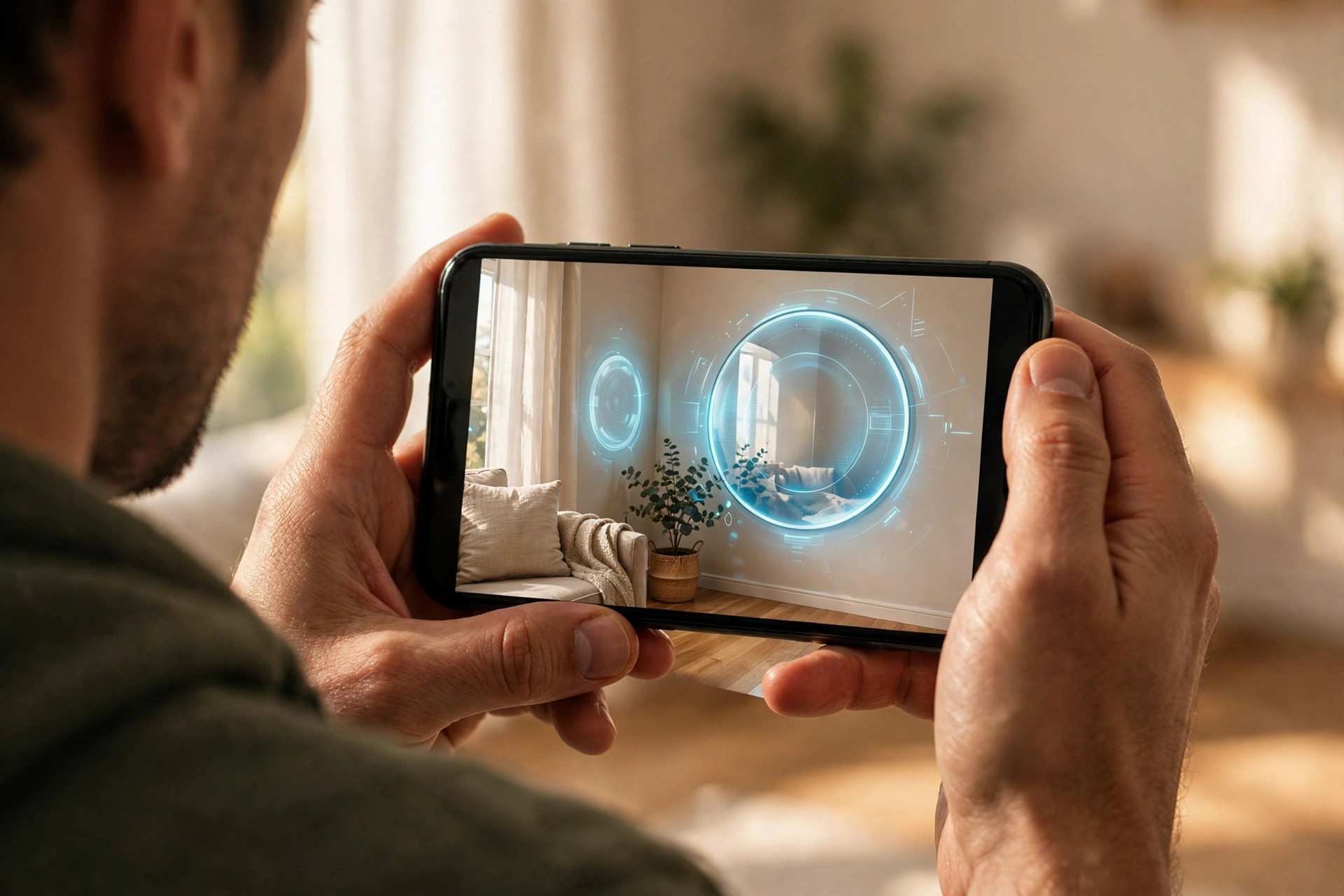
The second is conversion. Shoppers hesitate on decor for one reason: they cannot see the scale. Numbers on a spec tab do not translate into a room. When the buyer can point a phone at their wall and see the mirror at its true size, the hesitation shrinks. Shopify reports that products with 3D or AR views convert about 94% better than products without. That is Shopify's own data, not ours, and your number will be your own. But the mechanism is plain. Shoppers who can see the true size buy more confidently and send less back.
The five-line payback check
Do the maths on paper before you spend anything. These are round numbers, not a promise. Fill in your own.
- Your online orders a month. Say 300.
- Your return rate. Say 1 in 20 orders comes back, 15 returns a month.
- Your cost per return. Shipping both ways plus the handling. Say 12 euros.
- The monthly leak. 15 returns times 12 euros is 180 euros a month, gone.
- The AR cost. $29 a month after a $249 setup, views included.
If AR stops even a quarter of those size returns, the leak drops by 45 euros a month, and the service costs a fraction of that. Add one extra sale a week from shoppers who bought because they could see the true size, and the case is closed. This is a made-up store with round numbers, but the structure is real. Your own five lines will tell you the truth faster than any sales page.
The mistakes that make AR lose money
AR does not pay for itself on its own. The stores where it flops make the same four mistakes.
- The buried link. The AR view lives in a gallery page nobody opens. It belongs next to the buy button, where the size doubt lives.
- The app. If the customer must install an app, most of them will not. Browser AR opens from a link in seconds. That is the version that actually gets used.
- The whole catalogue on day one. You do not need 200 views to learn. Twenty bestsellers teach you what customers actually do with it.
- Paying per model forever. Per-model fees quietly dwarf subscriptions on catalogues that change. Know the full annual cost before you sign.
The cheapest way to check if it works for your store
You do not have to believe any article, including this one. Send a photo of your bestselling lamp or mirror and we will build you one true-to-size AR (Augmented Reality) view free. Put it on your own phone, check it against the real piece, and run your own five lines with your own numbers. If it does not convince you, you have spent nothing. Try the live decor demo first: it opens in your phone browser, no install.
The maths only works if the returns actually fall, so it is worth reading the mechanism before the numbers. How home decor stores cut returns with true-to-size AR is the mechanism, piece by piece.
FAQ
Does AR cut returns or just sell more?
Both, but only size-related returns. A lamp that looked too small still comes back if the fault was quality. AR fixes the guessing problem, which is the biggest slice of decor returns. Run your own return reasons and see how many were about size.
My store is mostly offline. Does AR still pay?
That is where the QR code earns its keep. A tag next to the floor lamp lets a browsing customer check the piece in their own room that evening and come back decided. Try the live decor demo on your phone and picture it on your own shop floor.
How do I know it works before I pay?
Do not pay. Send a photo of your bestseller and we build one true-to-size AR (Augmented Reality) view free. Check it against the real piece on your own phone. That is the whole test.
Try it on your own product, free
Reply with a photo of your bestselling product and we will build you one true-to-size AR model free, to try on your own phone. No commitment.
Get my free model